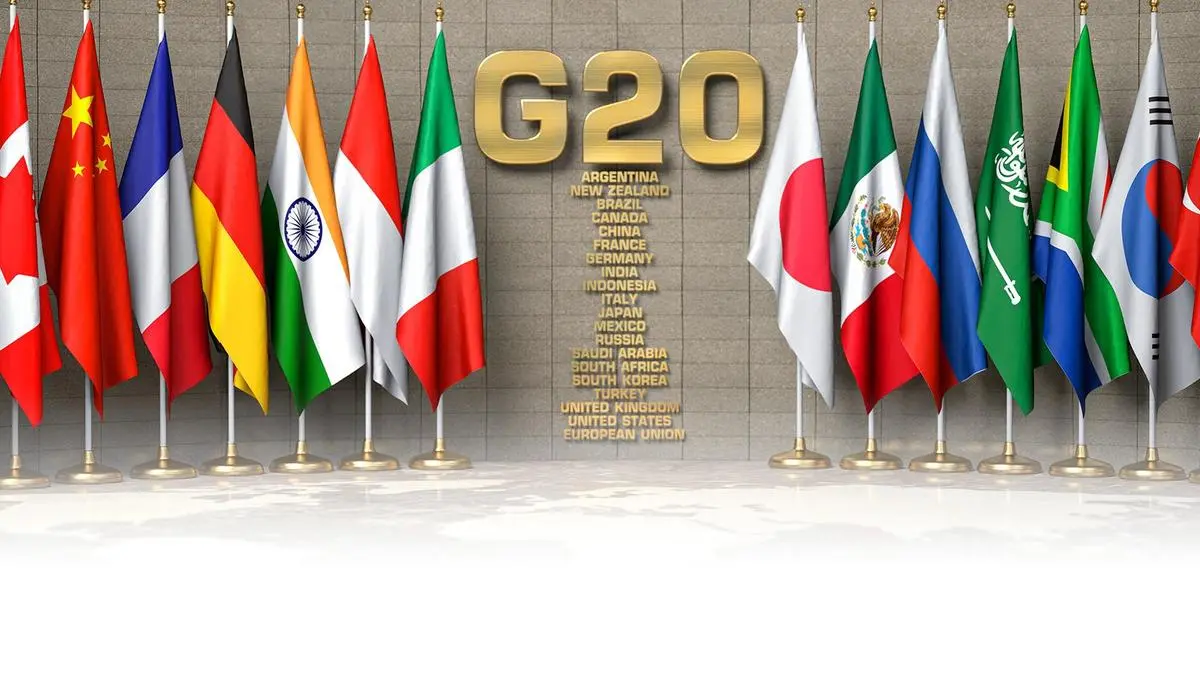
The United States will host the G20 Foreign Ministers’ Meeting in Atlanta, Georgia, on October 30-31, 2026. Chaired by U.S. Secretary of State Marco Rubio, the high-level gathering is ostensibly designed to advance global economic stability, open markets, and supply chain resilience. Yet underneath the polished bureaucratic language issued by the State Department lies a far more volatile reality. This ministerial meeting is the critical setup for a highly unconventional G20 Leaders' Summit scheduled for December at Trump National Doral in Miami, signaling an aggressive American effort to rewire the machinery of global governance.
By pulling the world’s top diplomats into Georgia’s capital just days before the American presidential midterms, Washington is putting its new international doctrine on full display. The official agenda emphasizes the traditional pillars of international trade and infrastructure. The actual friction, however, will center on a deeper ideological shift, as the current U.S. administration attempts to systematically strip climate change mandates from the global economic forum while forcing a rigid, security-first recalculation of supply chains.
The Illusion of Consensus in Atlanta
Multilateral diplomacy rarely happens in a vacuum, and the choice of Atlanta as a venue is a calculated domestic and international play. The administration points to the city’s status as a hub of global logistics and corporate commerce. The unspoken calculation is that a major international summit provides a prime backdrop for demonstrating economic nationalism in the American South.
The traditional G20 script is predictable. Ministers arrive, read prepared statements about shared prosperity, and sign off on a heavily negotiated, often toothless joint communiqué. This time, the boilerplate language faces an existential threat. For over a decade, European powers, along with recent G20 hosts like Brazil and India, have used these ministerial meetings to lock in commitments regarding green energy financing and carbon reduction targets. Washington is now actively dismantling that framework.
The state department has explicitly indicated that the 2026 American presidency will steer the G20 away from what it terms ideological preoccupations around green energy. Instead, the focus is shifting toward affordable fossil fuels, nuclear expansion, and traditional energy security. This is not just a change in tone. It is a fundamental pivot that pits the U.S. directly against the European Union and key Global South partners who view climate finance as a non-negotiable element of international economic cooperation.
The Trade War by Other Means
When foreign ministers debate supply chain resilience in late October, the real subtext will be economic containment. The global economy has fractured into distinct, competing blocs, and the Atlanta meeting will serve as an arena for this quiet warfare.
- The Semiconductor Standoff: Washington wants enforceable commitments to isolate adversaries from critical hardware pipelines.
- Critical Mineral Monopolies: Western economies are desperate to break reliance on processing networks controlled by Beijing.
- The Friend-Shoring Mandate: Access to American markets is increasingly tied to a nation's willingness to re-shore production to politically aligned territories.
This strategy forces middle powers into an uncomfortable corner. Nations like India, Brazil, and South Africa have spent years advocating for strategic autonomy, refusing to definitively choose between Western capital and Eastern manufacturing. New Delhi, which has long championed the representation of the Global South within the G20, will be watching closely. India wants secure technology transfers and semiconductor partnerships, but it resists any framework that transforms a global economic forum into a hardline security alliance.
The Bilateral Minefield
The real work of a foreign ministers' meeting rarely happens in the main plenary session. It occurs in the sterile, heavily guarded bilateral holding rooms down the hall.
The Atlanta summit comes at a moment of intense geopolitical reshuffling. Just days before Rubio takes the gavel in Georgia, Russian President Vladimir Putin’s high-profile visits to Beijing highlight the tightening axis between major Eastern powers. The presence of Chinese and Russian delegations in an American city, amid active proxy conflicts and trade blockades, guarantees that the formal agenda will be completely overshadowed by security friction.
G20 Economic Architecture (Traditional vs. 2026 U.S. Agenda)
┌───────────────────────────────┬───────────────────────────────┐
│ Previous Iterations           │ 2026 U.S. Framework           │
├───────────────────────────────┼───────────────────────────────┤
│ Multilateral Climate Pledges  │ Regulatory Deregulation       │
│ Global Tax Harmonization      │ National Supply Security      │
│ Developmental Aid Frameworks  │ Fossil Fuel Supply Chains     │
└───────────────────────────────┴───────────────────────────────┘
The administration's decision to invite Poland to the table as a burgeoning economic heavyweight further underscores this geopolitical engineering. By elevating Warsaw, Washington is deliberately inserting a hawkish, pro-American European voice into a forum that has historically been dominated by the more cautious diplomacy of Paris and Berlin. It disrupts the traditional European consensus, ensuring that security and defense realities are inextricably linked to every economic policy discussion.
The Doral Destination
Everything that occurs during the final days of October is a prelude to the main event in mid-December at Trump National Doral in Miami. Holding a G20 Leaders' Summit at a private commercial property owned by the sitting president is a unprecedented departure from diplomatic norm. It blurs the line between statecraft and corporate branding in a way that has already raised eyebrows across foreign ministries in Europe and Asia.
Diplomats are pragmatic creatures. They will attend because they must. The Miami summit coincides with the 250th anniversary of the United States, an milestone the administration intends to use as a display of American economic hegemony. For foreign ministers in Atlanta, the challenge will be survival. They must figure out how to navigate an American administration that views multilateral institutions not as venues for compromise, but as instruments for the projection of national power.
The old era of the G20, defined by consensus-driven globalism and shared climate goals, is dead. The ministers arriving in Georgia this October are not there to manage a cooperative global economy. They are there to negotiate the terms of its fragmentation.