The notification on a smartphone screen looks the same whether you have twelve dollars in your checking account or twelve billion. It is just glowing pixels. A sequence of numbers. But we spend our entire lives chasing the mutation of those numbers, convinced that at a certain undisclosed threshold, our brains will stop worrying.
We are hardwired to believe in the existence of a financial finish line. We think that if we just run fast enough, work long enough, and accumulate enough, we will cross a magical meridian where anxiety evaporates and pure, unadulterated happiness takes its place.
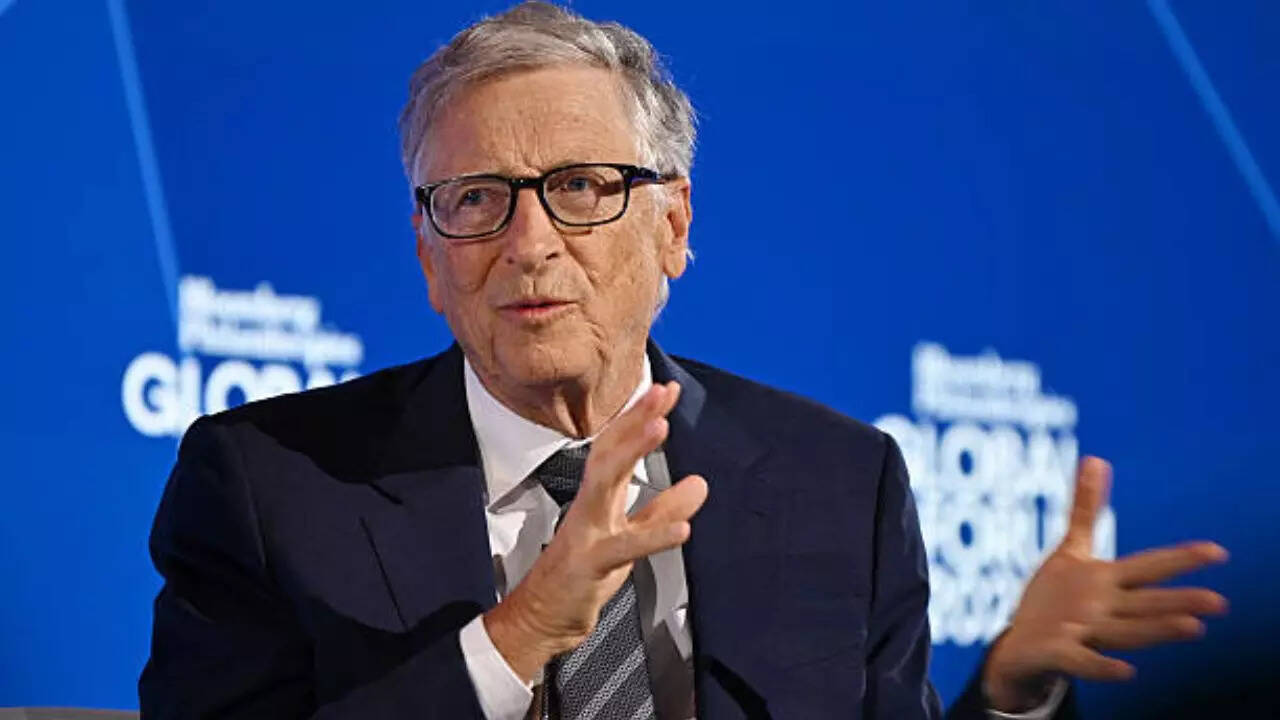
Then you look at Bill Gates.
For decades, his name was literally synonymous with wealth. He was the baseline metric for human prosperity. If anyone had reached the mythical finish line, it was him. Yet, when stripped of the corporate armor and the philanthropic press releases, his perspective on money reveals something far more complicated than a simple correlation between cash and joy. He exposes a truth we often try to ignore: wealth does not cure the human condition. It merely changes the scenery.
The Baseline of Security
Let us look at a hypothetical person named Maya. Maya is twenty-eight, living in a cramped apartment with a radiator that clanks like a dying tractor every winter. She works forty-five hours a week. Every Tuesday, she logs into her banking app with a slight tightness in her chest, waiting to see if her auto-pay rent check cleared before her paycheck landed.
For Maya, a sudden car repair isn’t an inconvenience. It is a catastrophe. It means choosing between a new alternator and groceries for the final week of the month.
If you give Maya a hundred thousand dollars tomorrow, her happiness will skyrocket.
This isn't a guess; it is verified behavioral science. For years, researchers argued over the exact dollar amount where emotional well-being plateaus. A famous 2010 study by Daniel Kahneman and Angus Deaton suggested the magic number was around $75,000 annually. Newer data from data scientist Matthew Killingsworth pushed that boundary higher, showing that happiness can continue to climb well past that mark. But the underlying mechanics remain identical. Money buys happiness up to a specific point because money buys the absence of misery.
When Bill Gates reflects on his wealth, he acknowledges this fundamental reality with surprising bluntness. He has noted that being billion-dollar wealthy is fundamentally different from being middle-class, but the true leap in human happiness happens when you escape poverty.
Think of it as a structural foundation. Money builds the floor. It stops the rain. It keeps the wolves away from the door. When you no longer have to calculate the cost of a doctor’s visit or wonder if you can afford fresh vegetables, your baseline stress drops precipitously. That relief feels exactly like happiness.
But a floor is not a house.
Once the floor is laid, we start building walls of expectation. This is where the human mind plays its cruelest trick.
The Luxury Trap and the Diminishing Return
Imagine stepping into a warm bath. The initial sensation is exquisite. The heat wraps around your muscles, and your nervous system sighs in relief. But twenty minutes later, without you even noticing, the water feels neutral. It is no longer hot. It is just the environment you are in. To get that original feeling back, you have to turn the hot water tap again.
Psychologists call this the hedonic treadmill. We adapt to our victories with terrifying speed.
When you transition from a beat-up sedan to a luxury SUV, the first month feels like science fiction. The leather smells richer. The ride is smoother. By month six, it is just the car you use to sit in traffic. The magic has drained out of the object, leaving only the new baseline.
Gates reached a point where the concept of a price tag ceased to exist. If he wants a rare manuscript by Leonardo da Vinci, he buys it. If he wants to travel across the globe, a private jet is waiting. But does a sandwich taste a thousand times better when you are worth eighty billion dollars instead of eighty thousand? No. The biology of a human tongue has strict limits.
The human brain evolved in an environment of scarcity. We are designed to seek, to hunt, to gather, and to celebrate the acquisition of resources because resources meant survival. Our dopamine systems reward the pursuit of more. But our biology never anticipated a world where the pursuit could be permanently won.
When you have an unlimited balance, the dopamine loop breaks. The thrill of saving up for a special vacation, the pride of finally purchasing a home after years of discipline, the joy of a rare indulgence—all of it is flattened. When everything is attainable, nothing is special.
Wealth removes the friction from life. But friction is often where meaning hides.
The Invisible Stakes of Unlimited Wealth
Consider what happens next when the external struggles of life are entirely solved. The battle shifts inward.
When you are fighting to pay rent, you have an external scapegoat for your unhappiness. You can tell yourself, "If I just didn't have this debt, I would be perfectly content." It is a comforting lie. It gives you a mission and a sense of purpose.
But what happens when the debt is gone, the houses are bought, the investments are secure, and you still wake up at three in the morning with a cold knot of existential dread in your stomach?
You can no longer blame your bank account. You are forced to confront the reality that your internal struggles—your insecurities, your fears of irrelevance, your broken relationships, your mortality—cannot be bought off.
Gates has been remarkably candid about the fact that wealth does not insulate a person from tragedy or emotional upheaval. Money did not prevent the painful, highly public dissolution of his decades-long marriage. It could not protect him from the relentless scrutiny, the conspiracy theories, or the profound isolation that comes with occupying a stratosphere inhabited by only a handful of humans.
There is a unique loneliness to extreme wealth. Trust becomes a luxury more expensive than any superyacht. Every relationship is viewed through a cracked lens of skepticism. Does this person love me, or do they love what I can do for them? Is this compliment genuine, or is it an investment?
The social fabric that keeps average humans grounded—the shared struggles, the mutual reliance, the simple acts of helping a neighbor move a couch because they can’t afford a moving truck—is severed. You are insulated, yes. But insulation is just a polite word for isolation.
Shifting the Ledger
If the accumulation of wealth eventually hits a wall of diminishing returns, how do those who possess it find a reason to get out of bed?
They have to reinvent the ledger. They have to turn the money from a scorekeeper into a tool.
Watch the trajectory of the world’s wealthiest individuals. The ones who survive the hedonic treadmill without losing their minds almost always pivot toward obsession. Not with getting more, but with giving it away or building something that outlasts their biological lifespan.
For Gates, this manifested as a massive, bureaucratic war against disease and poverty through his foundation. It is an attempt to solve problems that cannot be fixed by simply writing a single check. Eradicating polio or redesigning global sanitation systems requires intellectual rigor, political maneuvering, and decades of sustained effort.
It is, in essence, an artificial creation of friction.
By taking on problems so massive that they might not be solved in his lifetime, he reintroduces stakes into his existence. He creates a scenario where he can fail. And failure is a necessary ingredient for a meaningful life. Without the possibility of failure, success is just a boring certainty.
The Price of Admission
We look at the wealthy through a glass partition, envious of their freedom from our daily anxieties. We see the private islands and the effortless security. What we fail to see is the weight of the trade-off.
True wealth—the kind that brings deep, sustained contentment—rarely correlates with the number of zeros in a bank account. It is found in the quality of your attention. It is found in the stability of your relationships, the clarity of your purpose, and your ability to be present in a room without needing the validation of an audience or an acquisition.
Money is an undeniable utility. We must respect its power to alleviate suffering and provide security. We should admire the drive to achieve it and use it wisely. But we must stop treating it as a deity.
The next time you find yourself staring at your financial goals, imagining the pristine peace that awaits you when you reach that specific number, remember the billionaires who have already arrived there. They are standing at the summit, looking down at the clouds, realizing that the air is thin, the wind is cold, and the ground beneath their feet is just rock.
The mountain doesn't change who you are. It only shows you how small you look from the top.