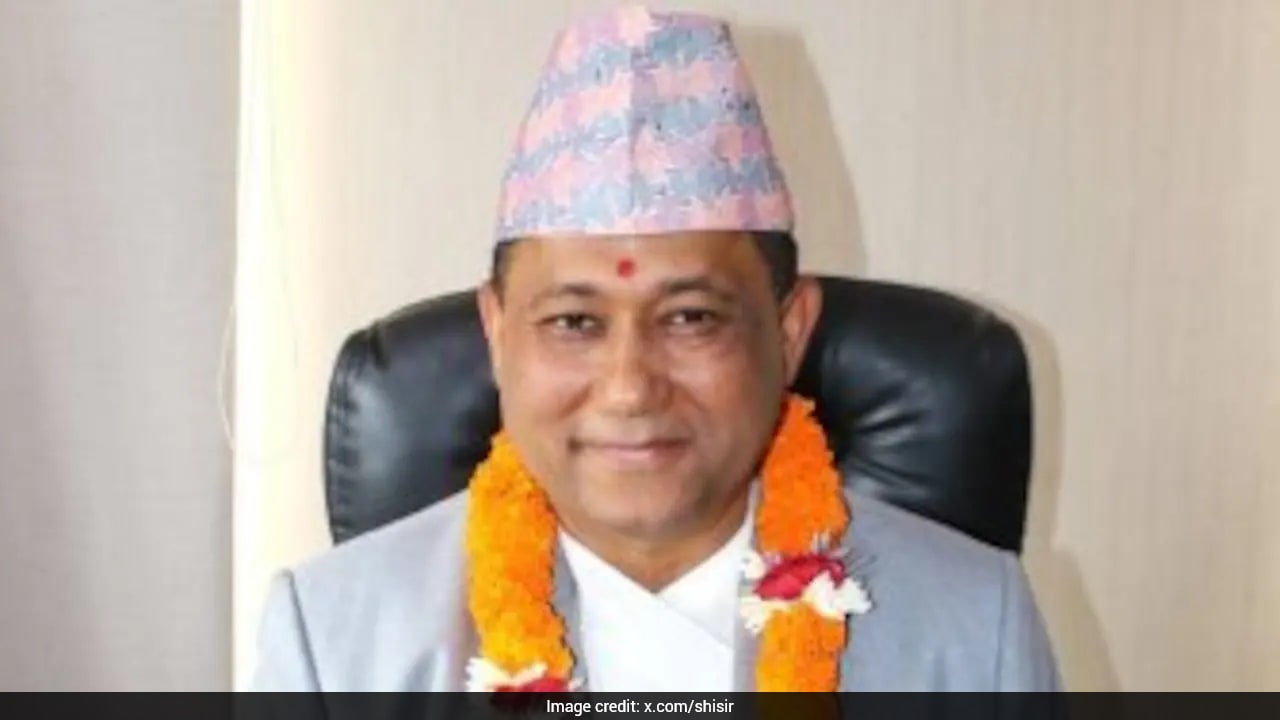
High-level bilateral visits between Kathmandu and New Delhi are rarely what they seem. When Nepal’s Foreign Minister Shisir Khanal crossed the border for a three-day official visit to New Delhi, public statements leaned heavily on the vocabulary of friendship, neighborhood-first diplomacy, and mutual economic cooperation.
But behind the scripted handshakes and talk of energy grids, the reality is far more strained. The primary driver of this diplomatic sprint is an escalating domestic political crisis in Kathmandu, weaponized by a long-standing cartographic war over the Kalapani, Lipulekh, and Limpiyadhura border territories.
New Delhi is not looking for a radical shift in its regional stance; instead, it is managing a fragile status quo. For Nepal, the visit is a high-stakes calculation designed to ease domestic political pressure by proving the current government can handle its imposing southern neighbor.
The Boundary Trap
Every diplomatic engagement between India and Nepal eventually collides with the reality of their shared 1,751-kilometer frontier. The core friction stems from a 2020 map amendment passed by the Nepali parliament, which legally claimed 370 square kilometers of land controlled by India since the 1962 Sino-Indian War.
[India-Nepal Border: Key Geopolitical Friction Points]
      |
      +---> Western Tri-junction: Kalapani, Lipulekh, Limpiyadhura (High-altitude strategic ridge)
      |
      +---> Southern Riverine Border: Susta (Shifting course of the Gandak River)
      |
      +---> Technical Maintenance: Boundary Working Group (Over 3,000 missing or broken pillars)
By turning a historical border ambiguity into a matter of constitutional law, Kathmandu locked itself into a position that leaves no room for diplomatic retreat. New Delhi viewed the unilateral cartographic change as a hostile act driven by internal political posturing rather than historical consensus.
The technical mechanisms intended to handle mundane border friction have ground to a halt under the weight of this dispute. The Boundary Working Group, established to repair thousands of missing or broken border pillars and clear the no-man's-land, has faced years of delays.
While Indian and Nepali officials agree on paper to resume technical discussions, these meetings deliberately exclude the disputed high-altitude tracts of Susta and Kalapani. Technical fixes cannot bridge a gap created by constitutional mandates.
Kathmandu Political Vulnerability
The timing of this diplomatic push is not accidental. The current government in Kathmandu, led by Prime Minister Balendra Shah, has faced intense pressure since taking office.
In Kathmandu’s volatile political theater, anti-India sentiment is a reliable tool for shifting public focus away from domestic failures. Just days before the Foreign Minister's departure, Prime Minister Shah stirred controversy in parliament by revealing that Kathmandu was discussing the border dispute with both China and the United Kingdom.
New Delhi responded swiftly, categorically rejecting any third-party mediation in what it considers a strictly bilateral matter. The move by the Nepali leadership highlighted a deeper insecurity: the fear that an inability to challenge India on the border would be seen by voters as a surrender of national sovereignty.
By sending the Foreign Minister to New Delhi immediately after these statements, Kathmandu attempted a difficult political maneuver. It sought to satisfy domestic nationalists with strong rhetoric at home, while quietly reassuring India behind closed doors that it remains a predictable partner.
The Leverage Balance
While political leaders focus on territorial sovereign lines, economic realities tell a completely different story. Nepal depends heavily on India for transit routes, fuel imports, and access to regional markets.
[The Structural Asymmetry]
+-----------------------------------+-----------------------------------+
| Nepal's Strategic Demands         | India's Regional Priorities       |
+-----------------------------------+-----------------------------------+
| • Resolution of Kalapani/Susta    | • Bilateral-only negotiations     |
| • Additional air entry routes     | • Security of the open border     |
| • Access to Indian energy markets | • Exclusion of third-party actors |
+-----------------------------------+-----------------------------------+
Kathmandu has repeatedly requested additional air entry routes through Indian airspace to ensure the commercial viability of its new international airports in Pokhara and Bhairahawa. New Delhi, citing air defense and security concerns, has delayed granting these approvals.
The asymmetry extends directly into the energy sector. Nepal’s long-term plan to export surplus hydropower to India and Bangladesh relies entirely on Indian grid infrastructure and regulatory approval.
New Delhi has made it clear that it will not purchase electricity from projects developed with Chinese investment or construction involvement. This restriction limits Kathmandu's economic options, forcing it to choose between Chinese infrastructure capital and access to the Indian energy market.
Managing the Open Border
The unique feature of the India-Nepal relationship is the open border established by the 1950 Treaty of Peace and Friendship. This treaty allows millions of citizens to cross, work, and live on either side without visas.
Yet, this open frontier is becoming an administrative burden. Indian security agencies view the porous border as a vulnerability for cross-border crime and smuggling, while Nepali nationalist factions argue the 1950 treaty is unequal and outdated.
Attempts to revise the treaty have failed repeatedly. The Eminent Persons Group, a joint panel tasked with drafting recommendations to update bilateral relations, submitted a comprehensive report years ago that has yet to be formally accepted by New Delhi.
The reluctance to open that report shows an understanding that any attempt to rewrite the legal foundation of the relationship risks creating more problems than it solves. Instead, both capitals prefer an unwritten arrangement: managing day-to-day issues through quiet security channels while avoiding sweeping structural reforms.
The Geopolitical Shadow
The bilateral friction between New Delhi and Kathmandu does not occur in isolation; it is constantly shaped by a larger competition for influence across the Himalayas. Kathmandu has tried to play a delicate balancing game, using Chinese infrastructure offers under the Belt and Road Initiative to gain leverage in negotiations with India.
This strategy has its limits. Beijing can offer loans for tunnels, airports, and highways, but it cannot replace the geographical reality of Nepal’s southern plains, which connect the country directly to global shipping lanes through Indian ports.
New Delhi understands this geographic dependence. Rather than competing directly with every Chinese investment project, India has focused its resources on cross-border oil pipelines, integrated check posts, and railway links designed to keep Nepal's economy tied to the south.
The outcome of these diplomatic talks will not be a sudden resolution of the border dispute or a radical rewriting of bilateral treaties. Success will look much more modest: keeping cross-border trade moving, preventing minor border incidents from turning into national crises, and maintaining communication channels open.
For the veteran diplomats sitting across from each other in New Delhi, the goal is not to solve the underlying contradictions of the relationship, but to manage them well enough to prevent a total breakdown.
Nepal's Foreign Minister can return to Kathmandu claiming to have raised the border issue at the highest levels, satisfying domestic critics for the moment. New Delhi can reassure its security establishment that the open border remains stable and that third-party influence has been kept in check.
The underlying structural issues—the constitutional map amendment, the unequal trade balance, and the unresolved high-altitude border lines—remain unchanged, waiting for the next political crisis in Kathmandu to bring them back to the surface.