Foreign direct investment data is the ultimate vanity metric for European politicians. Every year, the EY European Attractiveness Survey drops, and like clockwork, Paris erupts in celebration. The headlines write themselves: France retains the top spot for foreign investment projects in Europe, beating out the United Kingdom and Germany for the fifth consecutive year. Economists pop champagne. Government officials tweet self-congratulatory threads about the success of supply-side reforms and pro-business policies.
It is a beautiful narrative. It is also completely detached from economic reality.
Measuring economic health by counting individual foreign investment projects is like judging a tech company's success by how many lines of code its engineers write. It tracks activity, not value. While France tops the podium in project count, the underlying data reveals a structural weakness that should terrify anyone betting on the country's long-term economic dominance. France is winning the battle for small-scale press releases while losing the war for massive, transformative capital allocation.
The Project Count Delusion
To understand why the EY ranking is misleading, you have to look at how the data is compiled. EY counts the number of announced foreign direct investment (FDI) projects. It does not weight them by the actual dollar value of the investment or the long-term wealth generated.
A logistics hub that creates 50 low-wage warehouse jobs counts exactly the same as a multi-billion-dollar semiconductor fabrication plant or a global corporate headquarters.
When you strip away the raw project numbers and look at capital expenditure (CapEx) and job creation per project, the illusion evaporates. According to historical FDI data from the United Nations Conference on Trade and Development (UNCTAD) and fDi Markets, the United Kingdom and Germany consistently outperform France in total capital invested, despite hosting fewer individual projects.
I have sat in boardrooms where these expansion decisions are made. When a multinational corporation wants to open a small regional sales office or a minor assembly node, France is highly competitive. The infrastructure is excellent, and the geographical location is perfect. But when it comes to dropping €5 billion on a massive manufacturing complex or an advanced R&D ecosystem, the conversation changes rapidly.
The reality is stark: France specializes in small, fragmented investments. The country is piling up a high volume of low-calorie projects, while its neighbors pull in the heavy, high-yield capital.
The High-Tax, High-Subsidy Trap
Why does this asymmetry exist? It is the direct result of a highly distortionary economic policy that relies on massive state subsidies to offset systemic structural costs.
France has made undeniable strides under recent administrations. Corporate tax rates were lowered from over 33% to 25%, and the pacte de responsabilité eased some production taxes. But the structural core of the French economy remains deeply hostile to high-value capital.
- Production Taxes: Even after recent reductions, France’s taxes on production (taxes levied on companies simply for existing and operating, regardless of profit) remain multiple times higher than the European average.
- Labor Inflexibility: The cost of labor is not just the net salary; it is the staggering employer social security contributions and the permanent regulatory friction of down-scaling a workforce if market conditions change.
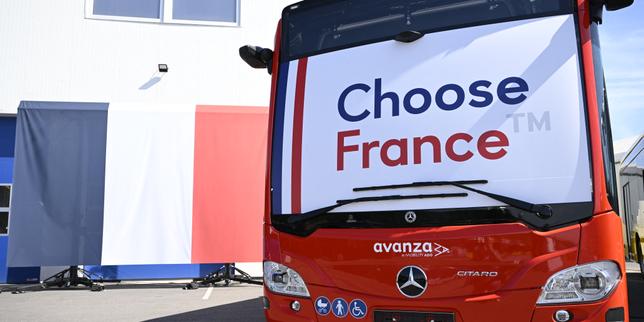
To overcome these barriers and secure headline-grabbing project announcements, the French state uses a mechanism I call the subsidy illusion. By deploying billions in state aid, direct grants, and tax credits through initiatives like "Choose France," the government artificially inflates the profitability of choosing French sites.
Imagine a scenario where a foreign tech giant requires a €1 billion investment. If Germany offers a stable regulatory framework and lower baseline operating costs, France must counter with massive upfront subsidies to close the gap. The project lands in France, the government claims victory in the EY rankings, but the taxpayer foots the bill for a project that would have been unviable on its own merits.
This strategy creates a brittle investment ecosystem. It attracts companies that are optimizing for short-term government handouts rather than long-term economic efficiency. The moment the subsidies dry up, or a more aggressive fiscal package is offered elsewhere, that capital has no structural reason to stay.
Small Warehouses vs. Massive Factories
Let us look at the nature of the projects France attracts versus its competitors. A disproportionate share of French FDI projects centers on logistics, distribution, and minor expansions of existing assembly lines.
Logistics centers are cheap to set up and easy to count as an FDI win. But they possess incredibly low capital intensity. They require vast amounts of land, offer low profit margins, and create jobs that are highly vulnerable to automation.
In contrast, Germany’s fewer projects are heavily weighted toward deep industrial manufacturing, automotive supply chains, and heavy engineering. The United Kingdom dominates in high-value services, venture capital inflows, and global corporate headquarters.
When a company establishes a global headquarters in London, it brings high-paying executive roles, professional services demand, and massive tax revenues. When a company opens a fulfillment center in the outer suburbs of Lyon, it creates minimum-wage temporary jobs and heavy traffic on state-funded highways.
By celebrating the sheer quantity of projects, France is masking a systemic failure to attract the types of investment that drive real productivity growth. Productivity is the engine of rising living standards. Chasing low-value projects to win a vanity ranking does nothing to solve France's stagnant productivity growth or its chronic balance of trade deficit.
Dismantling the Deceptive "People Also Ask" Consensus
Public discourse around European investment is filled with bad premises that need to be aggressively dismantled.
Does a high number of FDI projects mean an economy is healthy?
Absolutely not. It means an economy is active, which is not the same thing. If a country breaks up a single €500 million manufacturing plant into ten separate €10 million logistics nodes, its project count skyrockets tenfold, but its economic value drops precipitously. True economic health is measured by gross fixed capital formation, productivity gains, and net export growth. On these metrics, France’s top spot in the EY index is a distraction.
Did Brexit permanently destroy the UK’s investment appeal compared to France?
This is the favorite narrative of continental commentators, but it ignores how capital actually behaves. While Brexit created undeniable regulatory friction for goods, it did not destroy the UK’s structural advantages in capital allocation. The UK still attracts significantly more venture capital funding than France and Germany combined. London remains the undisputed financial capital of Europe, commanding a concentration of liquidity and corporate decision-makers that Paris cannot match with subsidies alone.
Are labor reforms making France the best place in Europe to do business?
The reforms eased the administrative burden of firing, but they did not transform the fundamental cost structure. France remains a high-cost, highly regulated environment. The state still spends over 55% of its GDP, funded by one of the highest tax-to-GDP ratios in the OECD. You cannot claim to be the best place to do business when your baseline regulatory and fiscal burden requires constant state intervention to make projects financially viable.
The Sovereign Wealth Paradox
There is a final, cynical truth that nobody in Paris wants to acknowledge: the money entering France is rarely the kind of sticky, long-term capital that builds generational industries.
True investment quality is defined by its resilience to economic shocks. When interest rates rise or global growth slows, speculative and subsidy-driven capital flees first. Deep, structural capital—the kind invested in sovereign infrastructure, deep-tech research ecosystems, and core industrial capacity—stays put.
Because France’s attractiveness is heavily propped up by political will and temporary financial incentives, it is highly sensitive to political risk. The moment a government faces a fiscal crisis and is forced to scale back business tax cuts or subsidy programs, the economic model underlying these FDI projects crumbles.
Look at the corporate bond yields and the rising cost of French sovereign debt relative to Germany. The markets are already pricing in the reality that France’s public-spending-fueled growth model is hitting a wall. You cannot fund business incentives indefinitely using borrowed money while running structural budget deficits that breach European treaty limits year after year.
Stop Counting Projects, Start Counting Value
The obsession with the EY ranking has created a dangerous feedback loop. It convinces policymakers that their work is done, preventing them from tackling the deep, painful structural reforms the country actually needs.
If France wants to convert its superficial attractiveness into actual economic power, it must abandon the chase for raw project volume.
Stop subsidizing international corporations to build warehouses. Eliminate the production taxes that cripple domestic industrial companies before they even turn a profit. Reform the rigid collective bargaining structures that make scaling a business a bureaucratic nightmare.
Until that happens, Germany and the United Kingdom will continue to let France win the beauty contest, while they quietly pocket the real wealth. Stop celebrating the headcount. Look at the balance sheet.


