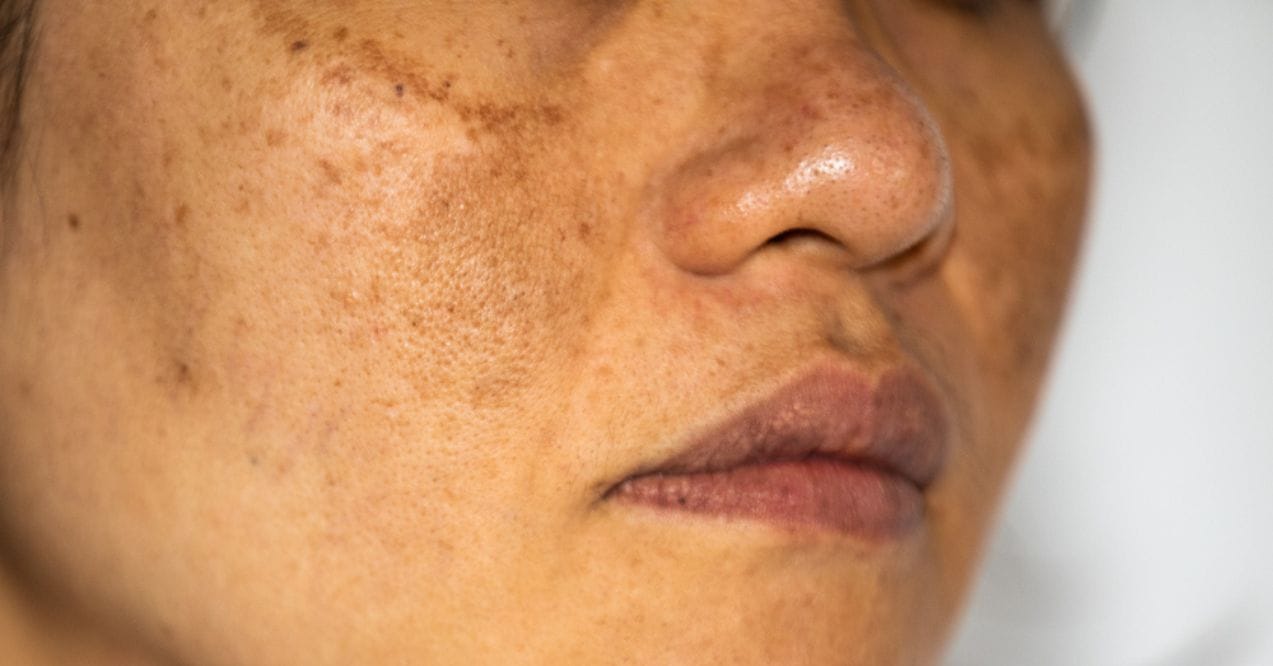
You look in the mirror and there it is. Again. That stubborn brown spot from a breakout three months ago or that "sun mustache" that seems to darken the second you step outside. It’s frustrating. You’ve bought the serums, you’ve watched the TikToks, and now you’re staring at your reflection wondering: how long does it take hyperpigmentation to go away?
The short answer? A while.
The long answer involves a complex dance of skin cell turnover, inflammatory triggers, and how well you actually wear your sunscreen. It’s not an overnight fix. If a product promises to erase dark spots in three days, they’re lying to you. Skin doesn't work that way. Your epidermis—the top layer—takes roughly 28 to 40 days to renew itself. If the pigment is buried deeper, you're looking at a much longer timeline.
Understanding the Clock: Why Some Spots Fade Faster
Hyperpigmentation isn't just one thing. It’s a broad umbrella for "too much melanin." To figure out the timeline, you have to identify what kind you're dealing with.
Post-Inflammatory Hyperpigmentation (PIH) is the most common. This is the "ghost of acne past." When your skin gets injured—like from a pimple or a scratch—it sends melanocytes into overdrive. If the spot is pink or red, it’s actually Post-Inflammatory Erythema (PIE), which is a vascular issue, not pigment. But if it’s brown or black, that’s PIH. Generally, PIH can take anywhere from 3 to 24 months to fade completely without treatment. Yeah, two years. It’s a long game.
Then there’s Melasma. This is the "final boss" of skin discoloration. It’s often hormonal—linked to pregnancy or birth control—and it’s incredibly heat-sensitive. Because the trigger is internal, melasma might never "go away" in the traditional sense; it’s more about management. You might see improvement in 6 to 12 months with strict intervention, but a single unprotected day at the beach can bring it all back.
Sun spots (lentigines) are different. These are permanent DNA damage to the skin cells. They won't just fade on their own because the cell itself is now programmed to produce more pigment. You basically have to blast these off with lasers or high-strength chemical peels.
The Science of Fading: What’s Actually Happening?
When we talk about how long it takes for these spots to vanish, we’re talking about the desquamation process. Your skin is like a conveyor belt. New cells are born at the bottom (the basal layer) and slowly move up to the surface where they eventually flake off.
Melanin gets "dumped" into these cells. To get rid of the spot, you have to wait for every single melanin-heavy cell to reach the surface and leave the building.
If you are 20 years old, this happens fast. If you are 50, your "conveyor belt" has slowed down significantly. This is why older skin takes much longer to heal. According to the American Academy of Dermatology, even when the cause of the dark spots is found and stopped, fading can take time. A spot that is a few shades darker than your natural skin tone will usually fade within 6 to 12 months. However, if the color lies deep in your skin (dermal hyperpigmentation), it can take years to fade.
Ingredients That Actually Move the Needle
You can’t just wish the pigment away. You need a multi-pronged approach. Experts like Dr. Shereene Idriss, a prominent dermatologist known for her expertise in discoloration, often emphasize the "sandwich" method: inhibit, treat, and protect.
The Inhibitors You need ingredients that tell your melanocytes to pipe down. Tyrosinase inhibitors are the gold standard here.
- Hydroquinone: The heavy hitter. It’s been the gold standard for decades, though it's controversial and should only be used for short bursts (3 months on, 3 months off) to avoid ochronosis—a blue-black darkening of the skin.
- Alpha Arbutin: A derivative of hydroquinone that’s much gentler and safe for long-term use.
- Kojic Acid: Derived from fungi, it’s great for brightening but can be irritating for sensitive types.
- Tranexamic Acid: This is a rising star in dermatology. It's particularly effective for melasma because it interferes with the pathway between keratinocytes and melanocytes.
The Speed-Walkers These ingredients don't stop pigment; they just speed up the conveyor belt so the pigmented cells leave faster.
- Retinoids (Tretinoin, Retinol): These increase cell turnover. If you start a prescription retinoid today, don't expect to see the "faded" result for at least 12 weeks.
- AHA (Glycolic or Lactic Acid): These dissolve the "glue" holding dead skin cells together. Using a 10% glycolic acid serum twice a week can shave weeks off your timeline.
The Brighteners
- Vitamin C (L-Ascorbic Acid): It’s an antioxidant that neutralizes free radicals from UV light, which prevents new spots from forming while slowly brightening existing ones.
Why Your Spots Aren't Fading
It's been six months. You've used the serums. Why is the hyperpigmentation still there?
Usually, it's the sun. This is the part people hate hearing. You can use $500 creams, but if you aren't wearing a broad-spectrum SPF 30+ every single day—even when it's raining, even when you're inside near a window—you are wasting your money. UV rays trigger melanocytes. Even five minutes of exposure can "recharge" a fading spot.
Secondly, you might be too aggressive. If you use too many acids and ruin your skin barrier, you cause more inflammation. More inflammation equals more pigment. It’s a vicious cycle. If your skin is peeling, red, or stinging, you are actually making your hyperpigmentation worse.
There's also the "depth" factor. Dermatologists use a tool called a Wood’s Lamp to see how deep the pigment goes. If the pigment is in the dermis (the deeper layer), topical creams literally cannot reach it. In those cases, you're looking at professional help.
Professional Treatments: The Fast Track?
If you want to cut the "how long does it take" question in half, you go to a clinic.
Chemical Peels A series of VI Peels or high-strength TCA peels can lift pigment much faster than over-the-counter products. You’ll usually need 3 to 6 sessions spaced a month apart. Total time: 4 to 6 months.
Laser Therapy PicoSure or Q-switched lasers target the melanin directly, shattering it into tiny particles that your body’s immune system then hauls away. It’s effective, but risky for deeper skin tones (Fitzpatrick scales IV-VI) as the heat can actually cause more hyperpigmentation.
Microneedling By creating micro-injuries, you force the skin to rebuild. When combined with "depigmenting" serums (often called a "vampire facial" or similar), it can significantly accelerate the fading of PIH.
The Reality Check
Let’s be real. Hyperpigmentation is a journey, not a destination. Your skin is a living organ, and it reacts to the environment.
The timeline for how long does it take hyperpigmentation to go away basically looks like this:
- Initial Brightening: 4–6 weeks (improved skin texture and "glow").
- Noticeable Fading: 3 months (the spots are lighter, easier to cover with makeup).
- Significant Clearance: 6–12 months (most PIH is gone).
- Deep Pigment/Melasma: 12+ months or ongoing maintenance.
Actionable Steps for Faster Fading
Stop picking your face. Seriously. Every time you squeeze a blemish, you are guaranteeing a dark spot that will last six months. It’s a bad trade for ten seconds of satisfaction.
- Morning Defense: Apply a Vitamin C serum followed by a tinted sunscreen. Why tinted? Tinted sunscreens contain iron oxides, which protect against blue light (HEV). Research shows blue light significantly worsens melasma and hyperpigmentation in darker skin tones.
- Evening Treatment: Use a tyrosinase inhibitor (like Alpha Arbutin or Tranexamic Acid) and a retinoid.
- Exfoliate Wisely: Use a chemical exfoliant (AHA) once or twice a week. Don't scrub your face with walnut shells; you're not sanding a deck.
- Cool it down: If you have melasma, avoid saunas, hot yoga, and even steam from the oven. Heat dilates blood vessels, which can trigger pigment production.
- Track Progress: Take a photo in the same lighting once a month. You won't notice the change day-to-day, but the 90-day comparison will usually surprise you.
If you’ve hit the six-month mark with zero change despite using SPF and actives, book an appointment with a board-certified dermatologist. You might be dealing with something that requires prescription-strength 4% Hydroquinone or a specific laser wavelength that you just can't get at Sephora.
Patience is the hardest ingredient to apply, but it's the only one that actually works. Give your skin the time it needs to cycle through the damage. Stick to the routine even when it feels like nothing is happening. Consistency is the difference between a spot that stays forever and one that finally disappears.