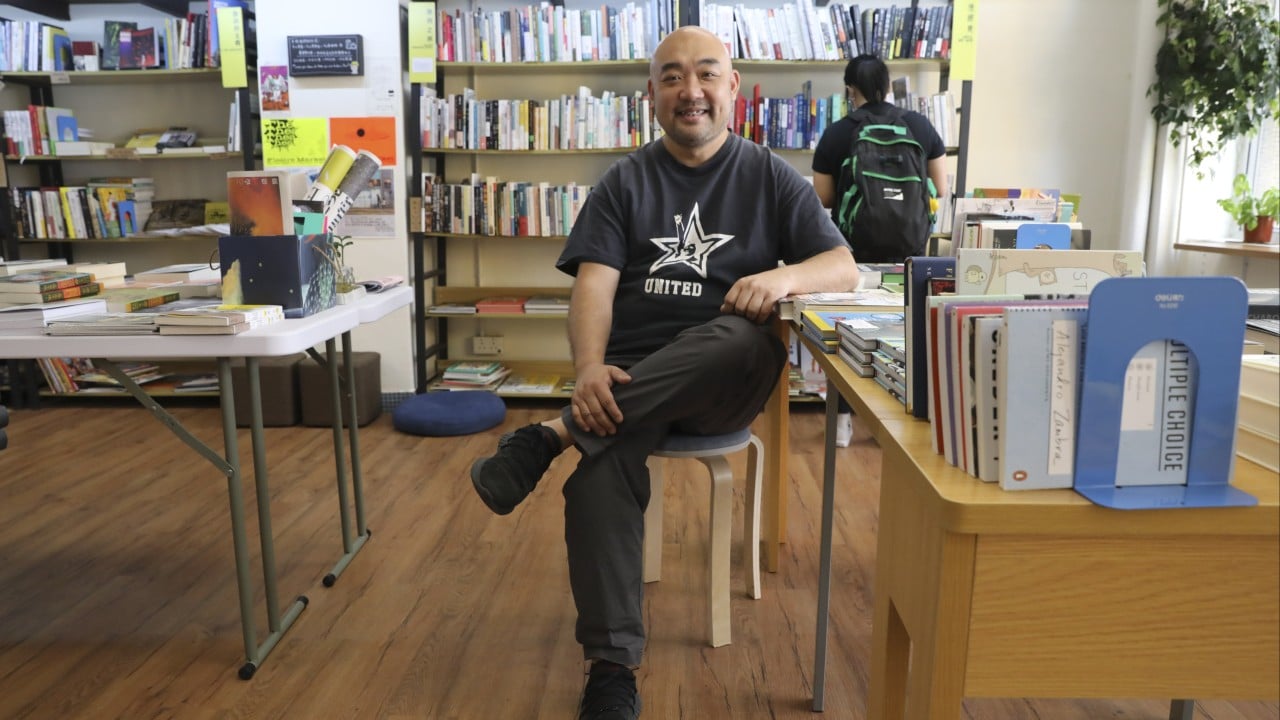
Running a small business in Hong Kong used to be about survival in a high-rent jungle. Now, it's about navigating a legal minefield where a simple "interest class" can suddenly become a criminal offense. Pong Yat-ming, the owner of the independent bookstore Book Punch, just found this out the hard way. He was slapped with a HK$32,000 fine at Kowloon City Magistrates' Courts because he used his shop as an "unregistered school."
The logic? He hosted a Spanish language course. For most people, that sounds like a standard community event. For the Education Bureau, it was a breach of the Education Ordinance. If you think this is just about one guy and some Spanish textbooks, you're missing the bigger picture.
The Fine Line Between a Workshop and a School
Under Hong Kong law, the definition of a "school" is surprisingly broad. According to the Education Ordinance, any institution providing "educational courses" for 20 or more people in a single day—or eight or more people at any one time—technically needs to register as a school.
Pong argued that his Spanish class was an "interest class," not a formal academic program. He didn't provide certificates. He didn't hold exams. He was basically just a guy in a bookstore facilitating learning. The court didn't care. Magistrate Philip Chan Chee-fai ruled that since the class involved a curriculum and a teacher-student dynamic, it crossed the line.
Here’s the breakdown of the charges Pong faced:
- Managing an unregistered school: The primary charge for the shop's operation.
- Permitting an unregistered teacher: Antonio Baro Montane, the instructor, wasn't a "permitted teacher" under the bureau's strict standards.
- Operating a business on unregistered premises: Specifically for educational purposes.
The Cost of Cultural Survival
Pong didn't just get hit with a bill; his parent company, Active Experiential Learning Company, was also fined. This isn't pocket change for a small bookstore. In Hong Kong’s current climate, independent bookstores are already struggling with rising costs and a shrinking space for public discourse.
Book Punch has been a target before. The shop previously reported "anonymous and false complaints" that led to constant government inspections. This pattern isn't unique to them. Mount Zero, another beloved independent shop, closed its doors in 2024 after being hounded by authorities over a tiny tiled platform outside its entrance.
When you look at these cases together, it feels less like "administrative oversight" and more like a targeted squeeze. The government says they're just enforcing the law. The shop owners say they're being suffocated by bureaucracy.
What You Need to Know to Stay Legal
If you’re running a gallery, a bookstore, or even a co-working space that hosts workshops, you're now in the crosshairs. You can’t just wing it anymore. Here’s how the Education Bureau determines if you’re a "school":
- The Rule of Eight: If you have eight people learning something at the same time, you're legally a school.
- The Curriculum Factor: If there’s a structured syllabus, the authorities will argue it’s formal education, even if you call it a "hobby group."
- Teacher Qualifications: You can’t just hire a native speaker or an expert. Teachers must be registered with the Education Bureau to teach in a "school" setting.
The penalty for getting this wrong is steep. While Pong was fined HK$32,000, the maximum penalty under the Ordinance is a HK$250,000 fine and two years in prison.
The Reality of "Soft Resistance"
We have to talk about the political backdrop. Pro-Beijing media outlets like Wen Wei Po have openly labeled independent bookstores as hubs for "soft resistance." While the charges against Pong were strictly about school registration, it's hard to separate the legal pressure from the broader crackdown on independent cultural spaces.
When authorities start calling local principals to ask if their teachers are bringing students to specific bookstores—as happened with Book Punch—it sends a clear chill through the community. It’s a strategy of exhaustion. If the government can’t find a major crime, they’ll find a dozen minor administrative ones until the business simply can't afford to stay open.
Protecting Your Space
If you host events in Hong Kong, you need to audit your operations immediately. Don't assume that because you aren't a "tutorial center," the rules don't apply.
- Keep your "interest classes" small—fewer than eight people at any given moment.
- Avoid using terms like "curriculum," "enrolment," or "student" in your marketing.
- Check your land lease. Most commercial leases don't permit "educational" use without a specific waiver.
The era of the "informal community hub" in Hong Kong is effectively over. If you want to run a space that involves people learning things, you either need to go through the grueling process of school registration or keep your head down and your numbers low. Pong Yat-ming's fine is a warning shot to everyone else. The law is being used as a precision tool, and right now, it’s pointed directly at the city's remaining independent voices.