The numbers coming out of Port-au-Prince are no longer just statistics. They are an indictment. When the United Nations reports that over 5,500 people have been killed in a ten-month span, they are describing a country where the very concept of a state has evaporated. This isn't just a "security crisis" or a "spasm of violence." It is a calculated takeover of a nation by criminal federations that have found there is more profit in chaos than in order. While the world looks at the body count, it misses the structural rot that allowed these gangs to become the primary providers of governance, justice, and death.
The violence has reached a level that surpasses many active war zones. Between January and October, the attrition of human life in Haiti has averaged nearly 18 deaths every single day. But to understand why the streets are running red, we have to look past the bullets. We have to look at the collapse of the legal economy and the rise of a "protection" economy that has turned every neighborhood into a fiefdom.
The Architecture of Criminal Control
The gangs in Haiti, specifically the Viv Ansanm coalition, are not merely groups of disaffected youth with small arms. They are paramilitary organizations with sophisticated logistics chains. They control the ports. They control the fuel terminals. They control the roads that connect the capital to the rest of the country. This isn't random. By choking the supply lines, the gangs have created a vacuum where they decide who eats, who moves, and who lives.
The UN’s alarm over "alarmant levels of gang violence" focuses on the brutality—the kidnappings, the use of sexual violence as a tool of territorial control, and the indiscriminate firing into crowded slums. However, the deeper issue is the total displacement of the Haitian National Police (PNH). With fewer than 10,000 active officers for a population of over 11 million, the math of survival is weighted heavily in favor of the criminals. In many districts, the police haven't just lost the fight; they have ceased to exist as a presence.
The Failed Promise of International Intervention
There was a hope, perhaps naive, that the Multinational Security Support (MSS) mission led by Kenya would turn the tide. It hasn't. The mission remains chronically underfunded and understaffed. A few hundred police officers from Nairobi patrolling the main boulevards cannot dismantle a criminal infrastructure that has been decades in the making. The gangs watched the arrival of foreign boots, tested their resolve with sniper fire and coordinated attacks on the airport, and realized the intervention lacked the mandate or the muscle to clear the "red zones."
Critics of the current approach argue that the international community is trying to put out a forest fire with a garden hose. The MSS was designed as a stopgap, but it is being treated as a solution. Without a massive infusion of resources—specifically armored vehicles, aerial surveillance, and a functional judiciary to process the thousands of arrests needed—the mission is little more than a high-stakes security detail for government buildings.
The Weaponization of Hunger
One of the most overlooked factors in the current death toll is the link between violence and the total collapse of the food supply. When gangs control the highways leading to the Artibonite Valley, Haiti’s breadbasket, they aren't just stealing trucks. They are weaponizing starvation. Nearly half the population is facing acute food insecurity. In the slums of Cité Soleil, the choice is often between joining a gang for a daily meal or watching your family waste away.
This recruitment pipeline is what makes the violence so resilient. For a teenager in Port-au-Prince, the gang is the only employer left. It offers a weapon, a sense of belonging, and a paycheck derived from the misery of their neighbors. Until the economic incentive to hold a rifle is lower than the incentive to work a legitimate job, the body count will continue to rise regardless of how many "urgent alerts" the UN issues.
Beyond the Body Count
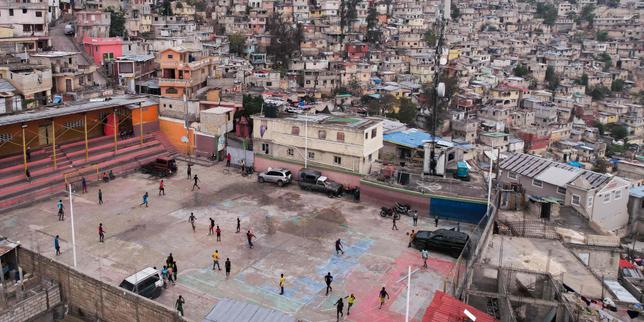
While the 5,500 deaths capture the headlines, the number of displaced people tells a more harrowing story of the future. Over 700,000 Haitians have fled their homes. They are living in makeshift camps, schoolrooms, and public parks. This mass internal migration has destroyed the social fabric of the country. When a neighborhood is emptied, the gang moves in, burns the records, and claims the land. This is a permanent redistribution of property and power through fire.
The judicial system is a ghost. In the rare instances where gang members are captured, there is nowhere to hold them and no judges brave enough to try them. The prisons are either overcrowded pits of despair or have been emptied by mass jailbreaks orchestrated by the gangs themselves. This total absence of consequences has created a culture of impunity where the most violent actors are the most rewarded.
The Political Deadlock
None of this happens in a vacuum. The violence is inextricably linked to the political paralysis in Port-au-Prince. The Transitional Presidential Council (TPC) is struggling to find its footing amidst internal bickering and the immense pressure of organizing elections in a country where it isn't safe to walk to a polling station. The gangs know this. They have signaled that they want a seat at the table. Jimmy "Barbecue" Chérizier and other gang leaders have moved from being mere thugs to political actors, demanding amnesty and a role in the "new Haiti."
The international community is terrified of this prospect, yet they have no alternative. You cannot have a democracy without security, and you cannot have security when the state’s monopoly on force has been surrendered to a coalition of kidnappers and narco-traffickers.
The Logistics of the Nightmare
Where do the guns come from? This is the question that few in power want to address with the necessary aggression. Despite an international arms embargo, high-powered rifles and ammunition flow into Haiti’s private ports with staggering regularity. Most of these weapons originate in the United States, specifically Florida. They are hidden in shipping containers, disguised as humanitarian aid or household goods.
Until there is a serious, sustained effort to cut off the iron flow of weaponry, the PNH and the MSS will always be outgunned. The gangs are currently using .50 caliber sniper rifles and automatic weapons that can pierce the light armor of police vehicles. It is a lopsided war. The UN can track the deaths, but until the global community tracks the serial numbers on the shells being picked up off the pavement, the cycle remains unbroken.
The Cost of Apathy
The danger of the "5,500 dead" narrative is that it breeds a sense of inevitability. The world becomes numb to the tragedy of Haiti, dismissing it as a failed state beyond repair. This apathy is exactly what the gang federations rely on. They thrive in the shadows of international indifference.
The current strategy of "containment"—trying to keep the violence within Haiti's borders while providing minimal support—is failing. It ignores the reality that the collapse of Haiti is a regional catastrophe. It fuels the migration crisis, strengthens Caribbean smuggling routes, and creates a massive black hole in the Western Hemisphere where law and order go to die.
Fixing this requires more than just another round of humanitarian aid that will likely be hijacked at the docks. It requires a fundamental rebuilding of the Haitian state from the ground up, starting with a security apparatus that can actually hold territory. It means treating the gang leaders not as political rebels, but as transnational criminal insurgents.
The human toll is more than just a figure in a report. It represents the erasure of a generation. Every one of those 5,500 people had a life, a family, and a role in a society that failed its most basic duty: the protection of its citizens. As the sun sets over Port-au-Prince, the sound of gunfire is a reminder that in the absence of a state, the strongest and the most cruel become the law. The time for "monitoring" the situation has long since passed. The state isn't just failing; it has been dismantled, piece by piece, while the world watched the data points rise.
The only way forward is a massive, sustained, and well-funded intervention that prioritizes the restoration of the rule of law over the optics of a quick exit. Anything less is just waiting for the next ten-month report to tell us how many more thousands have been lost to the silence.