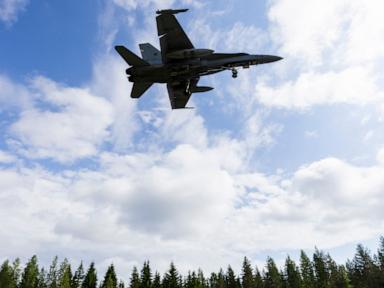
The Pentagon finally stopped polite diplomatic stalling and gave European leaders a hard dose of mathematical reality. Washington is scaling down the military hardware it commits to NATO's core defense model. Aircraft carriers, submarines, dozens of fighter jets, and crucial aerial refueling tankers are being crossed off the transatlantic availability list. The United States is reallocating these high-end assets to prepare for potential conflict with China in the Indo-Pacific, forcing Europe to scramble to fill the void.
For decades, European capitals treated American military protection as an infinite resource. It was a convenient political arrangement that allowed continental governments to fund generous welfare states while letting Washington foot the bill for high-intensity warfighting readiness. That era has officially ended.
The High End Deficit
The current crisis inside NATO is not a dispute over money, despite what political speeches suggest. It is a structural failure of physical capabilities. While European nations have recently promised massive increases in defense spending, those numbers on a ledger cannot immediately materialize into complex military hardware.
The immediate issue centers on what military planners call strategic enablers. These are the invisible nervous systems of modern warfare:
- Airborne Early Warning and Control: Systems that detect incoming threats and coordinate air battles.
- Satellite Intelligence and Surveillance: Continuous, unblinking data feeds that reveal enemy troop movements long before an artillery shell is fired.
- Air-to-Air Refueling: The tankers that allow fighter jets to stay airborne long enough to protect vast frontlines.
Without these American-owned assets, Europe's domestic fleets of advanced fighter jets are functionally grounded or severely limited in operational range. A country can own hundreds of modern tanks, but they are vulnerable if there is no air superiority dome to protect them from above. Europe lacks the deep inventories of long-range precision missiles and the coordinated command structures required to operate independently.
The Paper Armor of Increased Budgets
European leaders frequently point to historic budget increases as proof of their commitment. Under intense American pressure, member states have pledged significant percentages of their gross domestic product to defense. Yet, this financial surge exposes a deeper structural pathology: extreme industrial fragmentation.
When the United States buys weapons, it buys thousands of identical units from a consolidated industrial base, driving down costs and ensuring total uniformity. When Europe buys weapons, it does so through the lens of domestic job creation and national industrial pride.
The continent operates multiple distinct designs for main battle tanks, different fighter jet programs, and a dozen variations of naval frigates. This lack of standardization means that a French mechanic cannot easily fix a German vehicle, and British ammunition cannot always be swapped into a continental artillery piece.
Money cannot buy immediate security when the factories required to build artillery shells and air defense missiles have been running on low-volume, peacetime schedules for thirty years. Expanding production lines requires specialized machinery, raw chemical supplies, and skilled labor—none of which can be conjured overnight by passing a budget bill in Paris or Berlin.
The Divided Front
The strategic withdrawal of American forces has triggered an internal political fracture along Europe's geographical lines. The alliance is split between those who face an immediate existential threat and those insulated by distance.
Eastern European nations, particularly Poland and the Baltic states, view the American pivot with deep alarm. They have spent the last few years aggressively purchasing equipment and fortifying borders. Their military doctrine focuses on absolute deterrence at the frontier—stopping an aggressive adversary on foreign territory to prevent the devastation of their own cities.
Western European powers, sitting safely behind a buffer of allied states, often view the situation through a more detached economic and diplomatic lens. They are less inclined to rapidly retool their entire economies for a wartime footing. This divergence creates a dangerous command dilemma. NATO relies on consensus, but consensus breaks down when member nations disagree on the level of risk they are willing to tolerate.
The Illusion of Strategic Autonomy
For years, theorists in Brussels have championed the concept of strategic autonomy—the idea that the continent could develop an independent military capacity to act when Washington chooses to sit out a conflict. The current American drawdowns prove that autonomy is no longer an intellectual luxury; it is a forced requirement.
True independence requires shared sovereignty, a single unified chain of command, and a consolidated defense industry. Under current treaties, European nations are nowhere near relinquishing national control over their armies to a central authority.
The American nuclear umbrella remains the ultimate geopolitical backstop. While France and the United Kingdom possess independent nuclear deterrents, their arsenals are structurally designed for national survival, not to provide an extended safety net over the entire continent. As long as Europe relies on Washington for strategic nuclear deterrence and satellite intelligence, any talk of true autonomy remains a hollow political talking point.
The upcoming summits will feature frantic attempts by European ministers to present a unified front. They will announce new joint procurement initiatives, promise expedited troop readiness models, and sign grand declarations.
The hard truth is that the American military machine is shifting its weight to the Pacific, and the vacant spots on Europe's airfields and naval docks will remain empty until the continent undergoes a painful, structural transformation of its societies and industrial priorities. Europe must build a self-sustaining defense pillar not to please an American administration, but because it no longer has an alternative.


