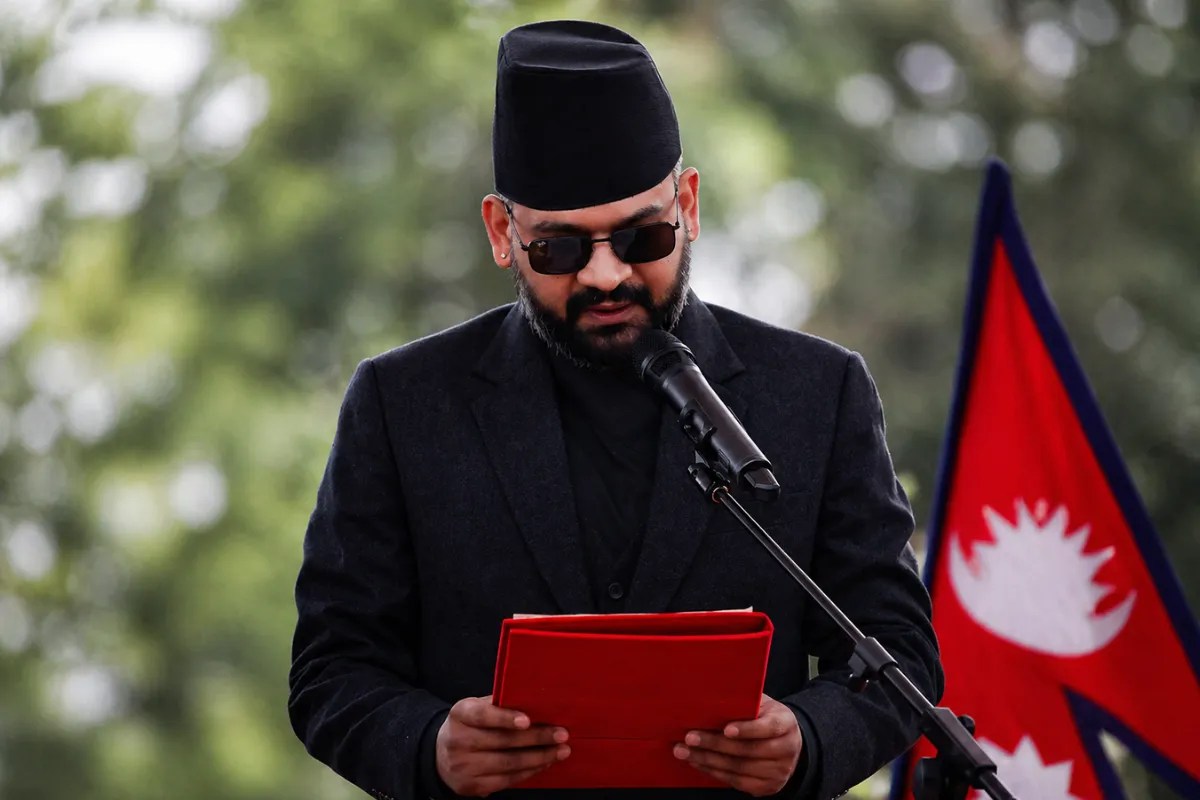
The dust in Kathmandu is a living thing. It clings to the throat, settles in the creases of your eyes, and turns the vibrant colors of the city into a muted, sepia memory. For years, the people of this valley inhaled that dust alongside a suffocating sense of stagnation. Then came the man with the black sunglasses.
Balen Shah was not a politician; he was a promise. He was the structural engineer who could fix the foundations and the rapper who could give the youth a voice. When he swept into office as Mayor, the energy in the streets was kinetic. It felt like the air had finally cleared. But one month is a long time in politics, and the honeymoon in Kathmandu hasn't just ended—it has crashed into the jagged reality of governance.
The Mirage of the Quick Fix
Consider a young street vendor named Ramesh. For him, the "Balen Wave" wasn't a political shift; it was a hope that he wouldn't have to keep playing a cat-and-mouse game with the city police. He voted for a modern Kathmandu, imagining a city that worked for everyone. Instead, he found himself watching his cart being hauled away during a sidewalk clearance drive.
Ramesh represents the invisible stakes of this administration. The logic of the Kathmandu Metropolitan City (KMC) is sound on paper: clear the footpaths to make the city walkable. Restore order. End the chaos. But when order is enforced with a heavy hand before a safety net is built, the "chaos" simply shifts from the street to the kitchen tables of the poor.
The early days of Balen’s tenure were marked by a flurry of activity that looked great on social media. Bulldozers moved. Illegal structures fell. The digital generation cheered from their smartphones. However, the applause is thinning. People are starting to realize that tearing something down is the easy part. Building the alternative is where the real work begins.
The Garbage Crisis and the Smell of Reality
Nothing humbles a revolutionary quite like trash.
For weeks, the stench of rotting organic waste has wafted through the alleyways of New Baneshwor and the courtyards of Patan. The Sisdole landfill, long a point of contention, became a symbol of the new administration’s first major hurdle. The villagers there, tired of being the city’s dumping ground, blocked the trucks.
Balen Shah stood in the mud, talking to protesters, trying to bridge a gap that has existed for decades. It was a moment of profound vulnerability. Here was the man who promised a high-tech, systematic overhaul, literally knee-deep in the failures of his predecessors.
The crisis revealed a hard truth: charisma cannot replace infrastructure. You can have the most visionary leader in the world, but if the pipes are broken and the landfill is full, the city will still smell. The frustration among Gen Z, his primary voting bloc, stems from a misunderstanding of time. They are used to the speed of a fiber-optic connection. They expected the city to "update" like an app. Instead, they are finding that government moves at the speed of a tectonic plate.
A Language Gap in the Halls of Power
There is a specific kind of silence that happens when a newcomer enters a room full of veterans. Balen Shah is navigating a bureaucracy that was designed to resist change. The KMC is staffed by people who have seen mayors come and go for thirty years. To them, he is a seasonal storm; they are the mountains.
His struggle isn't just with the opposition parties; it’s with the very machinery he is supposed to lead. There are whispers of a lack of coordination. Decisions are made, then walked back. Small business owners are confused about new tax regulations that seem to appear out of thin air.
The tension is most visible in the way the city handles its heritage. Kathmandu is not just a collection of buildings; it is a living museum. When the administration moves to "beautify" an area, there is a legitimate fear that the soul of the Newar culture—the intricate, messy, beautiful history of the valley—will be sacrificed for a sterile, "modern" aesthetic.
The Weight of the Sunglasses
The black sunglasses Balen wears have become his trademark, but they also serve as a metaphor. They represent a barrier. To his supporters, they are a sign of coolness and defiance. To his critics, they represent a leader who is unwilling to look the people in the eye.
In a recent town hall setting, the atmosphere was different than the campaign trail. The questions weren't about the future of Nepali hip-hop or the potential of smart cities. They were about the price of onions, the lack of public toilets, and the broken paving stones that trip up the elderly in the evenings.
The stakes are higher than a single mayor's reputation. If Balen Shah fails, it isn't just a political loss. It is a psychological blow to an entire generation. If the "independent" savior can't fix the city, the youth of Nepal may decide that the system is truly beyond repair. They might stop looking for leaders and start looking for the exit—towards Dubai, towards Australia, towards anywhere else.
The Invisible Progress
Behind the headlines of garbage and bulldozer diplomacy, there are smaller, quieter shifts. There is an attempt to digitize records. There is a push for better education in public schools. These don't make for viral TikToks, but they are the actual "engineering" tasks Balen was hired for.
The problem is that you cannot eat digital records. You cannot breathe "long-term plans."
The people of Kathmandu are notoriously patient, but that patience has been exploited for so long that it has turned into a brittle cynicism. They are looking for a sign that their lives are actually easier, not just that the Mayor is famous on the internet.
One month in, the questions are valid. Is this a government of optics or a government of outcomes? The "Balen Effect" was supposed to be a shock to the system. Instead, the system seems to be absorbing the shock and moving on as if nothing happened.
The city waits. The dust continues to settle.
On the outskirts of the city, near the banks of the Bagmati, the smoke from the cremation pyres rises into the late afternoon sky. It mingles with the exhaust from the idling motorcycles and the lingering smell of uncollected waste. Kathmandu remains a city of contradictions—devout and dirty, ancient and screaming for the future.
Balen Shah sits in his office, the weight of a thousand-year-old city resting on his shoulders. He is no longer the outsider throwing stones at the gates. He is the one inside, holding the keys, realizing that the gates are rusted shut and the locks have been changed. The music has stopped. The work is silent. And the valley is watching every move, waiting to see if the man in the sunglasses can actually see them.