A man sits in his private library, speaking into a recorder. The year is 2017. He is, for the first time in decades, a private citizen. He is grieving the loss of his eldest son. He is trying to stitch his life back together by writing a book, relying on a ghostwriter to help turn a chaotic lifetime of politics and personal tragedy into a coherent narrative. The room is quiet. The words are intimate, loose, unfiltered.
He assumes the tape is just between them. He is wrong.
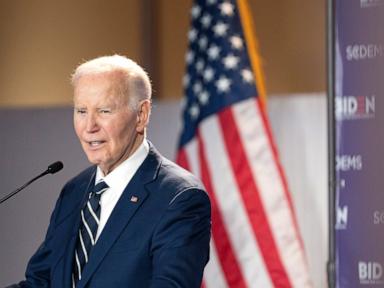
Nearly a decade later, those raw, magnetic tape reels have become the most contested territory in Washington. On a recent Friday afternoon, U.S. District Judge Dabney Friedrich fundamentally altered the boundary between a public figure’s private ghost and the public’s right to know. She ruled that the Department of Justice can release redacted transcripts and audio recordings of former President Joe Biden’s decade-old conversations with his biographer, Mark Zwonitzer, to the Heritage Foundation.
The legal machinery moved swiftly. Minutes after the ruling, Biden’s legal team launched an emergency motion, warning of "permanent" and "irreversible" damage to privacy. The judge granted a brief three-week stay to let an appeals court weigh in. But the dam has cracked. The private confessions of a man trying to remember his past are about to become public property.
This is not a dry dispute over Freedom of Information Act exemptions. This is a story about what happens when the state reaches inside a citizen’s home, extracts his private reflections under the banner of a criminal investigation, and then hands them over to his fiercest political adversaries.
Consider how we arrived here.
The recordings were never meant for a government archive. They were raw material for a memoir. But when Special Counsel Robert Hur launched his investigation into Biden’s handling of classified documents from his vice presidency, investigators seized the tapes. The criminal probe ended without charges, leaving behind a thick report that famously questioned the aging leader’s memory. The investigation died, but the ghostwriter’s tapes remained in the belly of the Justice Department.
When the political guard changed, the institutional philosophy changed with it. Under the current administration, the Justice Department reversed its previous stance, choosing to authorize the release of the recordings to both Congress and the Heritage Foundation.
Biden sued to stop it. His lawyers argued a simple, human premise: every American, whether they have occupied the Oval Office or a suburban townhouse, possesses a fundamental right to privacy within their own home. When the government uses the awesome power of a law enforcement probe to pull private diaries or recordings into its orbit, it assumes a profound duty to guard that vulnerability.
The court weighed that vulnerability against a cold, institutional metric. Judge Friedrich’s twenty-six page decision turned on a classic legal scale: did the public interest in understanding the inner workings of a federal investigation outweigh a former president's diminished expectation of privacy?
The judge acknowledged the potential for "irreparable harm" to Biden’s reputational interests. She knew the political fallout would be fierce. Yet, she concluded that because the Justice Department had already applied extensive redactions, stripping out deeply sensitive family discussions, illness, and references to non-public persons, the remaining material belonged to the citizenry. The law, in its majestic equality, treats the casual banter of a statesman as public property if it touches the hem of a federal inquiry.
We often treat public figures as characters in a play, forgetting that they bleed, forget, and grow old in the same messy, non-linear way the rest of us do. The terror of this precedent isn’t strictly political. It is the realization that our most vulnerable attempts to make sense of our lives can be subpoenaed, archived, and weaponized.
The true stakes are invisible. They live in the chilling effect this ruling casts over anyone who might want to write history. If every conversation with a biographer can be clawed back by the state and distributed to a partisan think tank, who will dare to speak frankly to a ghostwriter again? History will grow colder. Memoirs will become corporate press releases, scrubbed of humanity long before they reach the printing press.
For now, the tapes sit in a digital vault, insulated by a three-week judicial pause. The legal battle will escalate to the appeals court, where lawyers will trade dense paragraphs of administrative law. But beneath the legalese, the emotional core remains unchanged. A man’s private voice, recorded in a season of grief and transition, is being dragged into the bright, merciless glare of the public square.
The dictaphone is no longer a tool for remembering. It is evidence.