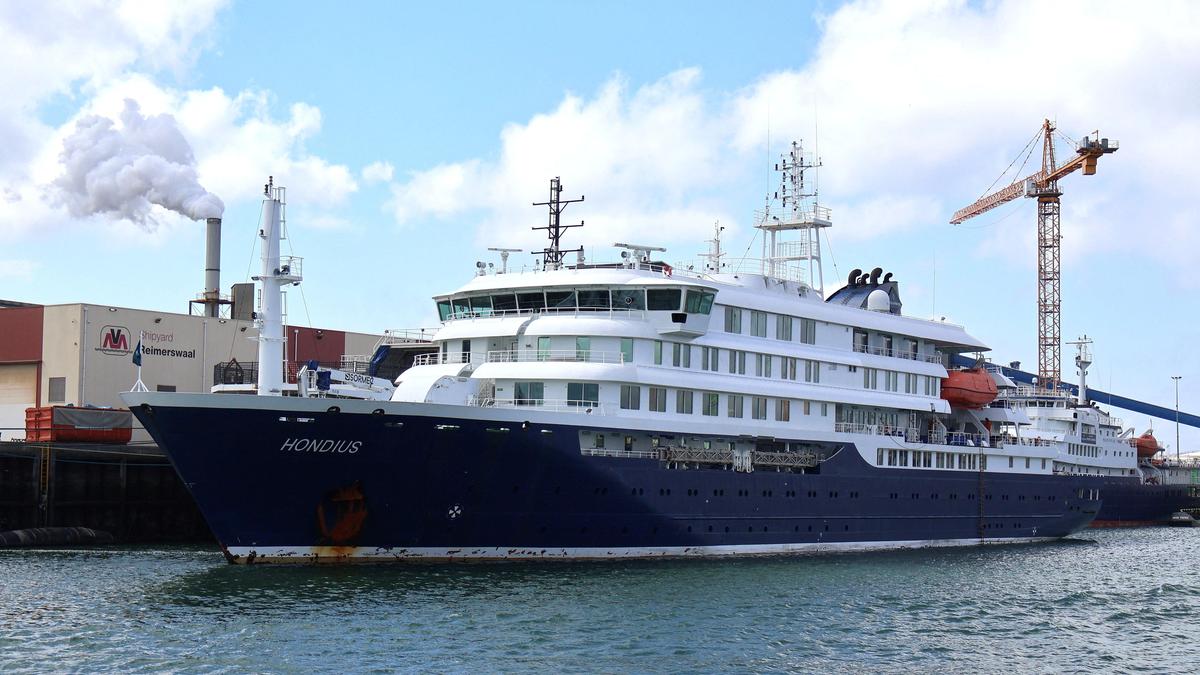
The World Health Organization is back at the podium, patting the collective shoulder of the global public with the usual soothing rhythm of "low risk." Following the recent outbreak on a cargo vessel, the official narrative has settled into a predictable groove: Hantavirus isn't the next pandemic, it doesn't spread person-to-person easily, and you should probably just wash your hands.
This is a dangerous oversimplification.
Calling Hantavirus a "low risk" to the general public is technically true in the way that being struck by lightning is a "low risk." It is a statistic that offers zero comfort to the person standing in a thunderstorm holding a metal rod. For the specific industries—shipping, logistics, and rural infrastructure—that keep our modern world running, Hantavirus isn't a peripheral news story. It is a biological tax on high-density environments that we are failing to audit.
The Myth of the Contained Outbreak
The "low risk" label relies on the assumption that because Hantavirus Pulmonary Syndrome (HPS) rarely jumps from human to human, it is a self-limiting problem. This ignores the reality of modern supply chains. We don't live in a world of isolated incidents; we live in a world of interconnected vectors.
When a ship becomes a breeding ground for infected rodents, that vessel is a floating laboratory for viral concentration. The WHO focuses on the crew. They focus on the immediate port. They miss the fact that the cargo itself—the crates, the pallets, the dry goods—serves as a transport mechanism for the viral shedding (urine, droppings, and saliva) that stays viable longer than the public health brochures suggest.
We are told the virus is fragile. "It dies quickly in sunlight," they say. Go tell that to a warehouse manager in a dimly lit distribution center in Northern Europe or a basement storage facility in Chicago. In cool, dark environments, Hantavirus can remain infectious for days. By the time the "low risk" assessment is published, the contaminated goods have already moved three links down the chain.
Logistics is the New Epidemiology
If you want to understand the real threat, stop looking at hospital admission rates and start looking at shipping manifests.
Hantaviruses, like the Sin Nombre virus in North America or the Seoul virus globally, are inextricably linked to the boom-and-bust cycles of rodent populations. These cycles are no longer dictated solely by "nature." They are dictated by our waste management failures and our frantic, just-in-time shipping demands.
I’ve spent years analyzing how industrial hygiene failures cripple operations. I’ve seen facilities shut down for "routine maintenance" that was actually a desperate attempt to scrub rodent-borne pathogens before the union caught wind of it. The industry knows. The regulators pretend not to.
The official stance treats every outbreak as a fluke. It isn’t a fluke; it’s a feature of a globalized economy that prioritizes speed over biosecurity. When we pack ships tighter and turn them around faster, we create the perfect stagnant environment for Peromyscus or Rattus species to thrive.
The Brutal Math of HPS
Let’s talk about the "nuance" the WHO avoids because it scares people: the Case Fatality Rate (CFR).
The CFR for Hantavirus Pulmonary Syndrome in the Americas often hovers around 35% to 40%.
Compare that to the early days of COVID-19 or the seasonal flu. While Hantavirus is significantly harder to catch, if you do catch it, your chances of survival are essentially a coin flip. Public health officials use the low transmission rate to justify a lack of aggressive monitoring. This is a logical fallacy. A low-probability, high-consequence event is the definition of a catastrophic risk.
If a commercial airliner had a 40% chance of falling out of the sky every time a specific (but rare) engine part flickered, we wouldn’t call the risk to the public "low." We would ground the entire fleet. But because Hantavirus primarily kills rural workers, hikers, and merchant marines, it stays in the "low risk" category. It is a class-based assessment of viral threat.
The Aerosolized Lie
The standard advice is to avoid "disturbing" dust in rodent-infested areas. This is the "just don't breathe" school of medicine.
In a closed environment like a ship’s hold or a mechanized warehouse, air is constantly being moved, filtered, and recirculated. The moment a forklift moves a pallet or a crew member sweeps a deck, the virus is aerosolized. You don't have to be "cleaning an old shed" to inhale the viral load.
The threshold for infection is remarkably low. You are not dealing with a bacterial infection that requires a high load; you are dealing with a viral pathogen that has evolved to move through the air in microscopic droplets of waste. The "low risk" narrative discourages the use of high-level PPE (like N95 or P100 respirators) in industries where rodent presence is considered "inevitable."
We are essentially telling workers to gamble their lives on the hope that the specific mouse that ran over their lunch table wasn't a carrier.
Stop Asking if You'll Catch It
The public asks the wrong question: "Am I going to catch Hantavirus from my Amazon package?"
The answer is almost certainly no. But that’s the wrong metric for a healthy society. The right question is: "Is our global supply chain resilient enough to handle a spike in high-mortality zoonotic spillovers?"
Currently, the answer is a resounding no. We are reactive, not proactive. We wait for a ship to have half its crew coughing up fluid before we issue a "low risk" bulletin. We should be looking at:
- Mandatory Rodent Genomic Surveillance: We should be testing rodent populations at every major port of entry, not just reacting to sick humans.
- HVAC Revolution: Ships and warehouses need UV-C sterilization in their ventilation systems as a standard, not a luxury.
- Liability Shifting: The moment a shipping company is held legally and financially responsible for the 40% mortality rate of a Hantavirus infection contracted on their watch, "low risk" will suddenly become "unacceptable risk."
The Hidden Cost of Complacency
The downside of my contrarian view? It’s expensive. It requires a fundamental shift in how we build, move goods, and protect workers. It’s much cheaper to have a WHO spokesperson say the risk is low and tell everyone to keep their distance from mice.
But "low risk" is a snapshot, not a forecast. As climate patterns shift and rodent populations migrate into new urban corridors, these "isolated incidents" on ships will become the baseline.
We are currently ignoring a virus with a near-coin-flip death rate because we’ve convinced ourselves that the barrier between "them" (the rodents) and "us" (the civilized world) is thicker than it actually is. It’s not. It’s as thin as a microscopic droplet of urine floating in a ventilation shaft.
Stop listening to the comfort of statistics calculated by people in sanitized offices. If you are in the path of the vector, the risk is 100% until proven otherwise.
Clean the vent. Wear the mask. Stop trusting the "low risk" lullaby.