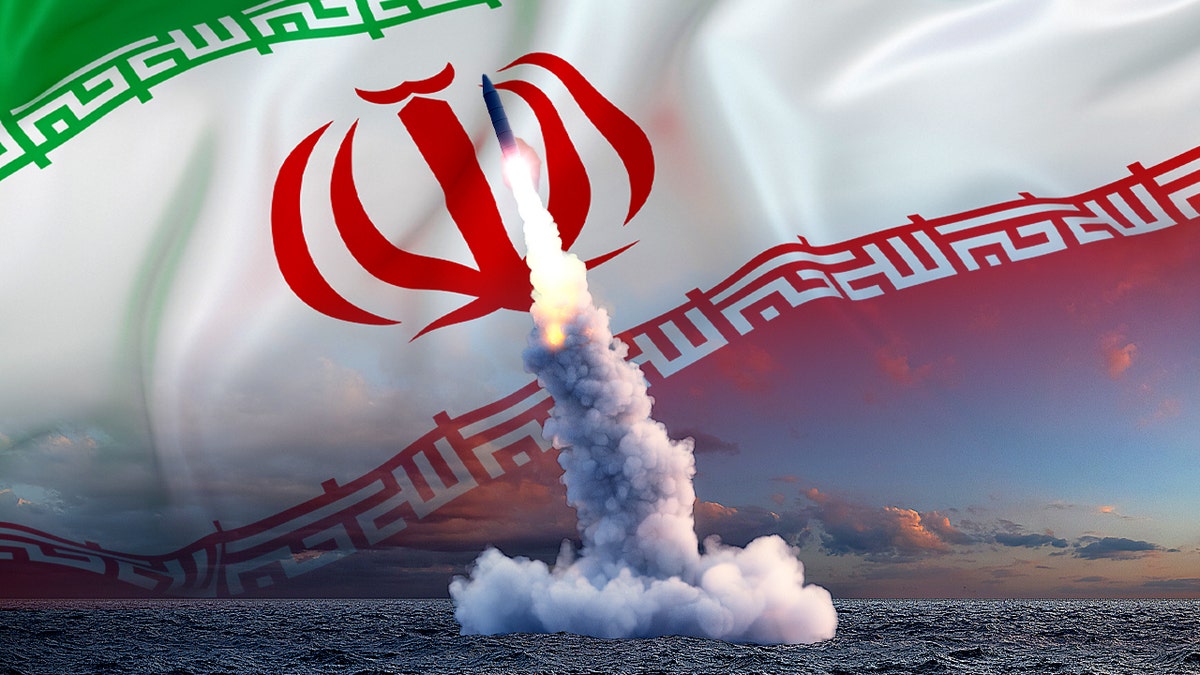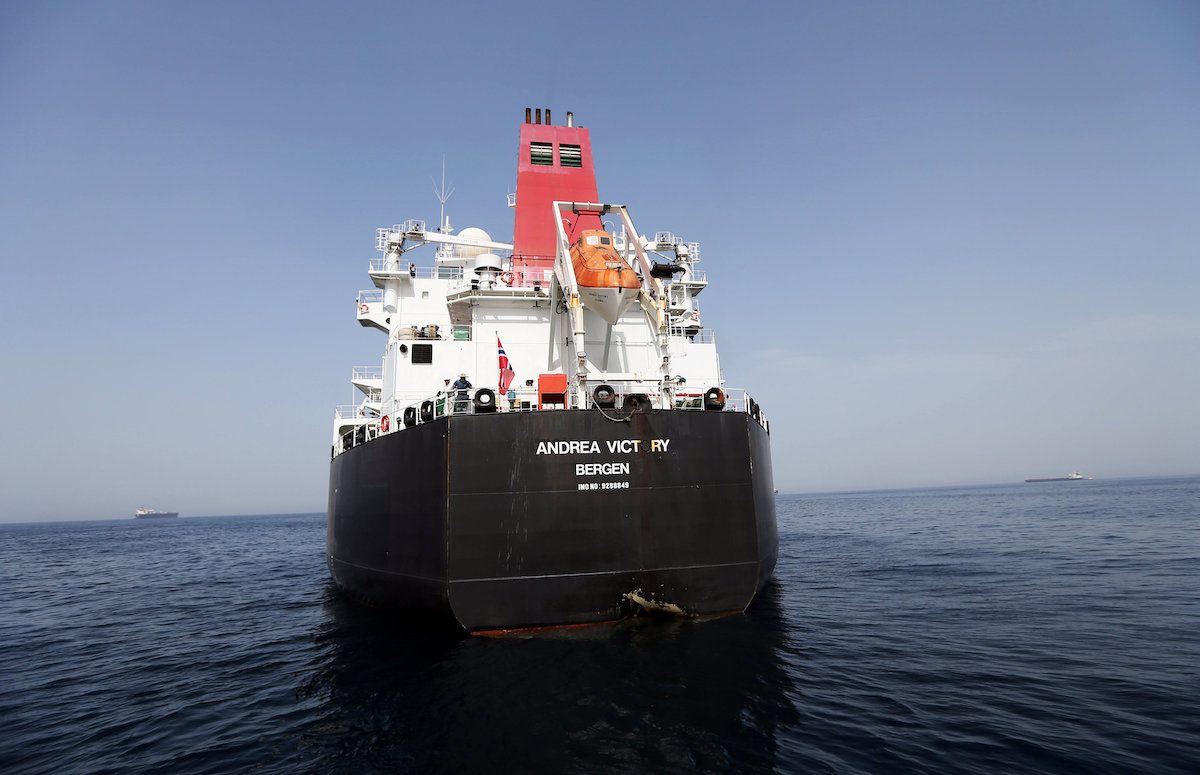
The shadow war in the Strait of Hormuz has finally broken into the light, and the cost is measured in steel and blood. In a sharp escalation of the long-standing friction between Washington and Tehran, three commercial tankers now sit smoldering in the Gulf, marking the most violent week for merchant shipping in the region in decades. This isn't just a localized skirmish. One seafarer is dead, insurance premiums for the world’s energy lifeline are vertical, and the assumption that the U.S. Navy can unilaterally guarantee the "freedom of navigation" is currently being dismantled in real-time.
For years, the industry treated regional tensions as a manageable risk—a "tax" on doing business in the Middle East. That era of complacency ended this week. The sophisticated nature of the attacks, involving a mix of one-way attack drones and limpet mines, suggests a calculated effort to prove that no vessel is safe regardless of its flag or its distance from the coast.
The mechanics of maritime instability
To understand why this is happening now, you have to look past the political rhetoric and focus on the tactical reality of the Strait. Roughly 20% of the world's total oil consumption passes through this narrow waterway. It is a choke point by every definition. When three tankers are hit in a single 48-hour window, it signals a shift from sporadic harassment to a systematic campaign of denial.
The attacks follow a predictable but lethal pattern. Iranian fast-attack craft or long-range drones target the engine rooms or the living quarters of the vessels. They aren't trying to sink the ships—which would cause an environmental catastrophe that might unite the world against them—but rather to make them unseaworthy and uninsurable. By killing a crew member, the aggressors have sent a message to the global labor unions that man these ships: the Gulf is now a combat zone.
The failure of the deterrent model
For decades, the presence of the U.S. Fifth Fleet was enough to keep the peace. The logic was simple. If you touch a tanker, you face the full weight of a carrier strike group. That logic is failing because the nature of the "touch" has changed.
Asymmetric warfare allows an actor to inflict massive economic damage through relatively cheap means. A drone costing $30,000 can disable a $100 million VLCC (Very Large Crude Carrier) carrying $200 million worth of oil. The U.S. Navy is finding it increasingly difficult to play goalie against every small, low-flying threat across thousands of square miles of water. We are seeing a breakdown in the traditional security architecture of the region.
The hidden cost of "War Risk" premiums
While the headlines focus on the physical damage to the hulls, the real carnage is happening in the London insurance markets. Ships entering the Gulf must carry "War Risk" insurance. Usually, this is a negligible fraction of the total voyage cost. Within hours of the third attack, those rates spiked by over 400%.
For a standard Suezmax tanker, this adds hundreds of thousands of dollars to a single transit. These costs do not vanish. They are passed directly to the refiners, then to the distributors, and finally to the person filling up their car in Ohio or Berlin. The Gulf conflict is an invisible tax on every consumer, and the current trajectory suggests that tax is about to become a permanent fixture of the global economy.
Logistics under fire
Shipping companies are now faced with an impossible choice. They can continue to sail the Strait and risk the lives of their crews, or they can reroute. However, there is no easy reroute for Middle Eastern oil. You cannot simply drive a tanker around the problem when the pipeline infrastructure to bypass the Strait is either at maximum capacity or non-existent.
Owners are now demanding armed guards on the bridge. This creates a new set of problems. Private maritime security companies are often legally restricted in what kind of hardware they can carry into sovereign territorial waters. If a private guard shoots at an Iranian drone, does that constitute an act of war by the ship's flag state? We are entering a legal gray area that the current maritime law—largely drafted in a different century—is not equipped to handle.
The geopolitical calculus of the escalator
Tehran’s strategy is not irrational. It is a response to the "maximum pressure" of economic sanctions. If they cannot export their own energy without hindrance, they will ensure that no one else can do so cheaply or safely. It is a strategy of shared pain. By targeting tankers associated with U.S. allies, they are testing the resolve of the international coalition.
The role of the "Dark Fleet"
Interestingly, not every ship in the Gulf is at risk. There is a massive "dark fleet" of tankers—vessels with obscured ownership and disabled transponders—that continue to move oil for sanctioned regimes. These ships are almost never targeted. This creates a perverse incentive structure where the most law-abiding, transparent shipping companies are the ones most likely to be attacked, while the illicit actors thrive in the chaos.
This bifurcation of the shipping industry is dangerous. It erodes the standards of safety and environmental protection that have been built up since the Exxon Valdez era. If the only way to safely move oil through the Gulf is to become a "ghost ship," the entire regulatory framework of global trade begins to dissolve.
Why traditional diplomacy is stalling
The standard response to these crises is a flurry of diplomatic activity at the UN and a reinforcement of naval assets. This hasn't worked. The reason is that the parties involved are no longer speaking the same language. Washington views this as a violation of international law; Tehran views it as a necessary defense against economic warfare.
There is also the factor of technological proliferation. Even if a diplomatic solution is reached tomorrow, the "genie" of cheap, effective maritime strike technology is out of the bottle. Non-state actors and smaller regional powers have seen how easily a major superpower’s naval dominance can be checked. The barrier to entry for disrupting global trade has never been lower.
The human element
We cannot forget the seafarer who lost his life this week. The merchant marine is often the forgotten pillar of global civilization. These are civilians, not soldiers. When we turn the Strait of Hormuz into a shooting gallery, we are asking workers from the Philippines, India, and Eastern Europe to walk into a crossfire for a paycheck that hasn't kept pace with the rising risk.
If crews begin to refuse to sail into the Gulf, the physical supply of oil will drop faster than any OPEC production cut could ever achieve. A labor strike in the shipping industry would be more devastating to the global economy than any drone strike.
The shift toward a multi-polar security model
The U.S. is increasingly reluctant to act as the world's sole maritime policeman. This is the "why" that most analysts miss. There is a growing sentiment in Washington that if China and India are the primary beneficiaries of Middle Eastern oil, they should be the ones footing the bill for the security of the shipping lanes.
However, China and India do not currently have the blue-water navy capacity or the regional bases to replace the Fifth Fleet. This creates a "security vacuum." In that vacuum, regional powers feel emboldened to use kinetic force to settle scores. The three damaged tankers are the first physical symptoms of a world where the old rules no longer apply and the new rules haven't been written yet.
The reality of the "Permanent Crisis"
The industry needs to stop waiting for a return to "normal." This volatility is the new baseline. Companies that thrive will be those that diversify their supply chains away from single-point-of-failure choke points. This means more investment in pipelines that bypass the Strait, increased domestic production in the West, and a faster transition to energy sources that don't require 300-meter-long targets to sail through a war zone.
The current conflict is a stress test that the global energy market is failing. We are seeing that a few well-placed explosives can hold the world's economy hostage. The dead seafarer and the burning tankers are a warning that the cost of ignoring this reality is only going to go up.
The immediate priority for any vessel owner is no longer just "on-time delivery," but survival. Every ship captain currently navigating those waters is looking at the horizon, not for the next port, but for the silhouette of a drone. That is no way to run a global economy.
Secure your own supply chains now, because the cavalry isn't coming this time.