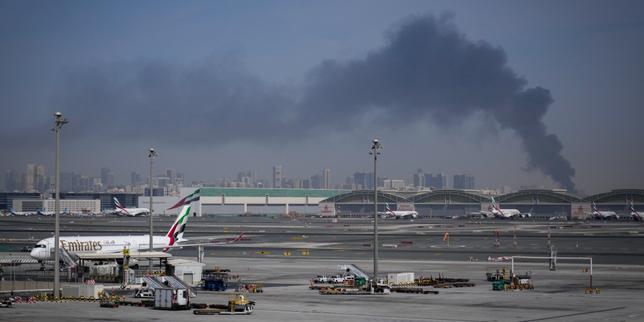
The global aviation network is currently operating on a razor's edge. What appears to be a series of isolated incidents—floods in Dubai, technical meltdowns in Bangkok, or strikes in Europe—is actually a systemic failure of an industry that scaled up its demand without repairing its foundations. When thousands of travelers find themselves sleeping on terminal floors from the Middle East to Southeast Asia, it is not merely a "bad weather day." It is the result of a fragile, hub-and-spoke model that has no margin for error and a workforce stretched to the breaking point.
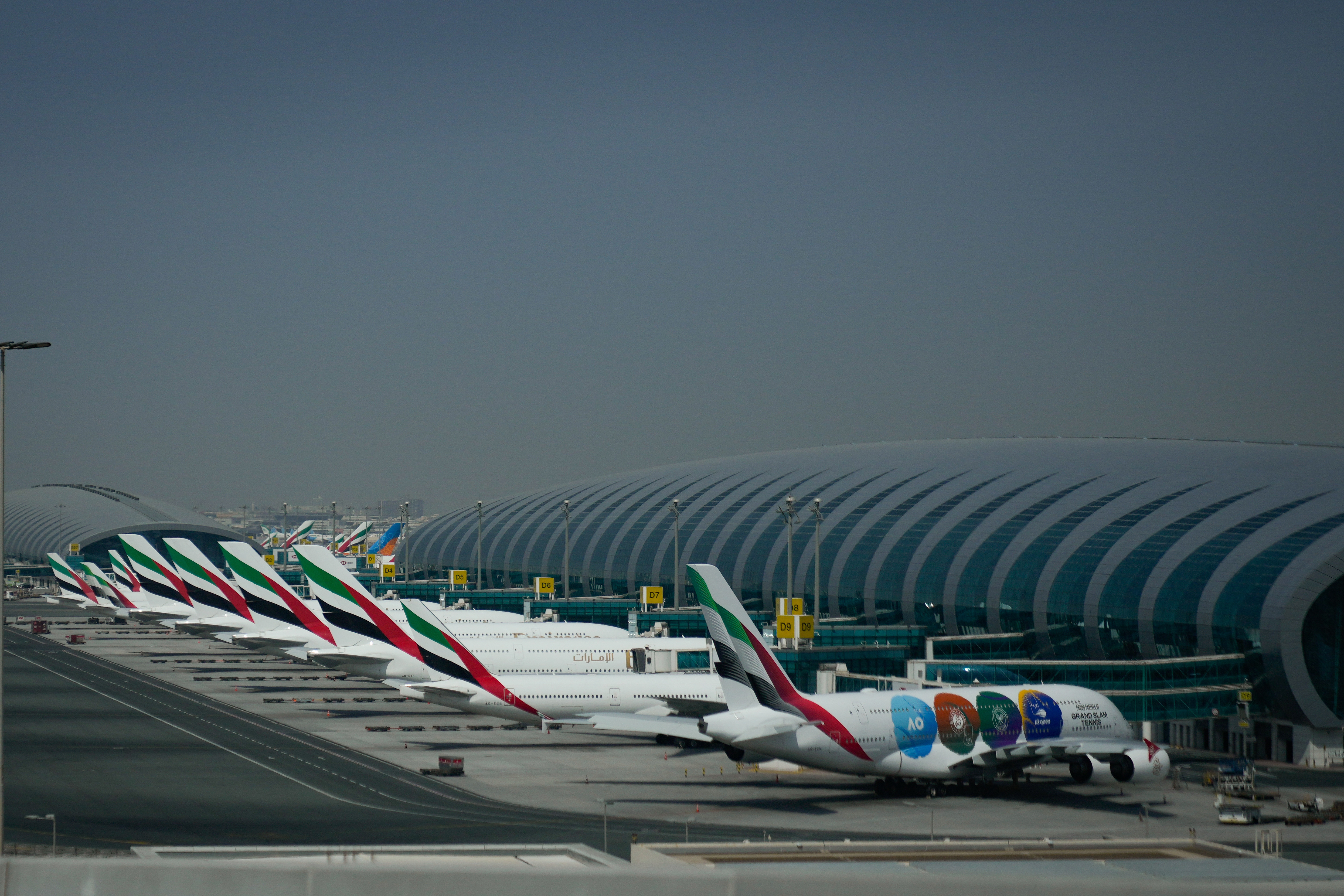
Travelers are discovering that their premium tickets offer no protection against a supply chain that has forgotten how to handle friction. The reality is that the aviation industry has optimized itself for efficiency at the expense of resiliency. When a major hub like Dubai International Airport—a facility that handled over 80 million passengers last year—stutters, the ripples are felt in London, Sydney, and Singapore within hours. This isn't just a travel inconvenience. It is a massive transfer of risk from multi-billion dollar corporations onto the individual consumer.
The Hub Fallacy and the Fragility of Connection
For decades, the airline industry sold us on the beauty of the "mega-hub." By funneling traffic through central points like Dubai, Doha, or Istanbul, airlines achieved massive economies of scale. It made long-haul travel affordable. But we are now seeing the dark side of this consolidation. When you route a significant percentage of the world’s east-west traffic through a single geographic coordinate, you create a single point of failure.
In recent disruptions, the problem wasn't just the water on the runway or the glitch in the passport gate. The problem was the sheer volume of "stranded souls" that the local infrastructure was never designed to house, feed, or rebook simultaneously. Most major hubs operate at 95% capacity on a normal Tuesday. When a storm hits or a server dies, there is nowhere for that extra 5% of energy to go. The system doesn't just slow down; it breaks.
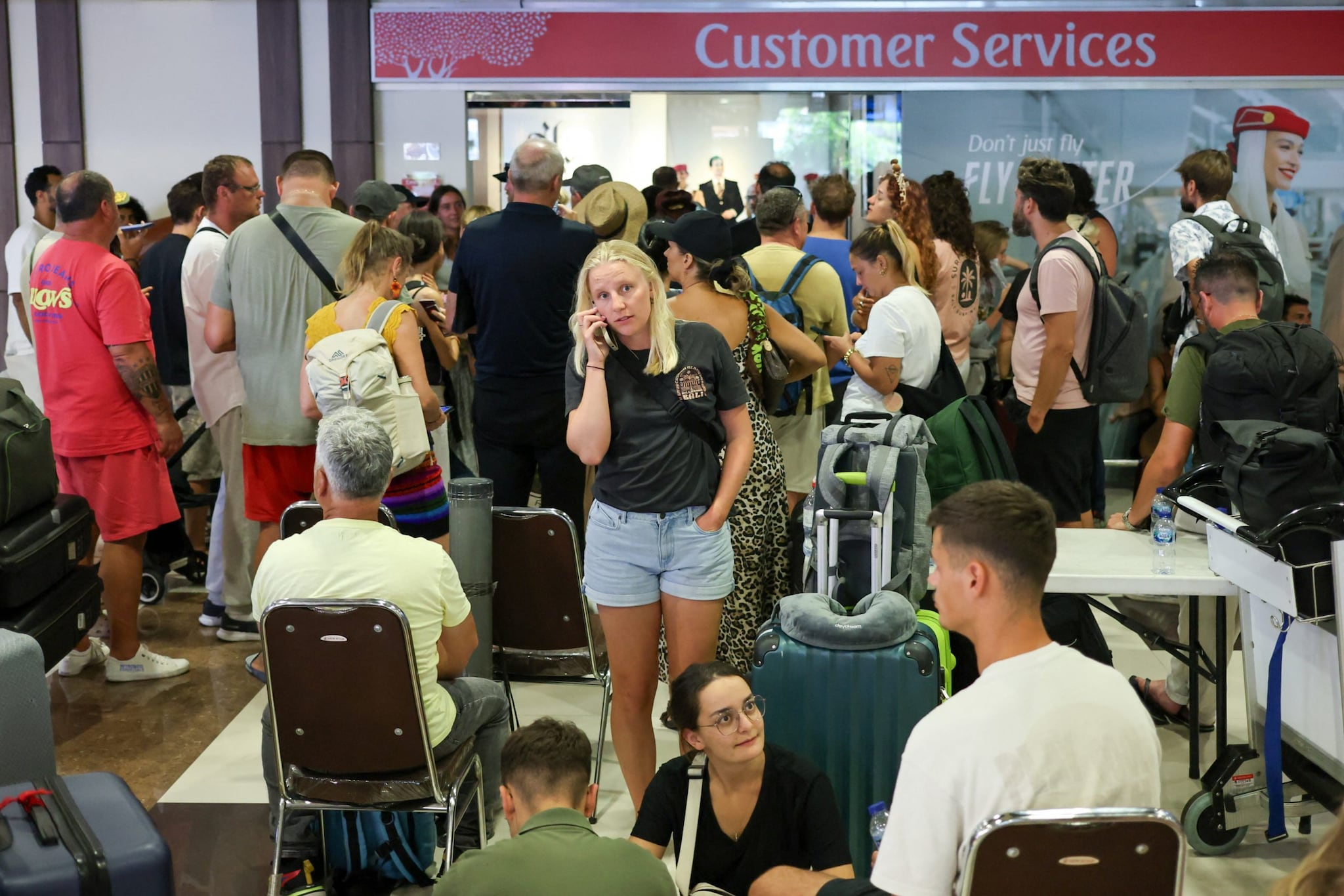
Airlines have spent the last three years aggressively marketing "revenge travel," encouraging a surge in bookings that their operational back-ends are struggling to support. They sold the seats, but they didn't hire the ground handlers, the technicians, or the gate agents in sufficient numbers to manage a crisis. You can see this in the eyes of the staff at the customer service desks. They are the frontline of a war they didn't sign up for, tasked with explaining why a "world-class" airline can’t find a hotel room for a family of four for 48 hours.
The Bangkok Stutter and the Tech Debt Crisis
While Dubai struggled with the elements, Bangkok recently illustrated a different, perhaps more terrifying vulnerability: tech debt. For all the talk of "digital transformation" and biometrics, much of the world’s travel infrastructure sits on top of legacy code and aging hardware. When biometric gates at Suvarnabhumi Airport failed, the result was a manual processing nightmare that backed up into the corridors.
The industry is currently obsessed with the "frictionless" experience. We want to walk through an airport without showing a passport. We want our faces to be our boarding passes. But every layer of technology added to the journey is a new vulnerability. If the biometric system goes down, the staff on the ground often lack the training or the numbers to revert to old-school manual processing at the speed required by modern passenger volumes.
We are building a "just-in-time" travel experience. It works beautifully when every sensor, every API, and every weather pattern aligns. But we are seeing a trend where these "black swan" events are becoming monthly occurrences. If the "unprecedented" happens every thirty days, it is no longer unprecedented. It is the new baseline.
The Economic Ghost in the Machine
Behind the scenes, the financial pressure on airlines is distorting how they handle stranded passengers. The "Duty of Care" laws—such as the UK’s UK271 or Europe’s EC 261/2004—are supposed to protect travelers. They mandate food, communication, and accommodation. However, in cities like Dubai or Bangkok during a mass disruption, the demand for hotel rooms instantly exceeds the supply.
Airlines are then forced into a cynical calculation. If they can’t find a room, they offer a voucher. If they can’t provide a voucher, they tell the passenger to "find their own and claim it back later." They know that 40% of passengers will never follow through with the arduous paperwork required to get that $200 refund. This is not a failure of logistics; it is a feature of the bottom line.
Furthermore, the secondary tourism markets in these regions—the boutique hotels, the tour operators, the street vendors—are the invisible victims. When thousands are stuck in an airport, they aren't out in the city spending money. They are consuming meager resources within the terminal. The "uncertainty" mentioned in industry reports is actually a direct hit to the GDP of nations that have tethered their economic hopes to the volatile whims of global aviation.
The Myth of the Automated Solution
Many analysts suggest that more AI and more automation will fix these bottlenecks. They are wrong. Automation speeds up the "happy path"—the journey where nothing goes wrong. But automation is historically terrible at handling the "unhappy path." When a flight is canceled, an algorithm can rebook a passenger on the next available flight. But an algorithm cannot decide which passenger gets the last seat on a flight leaving in ten minutes: the business traveler with a $10,000 ticket or the mother with a sick child.
When the system fails, we need humans. Yet, the industry has spent the last five years trying to remove as many humans as possible from the terminal floor. This is the "Service Gap." We have built airports that are magnificent shopping malls but mediocre transit points. We have prioritized the duty-free revenue over the contingency plan.
The Illusion of Choice in a Consolidated Market
If you are a traveler stuck in Bangkok or Dubai, you might think you have options. You don't. The alliance system (Star Alliance, Oneworld, SkyTeam) means that while you see different logos on the planes, the underlying logic is the same. They share the same ground crews, the same code-share agreements, and often the same fate.
This consolidation has led to a lack of competitive urgency to fix the resiliency problem. If every airline is failing at the same time, where is the incentive to be the one that invests in expensive "buffer" capacity? The market doesn't reward the airline that keeps three spare planes and five standby crews in case of a storm. It rewards the airline that keeps its planes in the air 18 hours a day and its crews at the absolute legal limit of their flight hours.
We are witnessing the "Enshittification" of travel. The price goes up, the legroom goes down, and the reliability evaporates. And because we have been conditioned to see travel as a commodity rather than a service, we continue to book. We see the videos of people sleeping on suitcases and think, "That won't be me." Until it is.
Reclaiming the Journey
Fixing this requires a fundamental shift in how we value the "buffer." Regulation needs to move beyond just fining airlines after the fact. We need to mandate "Operational Resiliency Minimums." This would mean forcing hubs to prove they have the physical and digital infrastructure to handle 120% of their peak capacity for a sustained period of 48 hours.
Until that happens, the burden of proof remains on the traveler.
The era of the "carefree" international trip is over for now. The savvy traveler today doesn't just look at the price of the ticket; they look at the "layover risk." They avoid the mega-hubs during peak seasons. They carry "disruption kits"—portable chargers, essential medications, and enough local currency to bribe a taxi driver if the trains fail. Most importantly, they stop believing the marketing gloss that promises a "seamless" experience.
The seams are showing. They are frayed, they are under tension, and in places like Dubai and Bangkok, they have already snapped. The global tourism industry is not in a "period of uncertainty." It is in a period of reckoning. We are discovering that the world is much larger, much more chaotic, and much less "connected" than the airline maps led us to believe.
Stop looking at the flight board and start looking at the infrastructure. If the airport you are flying into hasn't upgraded its drainage or its server racks in a decade, your "five-star" airline experience is nothing more than a gamble with very poor odds. You are not a guest; you are a data point in a system that is currently over-leveraged and under-prepared.
Check the historical on-time performance of your specific flight leg over the last thirty days before you book your next "unmissable" connection.