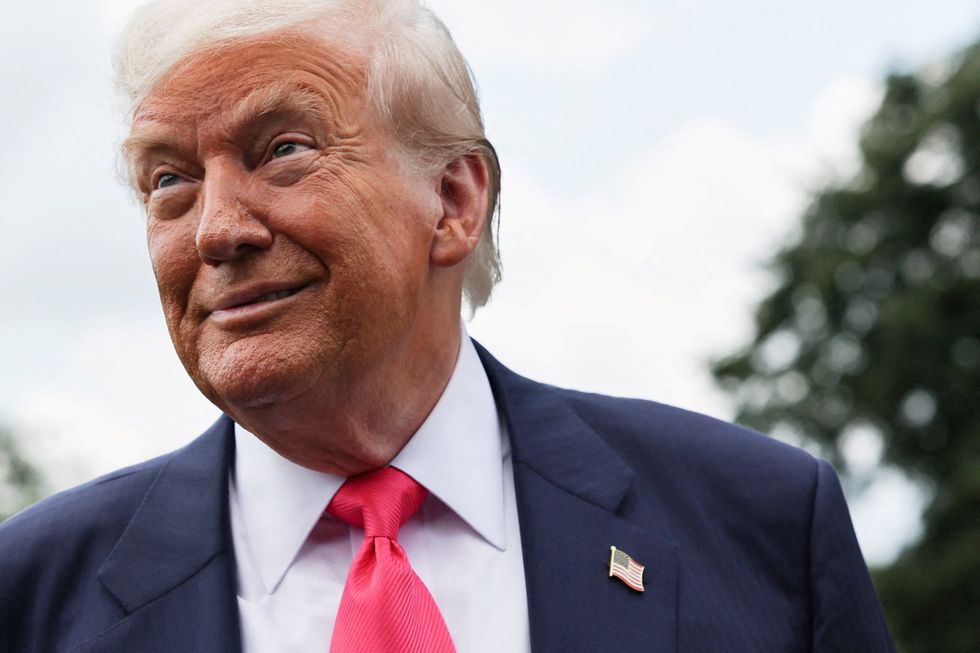
The air inside the donor suite at the fundraiser in Palm Beach was thick with the scent of expensive bourbon and the quiet, desperate hum of anxiety. These were the architects of the machine—the donors who sign the seven-figure checks and the strategists who map out the path to 270 electoral votes. They had a plan. It was a simple, brutal, and effective plan: talk about the price of eggs. Talk about the interest rates that have turned the American Dream of homeownership into a locked vault. Talk about the grocery bills that are eating the middle class alive.
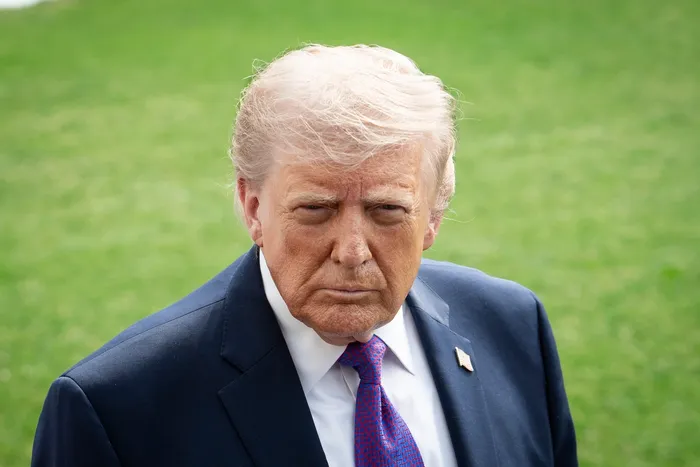
Then the candidate took the stage.
Within minutes, the script was gone. The carefully polished data points about inflation and manufacturing were discarded like yesterday’s news. Instead, the room was treated to a sprawling, jagged monologue about crowd sizes, personal grievances, and the perceived injustices of a legal system out for blood. The strategists in the back of the room didn't look at each other. They looked at their shoes.
This is the internal civil war currently tearing through the Republican establishment. It is not a war of ideology, but a war of discipline. On one side stands a party leadership that knows the economy is their golden ticket. On the other stands Donald Trump, a man who views the economy as a secondary character in a movie where he is the only star.
The Math of the Dinner Table
Imagine a family in a suburb of Pittsburgh. Let’s call them the Millers. Mark works in logistics; Sarah is a nurse. They aren't political junkies. They don't spend their evenings scrolling through Truth Social or refreshing the New York Times. They spend their evenings looking at a spreadsheet.
They see that their car insurance has jumped 20% in a year. They see that the "affordable" vacation they planned for the kids has been swallowed by the cost of gas and hotels. For the GOP, the Millers are the entire world. They are the voters who decide who sits in the Oval Office. When the campaign focuses on the "misery index"—the combined weight of unemployment and inflation—the Millers listen. It’s a language they speak fluently.
But when the message shifts? When the candidate spends forty-five minutes at a rally in a swing state talking about "low flow" toilets or the brilliance of Hannibal Lecter? The Millers tune out. They don't see their lives reflected in that rhetoric. They see a circus. And the GOP insiders—the people whose jobs depend on winning over the Millers—are watching their greatest advantage evaporate in real-time.
The Invisible Stakes of the Pivot
The frustration among Republican operatives is visceral. One veteran strategist, speaking on the condition of anonymity because they still have to work within the party's orbit, described it as watching a pilot decide to perform aerobatics while the passengers are screaming for a safe landing.
The economy is the one area where the current administration is vulnerable. Every poll shows a deep, lingering dissatisfaction with the "Bidenomics" brand, regardless of what the headline GDP numbers say. People feel poorer. That feeling is a political weapon.
But a weapon only works if you point it at the target.
Instead, the campaign has become a hall of mirrors. Trump’s penchant for personal grievance isn't just a quirk of his personality; it is the engine of his political identity. He feeds on the energy of the crowd, and the crowd—the die-hard, red-hat-wearing base—doesn't roar for tax reform. They roar for the fight. They roar when he calls his enemies names. He is giving the people in the arena what they want, but in doing so, he is starving the people in the living rooms who just want to know how he’s going to lower the price of milk.
The Mechanics of Sabotage
Consider the specific moment the wheels came off. The plan for the week was "Economy Week." It was supposed to be a disciplined rollout of policy proposals aimed at deregulating energy and cutting government spending. It was the kind of meat-and-potatoes conservatism that makes the Wall Street Journal editorial board swoon and gives suburban moms a reason to switch sides.
The press was ready. The graphics were loaded.
But at a press conference intended to highlight these issues, Trump stood behind a podium and spent the majority of his time attacking the intelligence of his opponent and relitigating the 2020 election. The economic message wasn't just buried; it was cremated.
The fallout was immediate. GOP donors began calling headquarters, demanding to know why their money was being spent on a campaign that couldn't stay on message for an hour. The insiders are furious because they know that in a close election, every day spent talking about anything other than the economy is a day lost.
Politics.
It’s often treated as a game of chess, but right now, it feels more like a game of chicken. The GOP leadership is hoping Trump will eventually realize that his path to victory lies in the wallet, not the ego. Trump is betting that his brand of populist fire is enough to overwhelm any traditional political logic.
The Human Cost of the Noise
There is a psychological exhaustion that sets in during an election cycle. For the average voter, the noise becomes a drone. To break through that drone, a candidate needs a clear, resonant signal.
When the Republican party talks about the economy, they are sending a signal that says: "We see your struggle."
When Trump talks about his legal battles, he sends a signal that says: "See my struggle."
The difference between "your" and "my" is the difference between a landslide and a loss.
Strategists talk about "opportunity cost." It’s a business term, but it applies perfectly here. The opportunity cost of a rally spent on personal attacks is the millions of voters who went to bed without hearing a single word about how their lives might get better under a new administration.
The donor class is starting to look at the numbers. They see the hundreds of millions being poured into the Trump campaign and they wonder if they are buying a solution or just funding a grievance tour. There is a growing sense of dread that the party has built a magnificent, high-tech engine, but the driver is insisting on steering it into the woods because he likes the way the branches crack against the windshield.
The Ghost in the Room
Inside the RNC, the atmosphere is reportedly one of forced optimism masking deep-seated panic. There is a "let Trump be Trump" faction that believes his unpredictability is his greatest strength. They argue that the experts were wrong in 2016 and they are wrong now. They believe the energy of the base will carry the day.
But even they can't ignore the data.
Independent voters—the holy grail of American politics—are consistently turned off by the chaos. They are the ones who are most concerned about the economy and most weary of the drama. By sabotaging the economic message, Trump isn't just ignoring his advisors; he’s ignoring the very people who have the power to put him back in the White House.
The "GOP insiders" aren't just bureaucrats in suits. They are people who have spent their lives studying the American electorate. They know that elections are won in the margins. A half-percent shift in three counties in Wisconsin. A few thousand votes in Arizona. These are the tiny fractures that decide the fate of nations.
When you are playing a game of inches, you can't afford to throw away miles.
The tragedy, from the perspective of the Republican establishment, is that the message they want to send is actually a strong one. They have a coherent argument to make about the state of the country. They have a narrative of decline and a promise of restoration. It’s a story that has worked for decades.
But a story needs a narrator. And if the narrator keeps changing the subject to himself, the audience eventually gets up and leaves the theater.
The sun is setting over the golf course in Florida, casting long, distorted shadows across the grass. Somewhere inside the club, a group of men in expensive suits are staring at a polling map, watching the red lines flicker and fade. They are waiting for a pivot that might never come. They are holding their breath, hoping that the man at the top of the ticket will finally stop talking about the past and start talking about the future.
The silence in the room is deafening.
It is the sound of a party realizing that you can provide a candidate with the best map in the world, but you can’t make him follow the road. You can give him the facts, the figures, and the keys to the kingdom, but in the end, he will always choose the mirror over the map.
And as the clock ticks down toward November, the mirror is the only thing he’s looking at.