Walk through Washington, D.C., long enough, and you realize the city is built on an argument. It is a debate written in stone, marble, and neoclassical columns, frozen in time by architects who wanted to prove that a young republic could be just as enduring as an ancient empire, without the crowns. The buildings were designed to be grand, yes, but deliberately restrained. They were built to make the citizen feel large, and the ruler feel temporary.
But right now, the rhythm of that argument is changing. The steady, quiet hum of history is being drowned out by the roar of heavy machinery, the grinding of drills, and the sharp, rhythmic crack of jackhammers striking centuries-old stone.
Donald Trump is a builder. He has never hidden this identity; he wears it like armor. When he returned to the Oval Office in January 2025, he brought that builder’s eye back to a city he views not just as a seat of government, but as a vast real estate portfolio in desperate need of a renovation. What is happening right now along the Potomac is a dramatic, sweeping structural overhaul of the American capital. It is a transformation so aggressive that observers are drawing comparisons to Theodore Roosevelt’s reshaping of the National Mall or Harry Truman’s complete gutting of the White House structure in the 1950s.
To watch this transformation is to witness a profound clash of philosophies. On one side stands the institutional weight of historic preservation, a belief that our monuments are sacred text, not to be edited. On the other side is a man with a chisel, a roll of blueprints, and an unshakeable belief that America’s capital should look less like a austere museum and more like a triumph.
The Great Excavation of the East Wing
Consider the mud.
For nearly a century, the East Wing of the White House stood as a functional, unpretentious anchor of the executive mansion. It housed the First Lady’s offices, social secretaries, and military aides. In October 2025, that history met a fleet of excavators. The original East Wing was demolished, reduced to rubble to clear a path for something unprecedented in the history of the modern presidency: a 90,000-square-foot State Ballroom.
To understand the sheer scale of this addition, one must look at the numbers. The core White House mansion itself, excluding the wings, spans roughly 55,000 square feet. This new structure is nearly double that size. It is a massive, four-story limestone and sandstone monument that matches the main house in height and scale.
Inside the security perimeter, the air smells of wet concrete and pulverized stone. Workers under a consortium led by Clark Construction have dug six stories into the subterranean bedrock of Washington. Far beneath the surface, where the public will never look, a massive military bunker is taking shape.
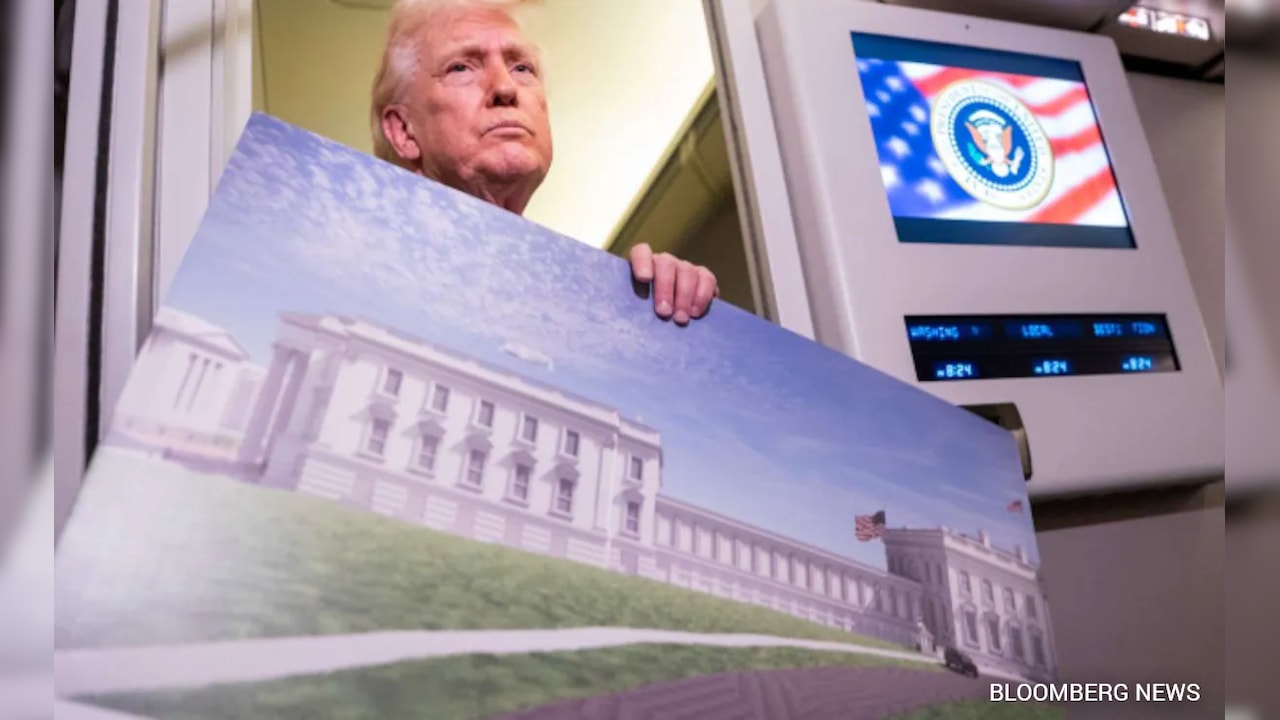
Above ground, the ambition turns theatrical. The building features two distinct classical facades, meticulously engineered by architect James McCrery II to blend with the original architecture. Yet, the materials are purely modern, designed for an era of hyper-vigilance. The walls will feature four-inch-thick, bulletproof, impenetrable glass panels.
Then, there is the roof.
Instead of a traditional slate pitch, the ballroom is capped with a dead-flat, drone-proof roof forged from high-strength steel. This is not just a ceiling; it is a strategic vantage point. The roof will serve as an active drone gallery and a military observation platform, granting security personnel a sweeping, 360-degree view of the entire capital skyline.
The price tag for this fortress of hospitality has ballooned. Initially projected at $200 million, the estimate climbed to $300 million, then settled at $400 million. The White House has maintained that the construction itself is funded entirely by private donors and large corporations—patriots, in the administration's phrasing—including heavyweights like Nvidia, BlackRock, and Jeff Yass. However, the funding mechanism took a sharp turn when the president requested an additional $1 billion in taxpayer money from Congress to fund the extensive security upgrades required to integrate the structure into the White House complex. Senate Republicans, looking warily at upcoming midterm elections, quietly declined the request.
Why build it? The administration presents a practical argument. For decades, when a foreign head of state visited Washington, the White House had to erect sprawling, temporary plastic pavilions on the South Lawn to accommodate state dinners exceeding 200 guests. The new ballroom will comfortably seat up to 1,000 people under shimmering chandeliers and beside ornate, gilded columns, linked to the main residence by a soaring glass bridge.
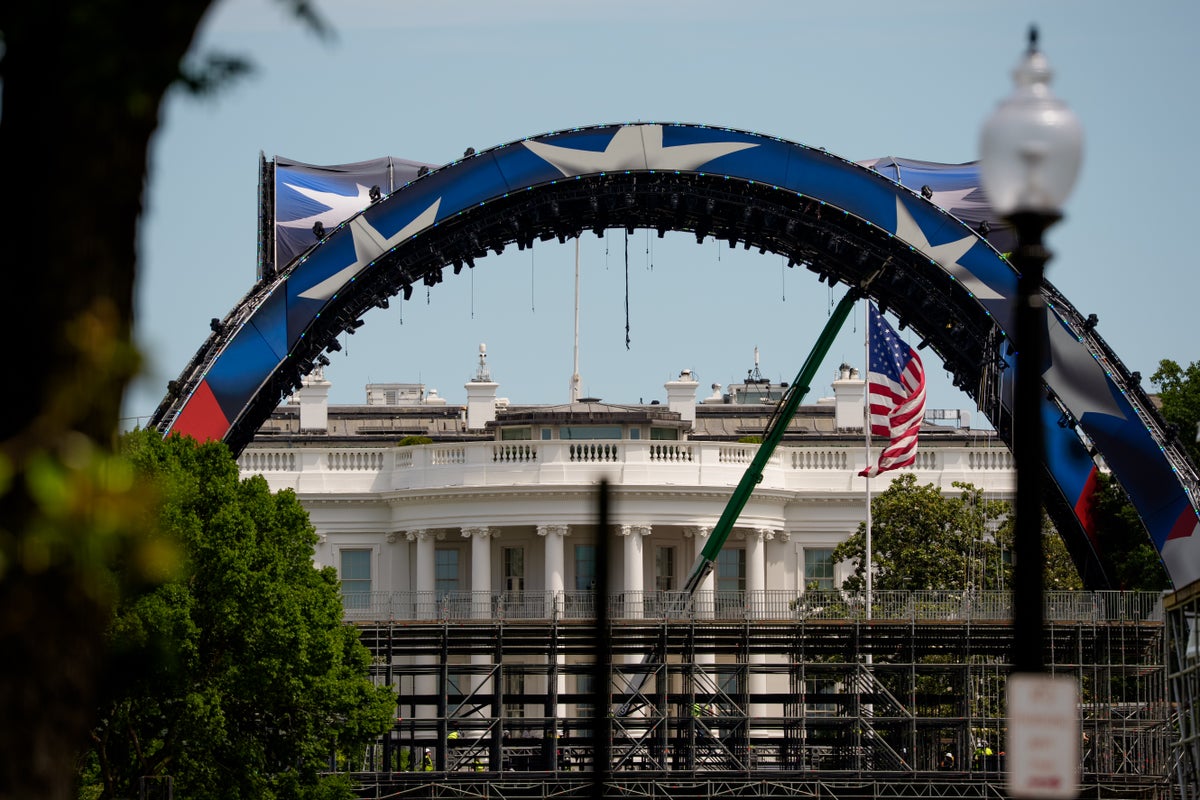
"This is really for other presidents," Trump remarked during a recent press gathering, pointing out toward the scaffolding. "This is not for me."
Yet, the critics see a different motivation entirely. They look at the sheer disruption—the legal battles that wound through an appeals court, which narrowly allowed construction to continue through June 2026—and see an ego carved into the landscape. They point to comments shared with confidants, where the president allegedly mused that he was building a monument to himself because no one else would.
Erasing the Grass
The hunger for stone is not contained within the ballroom walls. It has spilled directly outside the doors of the Executive Office.
For generations, the White House Rose Garden was defined by its soft, manicured turf. It was a place of quiet walk-and-talks, of dew on the grass during early morning press briefings. John F. Kennedy reimagined it; generations of presidents used its green expanse as a symbols of renewal.
Today, that green is gone.
The lawn has been completely excavated and replaced by a white stone patio, with pavers arranged in a sharp diamond pattern. Umbrella-covered tables stand where the grass once grew, mimicking the open-air, country-club aesthetic of Mar-a-Lago.
The reasoning provided by the administration was intensely pragmatic, almost domestic. The president complained that the traditional lawn was inhospitable to guests, noting that women wearing high heels would frequently sink into the soft, rain-soaked soil during outdoor receptions. Stone, he argued, was clean. It was stable. It was functional.
To complete the transformation, the garden’s open feel has been anchored by heavy, permanent art. Statues of Alexander Hamilton and Benjamin Franklin now stand watch over the patio, alongside a new, patriotic sculpture titled Freedom’s Charge. It is no longer a garden in the traditional sense; it is an open-air boardroom, built for heels and hard soles, stripped of its softness.
A New Shade of History
The aesthetic migration from the Florida coast to the Potomac River continues down the National Mall. If you walk past the White House grounds toward the Lincoln Memorial, you will find the Reflecting Pool.
For nearly a century, that long, rectangular body of water acted as a mirror for the sky and the Washington Monument. Its beauty lay in its passivity. It caught the grey clouds of winter and the heavy gold sunlight of summer evenings. It was the backdrop against which Martin Luther King Jr. told the world about his dream.
Now, if you look down into the water, the mirror has been tinted.
Workers have drained the pool and repainted its concrete floor in a deep, vibrant hue the president officially calls "American flag blue." The goal, according to the administration, was to make the water pop, to give it a crisp, deliberate luster that looks striking from the air and on television.
To the casual tourist, it looks sharp, clean, and intentional. To historians and preservationists, it feels like an artificial intervention on a monument that was meant to be meditative. The pool no longer reflects the world as it is; it filters it through a specific, manufactured lens.
The Landscape of Heroes and Steel
The ambition fans outward, stretching down the river and up into the sky. On June 4, 2026, the president announced plans for a massive pedestrian promenade built onto the Lincoln Memorial itself, designed to act as an elevated bridge for foot traffic over the two busy traffic arteries that encircle the Civil War president's monument.
Not far away, plans are moving forward for an Independence Arch. The proposed monument, adorned with soaring bronze eagles and a robed Lady Liberty figure, is projected to stand 250 feet tall. In a city where building heights are strictly regulated to protect the dominance of the U.S. Capitol dome, this arch would rival the skyline, visible from almost every major vantage point in the district.
And along the banks of the Potomac River at West Potomac Park, heavy machinery is preparing the ground for the National Garden of American Heroes. Intended to open in conjunction with the nation’s 250th anniversary of independence, the park will eventually house hundreds of statues: founding fathers, civil rights leaders, military veterans, athletes, and entertainers, all gathered together in a permanent, crowded pantheon of American achievement.
Even the city’s independent cultural hubs have been swept into the slipstream. The historic Kennedy Center for the Performing Arts faced slumping ticket sales and high-profile show cancellations following an aggressive administration takeover. In February, the White House announced the venue would close for two full years for a comprehensive structural overhaul. That plan ran into a brick wall in late May, when a federal judge blocked the closure and ordered the president's name removed from the center’s promotional materials and facade. In a characteristically defiant pivot, the president announced he would simply bypass the court by transferring total control of the cultural center directly to Congress.
The Cluttered Library
To understand the soul of this entire building blitz, however, one must leave the grand plazas and step inside the room where the orders are signed.
The Oval Office has always been a mirror of its occupant. Some presidents prefer minimalist spaces, clean lines, and open air. When Trump reoccupied the room in January 2025, he treated it like a canvas that had been left unfinished.
The current iteration of the room is a dense, heavy exercise in historical curation and personal taste. Gold accents dominate the draperies and fixtures. Small statuettes and historical portraits, many retrieved from deep archival storage, line the walls. Some of the figures in the frames are distinct; others are obscure historical actors whose names require a specialist to identify. Busts of Abraham Lincoln and Benjamin Franklin sit on side tables crowding the heavy Resolute Desk.
The effect is not one of modern executive efficiency. It feels like an old, wealthy collector’s private library, packed with bric-a-brac, heavy with the scent of old paper, polished wood, and ambition. It is a room that rejects the idea of less-is-more.
Everywhere you look in Washington right now, from the deep subterranean bunkers of the new East Wing to the blue floor of the Reflecting Pool, the city is being asked to accommodate a new identity. The capital is no longer just a place where laws are debated; it is a construction site where stone is being commanded to perform, to protect, and to impress.
The jackhammers will eventually fall silent. The concrete will cure. The 4-inch glass will be polished clean, and the drone guards will take their positions on the steel roof. Only then will we know if these new monuments blend into the long, classical story of the republic, or if they stand apart, an island of gold and steel in a city of white marble.
For a deeper look into the architectural debates and visual renderings of the changing capital landscape, you can watch this architectural breakdown of the project: White House Ballroom Construction and Controversies. This video provides a detailed journalistic analysis of the structural changes made to the East Wing and examines the ongoing historical preservation debates surrounding the project.