The Strait of Hormuz is the world’s most critical maritime chokepoint, facilitating the daily passage of approximately 20% of global petroleum liquids and a significant portion of liquefied natural gas (LNG). When Iran institutes a policy of selective safe passage—granting unhindered transit to specific nations including Russia, China, India, Iraq, Pakistan, Bangladesh, and the Philippines while implicitly threatening or restricting others—it is not merely executing a naval maneuver. It is rewriting the economic cost functions of global trade, weaponizing maritime geography, and forcing a structural divergence in how nations calculate energy security, aviation viability, and tourism infrastructure.
Understanding this shift requires moving past political rhetoric and analyzing the mechanics of asymmetric transit. By lowering risk premiums for a designated bloc while escalating them for unaligned nations, Iran manipulates the spatial economics of energy distribution and downstream service sectors.
The Tri-Commodity Cost Function: Crude Oil, LNG, and LPG
Maritime shipping costs are driven by three primary variables: freight rates, bunker fuel costs, and insurance risk premiums. In a standardized market, these variables fluctuate based on global supply and demand. However, a selective transit policy introduces an artificial bifurcation in the insurance market, specifically regarding War Risk Insurance and Kidnap and Ransom (K&R) premiums.
Crude Oil Distortion and Refinement Spreads
For unaligned oil tankers transiting the Strait, the cost of War Risk Insurance can spike from a standard 0.01% of hull value to over 1% during periods of heightened tension. For a Very Large Crude Carrier (VLCC) valued at $100 million, this represents a $1 million increase per voyage.
When nations like China and India are granted safe passage, their state-backed fleets or chartered vessels bypass these punitive premiums. This creates a structural cost advantage:
- Arbitrage Generation: Safe-passage refiners acquire crude with a lower landed cost per barrel compared to European or East Asian competitors.
- Supply Chain Continuity: While unaligned refiners must source alternative, more expensive grades from the Atlantic Basin or West Africa, exempted nations maintain uninterrupted access to heavy, sour Middle Eastern crudes optimized for their complex refining configurations.
LNG and LPG Infrastructure Rigidities
Unlike crude oil, which can be rerouted via alternative pipelines or stored relatively cheaply, Liquefied Natural Gas (LNG) and Liquefied Petroleum Gas (LPG) rely on highly specialized, capital-intensive infrastructure.
[Mideast Liquefaction Terminals] ---> [Strait of Hormuz (Chokepoint)] ---> [Import Terminals]
                                              |
                        +---------------------+---------------------+
                        |                                           |
            [Exempted Vessels]                             [Unaligned Vessels]
            • Risk Premium: 0%                             • Risk Premium: Elevated/Uninsurable
            • Route: Direct, Scheduled                     • Route: Cape of Good Hope Detour (+14-20 days)
            • Cost: Baseline                               • Cost: Capital Efficiency Collapse
The physics of LNG transport involve constant boil-off gas management. If an unaligned LNG carrier is forced to avoid the Persian Gulf entirely or face uninsurable transit risks, the cargo must be sourced from farther afield (e.g., the US Gulf Coast). This collapses the capital efficiency of the global LNG fleet by extending voyage days and disrupting just-in-time delivery schedules for power generation utilities. Bangladesh and Pakistan, structurally vulnerable to energy poverty, rely heavily on spot-market LNG; an exemption from Iran is a macroeconomic lifeline preventing grid collapse.
The Downstream Cascade: Aviation, Tourism, and Macroeconomic Stability
Energy security is fundamentally intertwined with consumer-facing service economies. The insulation of specific countries from the Hormuz premium prevents a destructive macroeconomic cascade that typically degrades aviation networks and international tourism.
The Jet Fuel Pricing Mechanism
Aviation fuel typically accounts for 25% to 40% of an airline's operating expenses. Because jet fuel (Kerosene-type aviation turbine fuel) is refined directly from crude oil fractions, any structural inflation in oil landed costs immediately compresses airline margins.
The mechanism links geographic immunity to aviation survival through three steps:
- Refining Margin Protection: Exempted nations process crude without the Hormuz risk premium, allowing domestic refiners to supply aviation turbine fuel to national carriers at stable price points.
- Network Resilience: Airlines operating out of safe-passage hubs (e.g., Moscow, New Delhi, Beijing) can maintain long-haul route networks without imposing aggressive fuel surcharges on consumer tickets.
- Competitiveness Arbitrage: Unaligned carriers must either pay inflated fuel costs or reroute flight paths to avoid volatile airspace adjacent to the chokepoint, burning more fuel per seat-kilometer and pricing themselves out of competitive international corridors.
Tourism Infrastructure and Capital Flight
Tourism is a highly price-sensitive, discretionary economic sector. When energy costs escalate, the real disposable income of travelers contracts globally, while the cost of operating hospitality infrastructure (heating, cooling, food logistics) rises.
By stabilizing energy inputs, nations like the Philippines and Thailand (via regional energy balance) protect the baseline viability of their hospitality sectors. Furthermore, stable energy costs prevent the currency depreciation often experienced by developing economies facing sudden oil-import bill spikes. When a country's balance of payments is protected by guaranteed energy transit, its currency remains stable, maintaining the purchasing power of international visitors and securing inbound foreign direct investment in leisure and infrastructure projects.
Strategic Cartelization: The Russia-Iran-China Nexus
The selective granting of safe passage is not an act of diplomatic altruism; it is an exercise in strategic cartelization designed to construct an alternative, sanction-resistant economic ecosystem.
                  +---------------------------------------+
                  |                 IRAN                  |
                  +---------------------------------------+
                     /                  |                \
    Guaranteed Securitization   Sanction Circumvention   Asymmetric Tech & Finance
                   /                    |                  \
                  v                     v                   v
        +-------------------+ +-------------------+ +-------------------+
        |       CHINA       | |      RUSSIA       | |   INDIA / ASEAN   |
        +-------------------+ +-------------------+ +-------------------+
The Sino-Iranian Energy Symphony
China’s inclusion in the safe-passage framework cements its role as the primary clearinghouse for Iranian energy products. This relationship bypasses the US-dollar-dominated SWIFT banking network, utilizing the Renminbi (RMB) for settlement. The strategic trade-off is clear: Iran secures a guaranteed buyer for its extracted wealth, while China secures a discounted, uninterrupted energy stream that is physically insulated from Western maritime interdiction capabilities.
The Russian Logistic Realignment
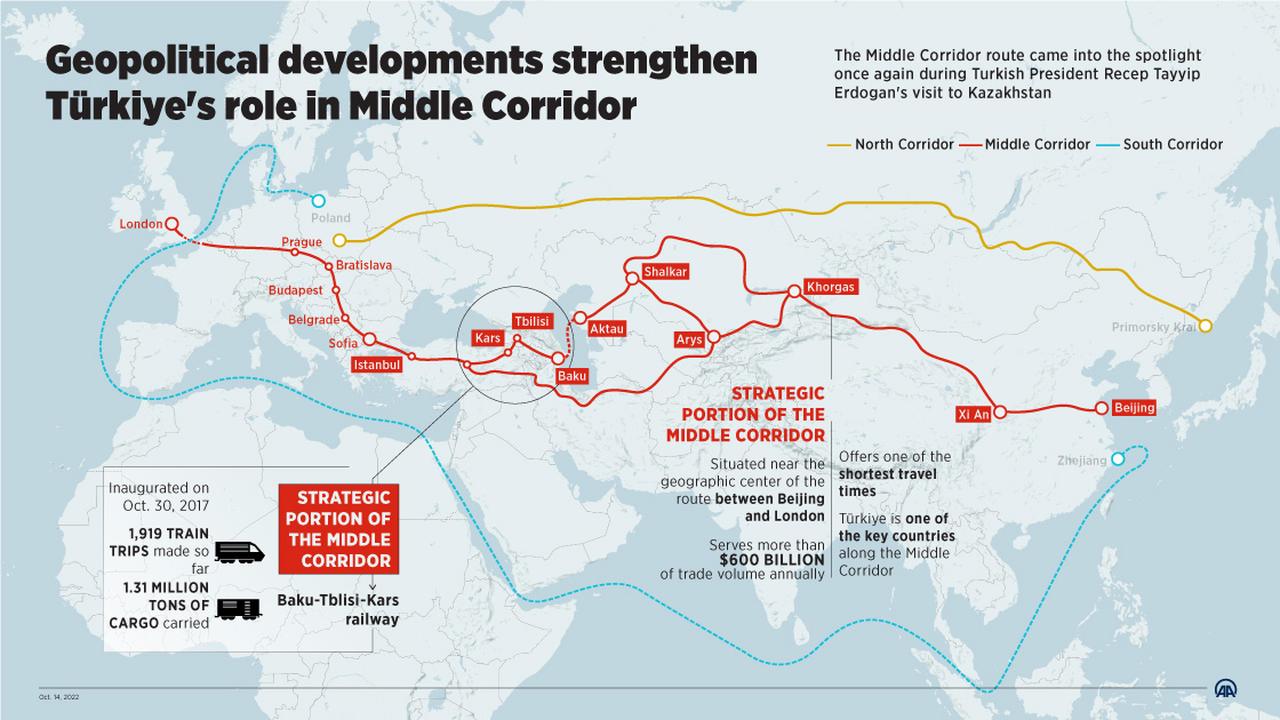
For Russia, the arrangement is highly complementary to its International North-South Transport Corridor (INSTC). By linking Russian rail networks through the Caspian Sea directly to Iranian ports on the Persian Gulf and the Gulf of Oman, Moscow establishes an end-to-end logistics chain outside the control of NATO or Western naval forces. Safe passage through Hormuz ensures that Russian refined products, grain shipments, and industrial inputs can flow into the Indian Ocean and South Asian markets seamlessly, undercutting the efficacy of unilateral Western sanctions packages.
Structural Bottlenecks and Limitations of Asymmetric Transit
While the strategy offers significant geopolitical leverage, its operationalization is constrained by structural realities inherent to maritime logistics and international law.
The Problem of Flag-State and Fleet Identification
Modern shipping relies on a complex web of beneficial ownership, flag-state registration (flags of convenience), and international crew composition. A vessel may be owned by a Greek corporation, chartered by a Chinese state enterprise, flagged in Panama, and crewed by Filipino mariners.
Iran's naval forces face a severe data and verification bottleneck:
- Kinetic Identification Friction: Relying on automated identification system (AIS) transponders is unreliable, as vessels frequently spoof data in high-risk zones. Physical boarding or drone verification introduces operational drag and risks accidental escalation with neutral parties.
- The Shadow Fleet Overlap: Much of the crude moving out of Russia and Iran utilizes the "shadow fleet"—older, under-insured vessels with opaque ownership structures. Distinguishing an approved shadow tanker from an unapproved one requires granular, real-time intelligence sharing that is difficult to sustain at operational scale.
Retaliatory Chokepoint Dynamics
Asymmetry invites counter-asymmetry. If unaligned nations find their commercial shipping systematically disadvantaged or threatened in the Strait of Hormuz, the pressure shifts to global naval coalitions to enforce freedom of navigation via convoy systems or targeted counter-interdictions.
Furthermore, nations relying on the safe-passage decree remain exposed to the physical reality of kinetic conflict. A stray missile, a sea mine breaking formation, or an error in operational targeting can instantly destroy the assumed safety of an exempted vessel, causing insurance markets to default to a universal high-risk rating regardless of diplomatic guarantees.
The Strategic Play: Operational Realignment for Global Supply Chains
The balkanization of maritime transit routing requires energy buyers, logistics providers, and corporate strategists to abandon the assumption of a unified global trade architecture.
Organizations must systematically transition to a dual-track supply chain matrix. This involves segregating shipping assets into dedicated regional pools: one fleet optimized exclusively for the Western-aligned, high-insurance-premium corridors, and another fleet operating entirely within the state-backed, sanctioned-insulated Eastern ecosystem.
Furthermore, logistics planning must structurally price in a permanent 15% volatility buffer on all routes touching the Middle East, shift capital allocation toward alternative overland corridors like the INSTC, and build localized refining redundancies to mitigate the inevitable shocks of a fractured chokepoint regime. Survival in this fragmented landscape belongs not to the lowest-cost operator, but to the most geopolitically agile.