Washington wants Abu Dhabi to seize Iranian islands in the Persian Gulf. Think about that for a second. We aren't talking about routine diplomatic posturing or standard economic sanctions. This is a massive, highly dangerous shift in Middle Eastern geopolitics. According to reports originally broken by the Telegraph, US officials are actively pushing the United Arab Emirates to take control of three strategically critical islands currently held by Iran.
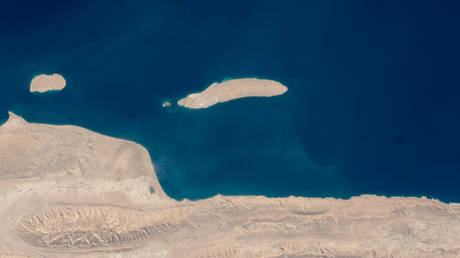
The islands in question are Abu Musa, Greater Tunb, and Lesser Tunb. You probably haven't thought about them since your high school geography class, if ever. But right now, they're sitting at the center of a potential military flashpoint.
This isn't just about a territorial dispute between neighbors. It's a calculated gamble by US policymakers to alter the balance of power in the world's most critical oil shipping lane, the Strait of Hormuz. But looking closely at the mechanics of this proposal reveals it is a recipe for an absolute catastrophe.
Why the US Wants UAE to Seize Iranian Islands Right Now
The timing isn't accidental. Washington is frustrated. Decades of economic sanctions haven't stopped Iran's regional influence or its nuclear ambitions. The shadow war between Israel and Iran keeps threatening to boil over into full-scale regional conflict. By encouraging the UAE to claim these islands, US officials hope to establish a permanent maritime chokepoint against the Islamic Revolutionary Guard Corps (IRGC).
These three islands sit directly alongside the deep-water shipping lanes of the Strait of Hormuz. Nearly a fifth of the world's petroleum passes through this narrow stretch of water every single day. If you control the islands, you control the visual and military surveillance of every oil tanker, warship, and cargo vessel entering or leaving the Gulf.
From a purely theoretical military perspective, Washington sees this as a masterstroke. It puts a Western-aligned Arab state in the driver's seat of Gulf security. It pushes Iran's maritime borders backward. Most importantly, it forces Tehran onto the defensive on its own doorstep.
But theory rarely survives contact with reality. The reality here is that the US is asking the UAE to poke a sleeping, heavily armed bear.
The Century-Old Blood Feud Over Abu Musa and the Tunbs
To understand how reckless this strategy is, you need to understand how we got here. This isn't a new argument. The ownership of Abu Musa, Greater Tunb, and Lesser Tunb has been a open wound since 1971.
Before the British Empire packed up its bags and left the Gulf in 1971, these islands were managed by the emirates of Sharjah and Ras Al Khaimah. Just days before the UAE officially formed as a unified country, the Iranian military, under the Shah, moved in and occupied them. The Shah's argument was simple: historical Persian maps showed the islands belonged to Iran.
When the Islamic Revolution overthrew the Shah in 1979, the new regime didn't change the policy. They doubled down. Over the last few decades, Iran has heavily militarized these outposts. They didn't just plant a flag. They built airstrips, established permanent naval bases, installed advanced radar systems, and deployed anti-ship missile batteries.
Iranian Military Infrastructure on the Islands:
- Anti-ship cruise missile sites (Gadir and Noor systems)
- Hardened underground submarine pens for midget subs
- Long-range air defense radar arrays
- Fortified garrisons of IRGC naval commandos
The UAE has never dropped its claim. Every year, Emirati diplomats stand up at the United Nations and demand the return of their sovereign territory. They've repeatedly offered to take the case to the International Court of Justice in The Hague. Iran refuses every single time. Tehran treats the islands as non-negotiable sovereign soil. Telling the UAE to just go take them isn't a diplomatic suggestion. It's an invitation to a major war.
The Lethal Calculus of an Emirati Seizure
Let's look at how this plays out if Abu Dhabi actually listens to the hawks in Washington. It wouldn't be a peaceful transition of power. It would be an amphibious invasion against heavily fortified positions.
The UAE has a highly modern, technologically advanced military. They've spent billions buying American F-16s, French Mirage jets, and advanced missile defense systems. Experts often call them "Little Sparta" because of their punch-above-their-weight military capability. But attacking an island garrison defended by fanatical IRGC troops is a completely different beast than conducting airstrikes in Yemen.
Iran's response to an attempted seizure would be swift, brutal, and asymmetrical. They wouldn't just fight for the islands. They'd retaliate across the entire Gulf theater.
- Asymmetric Swarm Attacks: The IRGC Navy specializes in fast-attack craft armed with missiles. They would swarm Emirati ports like Jebel Ali, the largest marine terminal in the Middle East.
- Ballistic Missile Strikes: Dubai's gleaming skyscrapers and Abu Dhabi's oil refineries are well within range of Iran's vast ballistic missile arsenal. A single successful strike on a major financial district would devastate the UAE's economy overnight.
- Global Energy Collapse: The moment the first shot is fired, shipping insurance rates would skyrocket to prohibitive levels. Tanker traffic through the Strait of Hormuz would freeze. Oil prices would instantly spike past $150 a barrel, triggering a global recession.
Emirati leadership knows this. They aren't stupid. While they desperately want the islands back, they value their economic stability and their survival even more.
The UAE Balancing Act Between Washington and Tehran
The US officials pushing this plan are misreading the current mindset in Abu Dhabi. Under President Sheikh Mohamed bin Zayed Al Nahyan, the UAE has radically shifted its foreign policy over the last few years. They're moving away from blind confrontation and leaning heavily into economic diplomacy.
The UAE recently normalized relations with Israel through the Abraham Accords, yes. But at the same time, they've actively repaired diplomatic ties with Iran. They sent an ambassador back to Tehran. They're expanding bilateral trade. Dubai serves as a vital economic lifeline for Iranian businesses trying to bypass Western sanctions.
The Emiratis are playing a sophisticated hedging game. They want the US security umbrella, but they refuse to be used as America's proxy battering ram. They look at how Washington has handled other regional conflicts and they see an unreliable partner. They saw how the US reacted when Iranian drones struck Saudi oil facilities in 2019—Washington offered words, not military retaliation. Abu Dhabi isn't going to risk its national existence for a US administration that might change its mind after the next election cycle.
How the International Community Stays Divided
This isn't just a bilateral issue between the US and the UAE. Other global superpowers have their own stakes in these tiny rocks.
China, which relies on the Persian Gulf for the vast majority of its crude oil imports, wants absolute stability. Beijing recently brokered a detente between Saudi Arabia and Iran. The last thing the Chinese government wants is a US-backed maritime war that shuts down the flow of energy to its factories.
Russia has grown incredibly close to Iran, sharing military tech and drone tactics. Moscow would immediately back Tehran's sovereign claims, creating yet another proxy standoff between the Kremlin and the White House.
Even within the Gulf Cooperation Council (GCC), support isn't unified. Countries like Oman and Qatar maintain highly cordial relations with Iran. They share massive natural gas fields with Tehran. They won't support a military escalation that turns their backyard into a combat zone. The UAE would find itself isolated, fighting a high-intensity war with limited regional backing.
Real Steps Toward De-escalation
If Washington actually wants to secure the Strait of Hormuz, pushing for a military land grab is the worst possible path. True security in the Gulf requires a completely different playbook.
First, the US needs to stop treating regional security as a zero-sum game where the only options are total capitulation or war. It's time to support a structured, multilateral maritime framework. This means backing regional hotlines between the navies operating in the Gulf to prevent accidental clashes from turning into full-scale engagements.
Second, the territorial dispute over Abu Musa and the Tunbs must be tied to broader economic incentives. Iran's economy is suffocating under sanctions. A realistic diplomatic strategy would offer targeted sanctions relief for Tehran in exchange for demilitarizing the islands and allowing joint UAE-Iran economic management zones. It sounds impossible right now, but it's far more realistic than surviving a war in the Strait.
Finally, the UAE should continue its current path of strategic patience. They must reject the dangerous advice coming from hawkish factions in Washington. Abu Dhabi needs to maintain its diplomatic channel with Tehran, building economic interdependencies that make military conflict too costly for the Iranians to contemplate. True sovereignty isn't achieved by starting a war you can't finish; it's won by outlasting your opponent through smart diplomacy and economic power.