The UAE represents a unique case study in asymmetric risk perception, where the presence of regional kinetic threats fails to trigger the expected capital or talent flight. While traditional security models suggest that proximity to conflict correlates linearly with decreased foreign direct investment (FDI) and expat attrition, the UAE operates under a Resilience Multiplier effect. This phenomenon is driven by three structural pillars: institutional insulation, the high cost of exit, and a calculated trade-off between physical risk and economic utility. Understanding why the expat population remains anchored despite escalating regional tensions requires a move away from emotional surveys toward a rigorous analysis of the Security-Utility Function.
The Security-Utility Function: Why Risks Are Discounted
The decision for a high-net-worth individual or a skilled professional to remain in a conflict-adjacent zone is rarely sentimental. It is an exercise in Expected Utility Theory. The "Utility" of the UAE—characterized by zero personal income tax, world-class infrastructure, and a strategic position as a global trade hub—is weighed against the "Risk" of regional instability.
$U = P(S) \cdot E + P(I) \cdot C$
In this simplified model, $U$ is the total utility for an expat. $P(S)$ represents the probability of continued stability, while $E$ is the economic gain (untaxed income, career growth). $P(I)$ is the probability of a catastrophic instability event, and $C$ is the cost of that event.
The UAE has successfully suppressed $P(I)$ through massive investment in multi-layered defense systems, such as the Terminal High Altitude Area Defense (THAAD) and Patriot PAC-3 batteries. When these systems successfully intercept threats, they don't just protect physical assets; they provide a Proof of Concept for the state’s protective umbrella, effectively lowering the perceived risk coefficient for the resident population.
The Three Pillars of Expat Retention
1. Institutional Insulation and Legal Predictability
The UAE has decoupled its economic functionality from its geopolitical surroundings. By creating "Special Economic Zones" like the Dubai International Financial Centre (DIFC) and Abu Dhabi Global Market (ADGM), the state has imported English Common Law frameworks. This creates a legal "bubble" that ensures business continuity even if the political climate shifts. Expats do not view themselves as residents of a Middle Eastern country in a traditional sense; they view themselves as participants in a globalized jurisdiction that happens to be geographically located in the Gulf.
2. The Sunk Cost of Integration
The "sticky" nature of the UAE’s expat population is a function of Asset Specificity. Over the last decade, the UAE transitioned from a transient "gold rush" economy to one where expats hold long-term illiquid assets.
- Real Estate Exposure: The introduction of 10-year Golden Visas and freehold property ownership means a significant portion of the expat population has their net worth tied to local valuations.
- Educational Sunk Costs: The proliferation of high-end international schools creates a "social anchor" that makes relocation logistically and emotionally expensive.
- Career Path Dependency: Many professionals in the UAE occupy roles in regional headquarters (RHQ) that do not have equivalent counterparts in their home countries or other regional hubs like Singapore or London.
3. The Lack of Viable Substitutes
When analyzing the "stay or go" dynamic, one must look at the Opportunity Cost of Relocation. For a professional based in Dubai, the alternative is not a safer version of Dubai; it is often a return to a high-tax, low-growth environment in Europe or North America. The UAE benefits from a "Relative Safety" paradox. While the UAE faces regional kinetic threats, Western cities face perceived threats of rising crime, social unrest, and fiscal instability. In the mind of the rational expat, a 1% chance of a missile strike is often weighed more favorably than a 100% chance of a 45% tax rate and stagnant wages.
Quantifying the Threshold of Exit
The "Exit Threshold" is the point at which the probability of physical harm outweighs the economic and lifestyle benefits. This threshold is not uniform across the population. It follows a stratified risk tolerance model:
- Tier 1: Institutional Capital (Low Tolerance): Multinational corporations (MNCs) have the lowest threshold. If insurance premiums for "War and Strikes" (SRCC) coverage exceed a certain percentage of operational revenue, MNCs begin "Shadow Relocation"—moving critical staff to back-offices in India or Eastern Europe while maintaining a skeletal presence in the UAE.
- Tier 2: High-Net-Worth Individuals (High Tolerance): This group is highly mobile but also highly insulated. They often possess multiple residencies. They are the last to leave because their assets are often diversified enough to withstand a temporary dip in local stability.
- Tier 3: Mid-Level Professionals (Varying Tolerance): This is the group usually captured in "feeling safe" surveys. Their decision to stay is often driven by a lack of immediate liquidity to relocate, making their "feeling of safety" a psychological necessity to justify their continued presence.
The Strategic Role of "Normalcy Bias"
The UAE government is a master of Information Environment Management. By maintaining a high-frequency cycle of "mega-events" (e.g., COP28, various World Summits, and global sporting events), the state creates a narrative of hyper-normalcy. This is a deliberate strategy to counteract the "CNN Effect," where global media cycles focus on regional conflict.
This normalcy is not just PR; it is operational. The speed with which life returns to normal after a security incident is a key metric for expat confidence. The UAE’s ability to clear debris, issue statements, and resume flight operations at DXB (Dubai International Airport) within hours of any disruption is a Resilience Signal that informs the expat’s internal risk assessment.
Structural Vulnerabilities in the Retention Model
Despite the current stability, the UAE’s expat retention model has inherent vulnerabilities that could be triggered by specific catalysts:
- Insurance Escalation: If global reinsurers reclassify the entire UAE as a "High-Risk Zone," the resulting surge in premiums for aviation, shipping, and commercial property could force an involuntary corporate exodus, regardless of how "safe" individual employees feel.
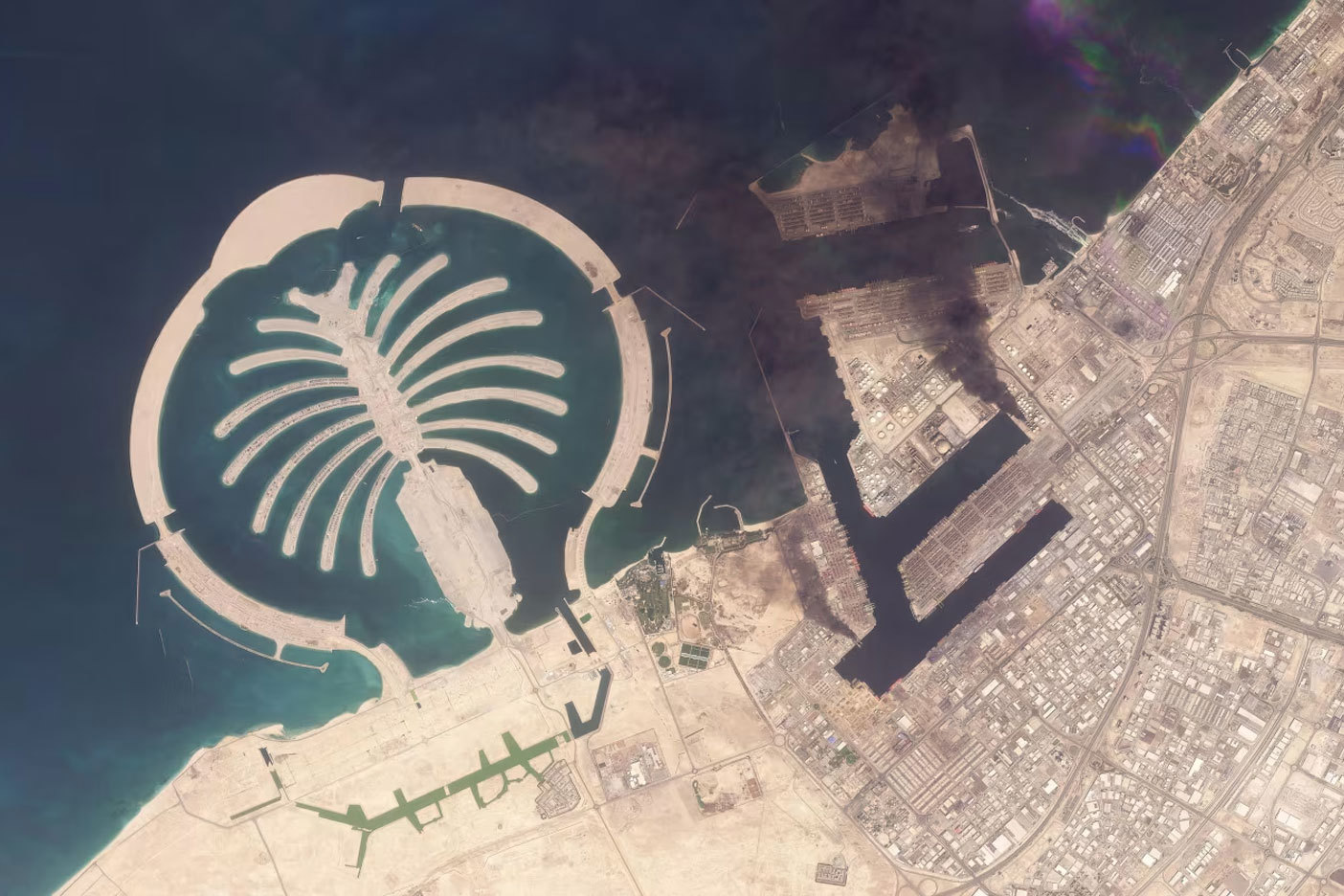
- The Single-Point-of-Failure (SPOF) Risk: The UAE’s economy is heavily reliant on a few critical nodes, namely DXB and the Jebel Ali Port. A sustained disruption to these nodes would bypass the psychological resilience of the population by cutting off the physical supply chains that make life in the desert viable.
- Taxation Introduction: The introduction of Corporate Tax and the potential for future Personal Income Tax narrows the "Utility" side of the equation. As the economic surplus for the expat shrinks, the "Risk" side becomes more prominent.
The Sovereign Response to Kinetic Threats
The UAE’s shift toward a Multi-Alignment Foreign Policy is the ultimate hedge against expat flight. By maintaining strong ties with both the West and the East (BRICS+ expansion), the UAE ensures that it remains "too connected to fail." This diplomatic thickness acts as a secondary layer of defense. The logic is simple: if every major global power has a significant stake in the UAE’s stability (real estate, energy, or trade), the likelihood of a sustained, unmitigated conflict remains low.
Strategic Play: The Portfolio Approach to UAE Residency
For the rational actor—be it a corporation or an individual—the UAE should no longer be viewed as a permanent "safe haven" or a "temporary camp," but rather as a High-Yield Geopolitical Asset.
- Maintain Operational Liquidity: Corporations must ensure that their UAE entities are structurally "modular." This means having the ability to shift digital workloads and management oversight to a secondary hub (like Riyadh, Singapore, or Riyadh) within a 48-hour window.
- Asset Hedging: For individuals, the "Golden Visa" should be paired with a "Plan B" residency in a different geopolitical theater. The UAE is an excellent place to accumulate wealth, but wealth preservation should involve diversifying away from the Gulf’s geographic risk.
- Monitor Lead Indicators: Disregard sentiment surveys. Instead, track the Internal Rate of Return (IRR) of local real estate against the cost of Political Risk Insurance (PRI). When the cost of insurance begins to outpace the yield of the asset, the structural resilience of the "Safe UAE" narrative is nearing its breaking point.
The UAE has successfully decoupled perceived safety from regional reality through a combination of military hardware, legal innovation, and economic enticement. As long as the Utility Multiplier stays high enough to compensate for the Kinetic Risk, the expat population will not only stay—they will continue to expand.