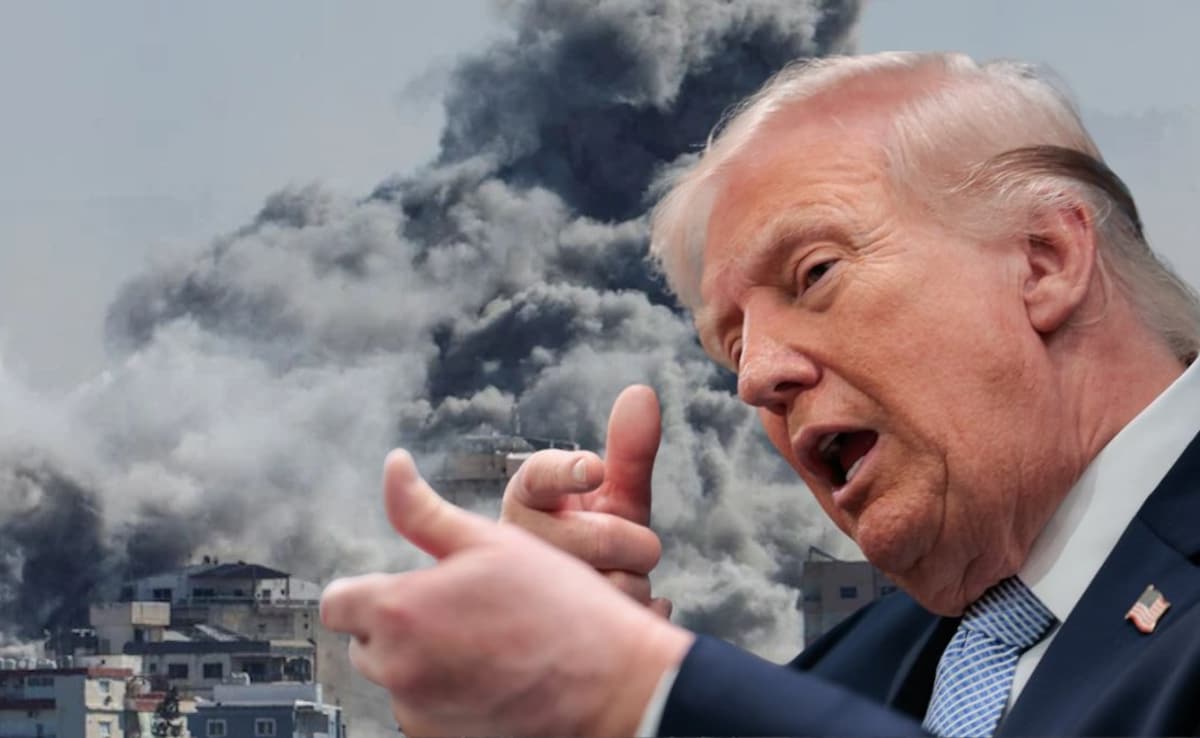
The stability of global energy markets hinges on the functional openness of the Strait of Hormuz, a maritime corridor through which approximately 21 million barrels of oil flow daily. When executive leadership in the United States casts doubt on a ceasefire between regional powers—specifically citing the continued closure or disruption of this strait—the issue shifts from a localized military conflict to a systemic failure of international maritime law. The logic of the current Middle East crisis is not defined by ideological friction alone, but by the tangible mechanics of "Chokepoint Leverage." To understand the current breakdown in negotiations, one must analyze the three distinct variables that govern the Strait’s status: kinetic risk, insurance premiums, and the credibility of security guarantees.
The Mechanics of Chokepoint Leverage
Control over the Strait of Hormuz is the primary asymmetric tool for middle-tier powers in the region. The geography of the strait necessitates that all deep-draft tankers pass through the Territorial Waters of Oman and Iran. While the 1982 UN Convention on the Law of the Sea (UNCLOS) provides for "transit passage," this legal framework collapses the moment a littoral state perceives a threat to its national security.
The current escalation follows a predictable "Escalation Ladder."
- Verbal Harassment: Low-cost signals intended to test the political will of Western naval coalitions.
- Kinetic Interference: The physical seizure or boarding of vessels to disrupt the "Just-in-Time" delivery schedules of global refineries.
- Mining and Blockade: The high-risk stage where the cost of passage exceeds the value of the cargo, effectively shuttering the strait without a full military engagement.
The skepticism regarding a ceasefire stems from the fact that a cessation of hostilities in Gaza or Lebanon does not inherently address the structural incentive for Iran to maintain a credible threat over the Strait. For a ceasefire to be durable, the "Security-Trade Tradeoff" must be solved. Currently, the strategic utility of threatening the strait provides more leverage at the negotiating table than the economic benefits of a peaceful, open corridor.
The Volatility Index and Insurance Logic
In maritime logistics, "closure" is rarely a binary state. It is a spectrum of rising costs. Even if the strait is physically open, it can be "economically closed" via the mechanism of War Risk Premiums.
When a superpower like the United States signals that a ceasefire is unlikely due to maritime disruptions, they are directly influencing the risk modeling of London-based underwriters. The cost of shipping through Hormuz involves:
- Hull Stress and War Risk: Premiums that can spike from 0.01% to over 0.5% of the ship's value in a single week.
- Demurrage Costs: The daily rate for a delayed tanker, often exceeding $50,000 to $100,000 USD.
- Rerouting Friction: The lack of viable alternatives. Unlike the Red Sea, where ships can round the Cape of Good Hope, there is no terrestrial or maritime detour for oil loaded inside the Persian Gulf, save for a few under-capacity pipelines in Saudi Arabia and the UAE.
This creates a "Bottleneck Feedback Loop." The more the Strait is used as a bargaining chip, the higher the baseline global energy price becomes, regardless of actual supply levels. The market prices in the possibility of a total shutdown, which acts as a hidden tax on global industrial production.
The Failure of Deterrence Frameworks
The inability to secure a ceasefire indicates a failure in the "Deterrence-Compellence" model. For deterrence to work, the threatened party must believe that the cost of an action (closing the strait) is higher than the reward.
Historically, the U.S. Fifth Fleet provided this deterrent. However, several factors have eroded this framework:
- Asymmetric Capabilities: The proliferation of low-cost loitering munitions (drones) and anti-ship missiles has shifted the cost-exchange ratio. A $20,000 drone can effectively disable a multi-million dollar logistics chain, forcing a $2 billion destroyer to expend a $2 million interceptor.
- The Credibility Gap: Political statements casting doubt on peace suggest that the diplomatic "off-ramps" are no longer viewed as viable by the parties involved. If the U.S. executive branch does not believe a ceasefire will hold because of maritime actions, it signals that the military posture has shifted from "preventing conflict" to "managing a long-term low-intensity war."
The Three Pillars of Regional Instability
To quantify the current crisis, we must view it through three interconnected pillars that prevent a return to the status quo.
1. The Proliferation of Sub-State Actors
Traditional diplomacy assumes state-to-state negotiations. However, the Middle East crisis involves non-state actors who operate with state-level technology but without state-level accountability. These groups use the Strait of Hormuz and the Bab el-Mandeb as a unified front. A ceasefire that only addresses one front while leaving the maritime chokepoints contested is functionally useless for global trade.
2. Energy Transition Sensitivity
While the West is moving toward a post-carbon economy, the interim period has made the global financial system more sensitive to energy shocks, not less. Because many nations have reduced their own fossil fuel production in favor of imports, the reliance on Persian Gulf crude remains a critical vulnerability. This vulnerability is being exploited as a "Geopolitical Multiplier."
3. The Shadow War Logic
Conflict has moved out of the "gray zone" and into a semi-permanent state of friction. In this environment, a ceasefire is not a peace treaty; it is a tactical pause to rearm. The skepticism expressed regarding the Iranian ceasefire is rooted in the "Double-Game" strategy: maintaining a formal diplomatic presence while simultaneously supporting irregular forces that keep the Strait of Hormuz in a state of perpetual high-alert.
Strategic Realignment and the Pivot to Hard Assets
The current trajectory suggests that the era of "Freedom of Navigation" guaranteed by a single global hegemon is transitioning into an era of "Escorted Commerce." This is a significant regression in global trade efficiency.
The second limitation of current ceasefire attempts is the absence of an enforcement mechanism for maritime corridors. Without a multinational "Blue Water" agreement that includes regional powers and Asian consumers (the primary recipients of Gulf oil), any temporary halt in fighting will be fragile. The primary stakeholders—China, India, and Japan—have remained largely on the sidelines, relying on the U.S. to maintain the corridor while they avoid the political costs of intervention. This creates a "Free Rider" problem that destabilizes the deterrent effect.
Structural Bottlenecks in Diplomacy
The logic used by the administration to doubt the ceasefire highlights a shift toward "Functionalist Diplomacy." Under this view, a ceasefire is not measured by the absence of gunfire on land, but by the restoration of flow in the water.
This creates a significant hurdle:
- Linkage: The conflict in Gaza is now inextricably linked to the Strait of Hormuz.
- Escalation Parity: Iran has successfully demonstrated that it can project power far beyond its borders to influence Western political outcomes (inflation, gas prices).
- The Zero-Sum Trap: If the U.S. accepts a ceasefire while the Strait remains under threat, it effectively admits that its maritime dominance is conditional.
Tactical Realities for Energy Markets
Refineries and commodity traders must now calculate for "Permanent Friction." This involves:
- Inventory Buffering: Moving away from "Just-in-Time" to "Just-in-Case" oil stockpiling.
- Route Diversification: Increased investment in the East-West Pipeline (Saudi Arabia) and the Habshan-Fujairah Pipeline (UAE), though neither can currently handle the full volume of the Strait.
- Security Surcharges: Acceptance that the cost of doing business in the region has been permanently reset higher.
The strategic play here is not to wait for a definitive ceasefire—which current rhetoric suggests is a remote possibility—but to adapt to a "Bifurcated Maritime Environment." In this scenario, some vessels (those with specific national affiliations) will pass through the strait with relative ease, while others will require constant naval escort or face prohibitive insurance costs.
The immediate outlook requires a shift in focus from "Is there a ceasefire?" to "Is the Strait of Hormuz being decoupled from the land-based conflict?" Until that decoupling occurs, the geopolitical risk remains a constant variable in the global inflation equation. The doubt cast by executive leadership is not a pessimistic guess; it is a recognition that the leverage gained by controlling the Strait is too valuable for regional actors to relinquish for a mere pause in land-based hostilities.
Military and economic planners should prepare for a sustained period where maritime security is the primary driver of regional policy, necessitating a move toward "Fortress Logistics"—where supply chains are protected by state-backed insurance guarantees and permanent naval convoys.