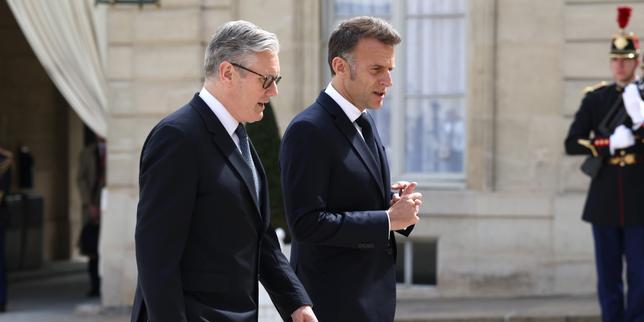
The diplomatic theater currently unfolding in Paris suggests that the global economy can simply negotiate its way out of a maritime chokehold. While European leaders gather to discuss the reopening of the Strait of Hormuz and the precarious ceasefire between Israel and Hezbollah, the reality on the water tells a much darker story. The core issue is not a lack of dialogue, but a fundamental shift in the regional power balance that has rendered traditional shipping guarantees obsolete. If the Strait remains a geopolitical hostage, the resulting energy shock will trigger a global inflationary spiral that no central bank can contain.
The Mirage of the Paris Summit
Delegates sitting in velvet chairs at the Elysee Palace are operating under the assumption that the Strait of Hormuz is a switch that can be flipped back on. It is not. The waterway, which sees roughly 21 million barrels of oil pass through it daily, has become the primary leverage point for an Iranian administration that views Western maritime law as a relic of a bygone era.
While the "reopening" dominates the headlines, the actual mechanics of the closure were never about physical blockades. No one has sunk a VLCC (Very Large Crude Carrier) in the middle of the shipping lane yet. Instead, the closure is psychological and financial. Insurance premiums for tankers have spiked to levels that make transit economically unviable for all but the most desperate operators. A diplomatic "agreement" in Paris does nothing to lower the War Risk Surcharge if the underlying threat of drone strikes and naval boardings remains.
The Hezbollah Factor and the Myth of the Silent Border
The ceasefire between Israel and Hezbollah is currently described by diplomats as "fragile." That is an understatement. It is a tactical pause, not a strategic resolution. Hezbollah has spent the last two decades integrating its missile infrastructure into the bedrock of Southern Lebanon. A few weeks of intense kinetic activity by the IDF did not erase that reality.
From an investigative standpoint, the link between the Northern Israeli border and the Strait of Hormuz is umbilical. Tehran uses Hezbollah as its Mediterranean shield; when pressure mounts on the militia, the response often manifests thousands of miles away in the Persian Gulf. This is the "symmetric escalation" model. By threatening the world's oil supply, the Iranian leadership creates a buffer for its proxies in the Levant. If you want to know when the Strait will truly be safe, stop looking at naval charts and start looking at the rocket launch counts in the Galilee.
Why the Blue Helmets Cannot Save the Trade Routes
There is a growing call for an expanded international naval presence—a "UNIFIL at sea"—to guarantee the flow of commerce. This is a fantasy. The Strait is 21 miles wide at its narrowest point, but the actual shipping lanes are only two miles wide in either direction, separated by a two-mile buffer zone. These lanes fall almost entirely within Omani and Iranian territorial waters.
A heavy Western naval presence in these confined spaces often increases the risk of accidental escalation rather than deterring it. During the "Tanker War" of the 1980s, the US Navy discovered that protecting commercial shipping required an immense amount of resources for very inconsistent results. Modern warfare has only made this harder. A $2,000 loitering munition can disable a $100 million tanker, and no amount of Aegis destroyers can perfectly intercept every "swarm" attack in a confined channel.
The Economic Shrapnel
The business world is currently pricing in a "diplomatic discount," hoping the Paris talks yield a signed communique. This optimism is misplaced. Even if the Strait sees a temporary increase in traffic, the permanent risk premium is now baked into the global economy.
The Cost of Redirection
- Cape of Good Hope Diversions: Shipping companies are already recalculating routes. Avoiding the Middle East entirely adds 10 to 14 days to a journey.
- Fuel Consumption: Longer routes mean higher carbon emissions and massive increases in bunker fuel costs.
- Supply Chain Lag: The "just-in-time" manufacturing model cannot survive a three-week delay in raw material delivery.
The real victims are not the oil giants, who often profit from price volatility, but the emerging economies in Asia and Africa. Nations like India and Vietnam, which rely heavily on Middle Eastern crude to fuel their industrial growth, are seeing their margins evaporated by shipping costs they cannot control.
The Shadow Fleet Problem
While official shipping slows, a "shadow fleet" of aging, under-insured tankers continues to move oil through the Strait. these vessels operate with their AIS (Automatic Identification System) transponders turned off, making them maritime ghosts. They do not care about Paris summits or fragile ceasefires.
This creates a two-tier market. On one hand, you have the legitimate global economy stalled by geopolitical risk. On the other, you have a booming illicit trade that funds the very groups causing the instability. By making the Strait "closed" to legitimate traffic through high insurance and security risks, the international community has inadvertently handed a monopoly on the waterway to the most dangerous actors in the region.
The Technological Blind Spot
We often talk about the Middle East crisis in terms of 20th-century diplomacy—treaties, borders, and UN resolutions. However, the current conflict is being fought with 21st-century asymmetric tech. The "fragile ceasefire" is being tested every day by cyber-attacks on infrastructure and the deployment of autonomous underwater vehicles (AUVs).
A ceasefire isn't just about stopping the rockets. It’s about stopping the digital sabotage of port management systems and the GPS jamming that causes tankers to drift into hostile waters. The Paris summit has spent almost no time discussing the digital sovereignty of the Strait, focusing instead on the optics of a handshake.
The Failure of Energy Diversification
For decades, the West claimed it would move away from its dependence on the Strait of Hormuz. We built pipelines across Saudi Arabia to the Red Sea. We invested in American shale. We subsidized renewables. And yet, here we are in 2026, still holding emergency summits because a 21-mile strip of water is under threat.
The pipelines—specifically the East-West Pipeline in Saudi Arabia—have limited capacity and are themselves vulnerable to drone attacks. American shale provides a cushion but cannot replace the specific grades of heavy crude that Asian refineries are built to process. The transition to green energy is happening, but it isn't happening fast enough to decapitate the political power of the Persian Gulf.
The Brutal Reality of the Ceasefire
On the ground in Lebanon, the "ceasefire" is a period of re-armament. Intelligence reports indicate that the supply lines from Syria are already being tested. The diplomatic community views a day without an airstrike as a success. The military community views it as a window for the next escalation.
Israel's leadership is under immense domestic pressure to ensure that the residents of the north can return to their homes permanently. A "fragile" deal doesn't achieve that. Unless the deal includes a verifiable withdrawal of Hezbollah forces beyond the Litani River—a move the group has resisted for eighteen years—the current quiet is merely a countdown.
The Missing Link in the Paris Talks
The most glaring omission from the current diplomatic effort is a credible enforcement mechanism. If Iran or its proxies decide to seize another vessel tomorrow, what is the consequence? The current toolkit of sanctions has been exhausted. There is no "Snapback" left that hasn't already been priced into the Iranian economy.
Without a credible threat of force or a radical new approach to maritime insurance, the Strait of Hormuz will remain a tool of geopolitical blackmail. The Paris summit may produce a glowing joint statement, and the markets might see a 48-hour relief rally, but the structural instability of the world's most important waterway remains untouched.
We are living in an era where non-state actors and regional powers have realized that they don't need to win a war to win the peace. They only need to make the peace too expensive for the West to maintain. The "fragility" of the ceasefire and the "reopening" of the Strait are not bugs in the system; they are the system.
Stop waiting for a return to the status quo. The old rules of maritime commerce are at the bottom of the Gulf, and no amount of French diplomacy is going to dredge them up.