The Ghost of 1983
The wreckage of modern Beirut often obscures a brief, flickering moment in history when the border between Lebanon and Israel wasn’t merely a line of fire. In May 1983, a Lebanese government led by Amin Gemayel signed a peace treaty with the State of Israel. It was a document intended to end the state of war that had persisted since 1948 and, more crucially, to force the withdrawal of all foreign forces—both Israeli and Syrian—from Lebanese soil.
Today, that treaty is remembered by many as a stillborn curiosity or a betrayal. Yet, as Lebanon currently faces a systematic hollowing out of its state institutions and a relentless exchange of missiles across its southern frontier, the core logic of that 1983 agreement has never been more relevant. The fundamental premise was simple. Lebanon cannot be a sovereign nation while it serves as the primary battlefield for regional proxies.
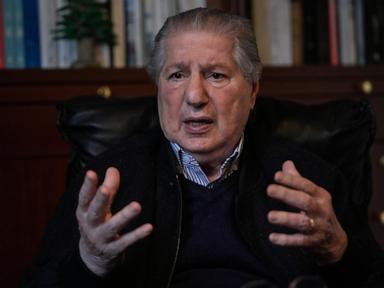
Amin Gemayel, now a patriarch of the Maronite political scene, continues to argue that Lebanon’s survival depends on reclaiming that lost neutrality. He isn't suggesting a warm, cultural embrace of Jerusalem. He is advocating for a cold, pragmatic legal framework that restores the Lebanese state’s monopoly on the use of force. Without a formal cessation of hostilities, Lebanon remains a "convenience theater" for Tehran and a target for Tel Aviv.
The High Cost of the Resistance Narrative
For decades, the dominant political gravity in Lebanon has been defined by "The Resistance." This doctrine posits that Lebanon’s only defense against Israeli aggression is an armed, non-state actor capable of asymmetric warfare. This theory has become the primary justification for Hezbollah’s massive arsenal, which effectively operates outside the control of the Lebanese Armed Forces.
The result is a country with two heads. One head—the official state—begs for international investment, tourism, and diplomatic recognition. The other head—the paramilitary apparatus—engages in regional conflicts that trigger sanctions and devastating retaliatory strikes. This duality has paralyzed the Lebanese economy.
Sovereignty isn't a vague feeling of pride. It is a functional reality where a central government controls its borders and its foreign policy. When a militia makes the decision to enter a war, the entire population pays the price, but the population has no democratic mechanism to stop it. This is the structural trap that Gemayel and other proponents of the 1983 logic believe can only be broken through a formal state-to-state settlement.
Why the 1983 Deal Failed
To understand why a new deal is so difficult, we have to look at why the first one collapsed. The 1983 agreement wasn't destroyed by a lack of will in Beirut or Jerusalem. It was strangled by Damascus.
Hafez al-Assad, the then-president of Syria, viewed any independent Lebanese peace with Israel as a direct threat to Syrian strategic depth. He used his proxies in Lebanon to wage a campaign of assassinations and internal revolts that made the treaty impossible to implement. The Lebanese parliament eventually abrogated the deal under immense pressure in 1984.
The lesson for the modern era is clear. Lebanon does not exist in a vacuum. Any move toward a peace deal or even a formal maritime and land border demarcation is a threat to those who benefit from the status quo of "permanent resistance." For Iran, Lebanon is a forward operating base. For Israel, Lebanon is a persistent security headache that they prefer to manage with airpower rather than diplomacy.
The Demographic and Political Deadlock
The internal sectarian balance of Lebanon makes any talk of "peace" radioactive. The political system is built on a delicate power-sharing agreement between Christians, Sunnis, and Shiites. Because the Shiite community, largely represented by Hezbollah and Amal, views the armed struggle against Israel as central to their political identity and security, any move toward a treaty is framed as an act of communal dispossession.
Critics of Gemayel’s perspective argue that his calls for a return to the 1983 spirit ignore the changed realities on the ground. In 1983, the Shiite community was not yet the dominant political and military force it is today. To suggest a peace deal now is to suggest a direct confrontation with the most powerful military entity in the country.
However, the counter-argument is increasingly grounded in the sheer exhaustion of the Lebanese people. The 2020 Beirut port explosion and the subsequent economic collapse have stripped away the illusions of the state. People are beginning to ask what "resistance" is worth if the country they are resisting for has no electricity, no functional currency, and no future for its youth.
The Maritime Precedent
There is a small, modern sliver of evidence that pragmatism can win. In 2022, Lebanon and Israel signed a US-brokered maritime border deal. This was not a peace treaty, but it was a formal recognition of each other's rights to underwater gas fields.
Crucially, Hezbollah gave its tacit approval. They did this because the economic pressure had become so great that even the "Resistance" needed the potential promise of gas wealth to keep the country from total disintegration. This proves that the "state of war" is a flexible concept when survival is on the line.
If the maritime borders can be settled, the land borders and the state of war itself are theoretically next. The barrier isn't a lack of paperwork or legal definitions. The barrier is the political economy of the conflict. There are too many actors who gain power, funding, and relevance from the continuation of the "unfinished war."
The Illusion of the Buffer Zone
Israel’s strategy has often defaulted to creating "buffer zones" in Southern Lebanon. History shows this is a failing tactic. From 1985 to 2000, the South Lebanon Army (a Lebanese Christian-led militia) and the IDF occupied a "security belt" that only served to fuel the rise of Hezbollah.
Real security for Israel cannot be found in an occupied strip of scorched earth. It can only be found in a stable, sovereign Lebanese state that has both the will and the capacity to prevent its territory from being used as a launchpad. This requires a strong Lebanese Army, which in turn requires a massive influx of international aid that will only come if the state decouples itself from non-state militias.
The Missing Mediator
In 1983, the United States was the primary driver of the negotiations. Today, the US role is complicated by its domestic politics and its over-arching focus on containing Iran. For a new Lebanese peace initiative to take hold, it would likely need a broader coalition, including Gulf Arab states who are currently reluctant to throw money into what they see as a "Hezbollah-controlled" sinkhole.
The Saudi-Iranian rapprochement brokered by China adds another layer of complexity. If Riyadh and Tehran decide to cool their regional competition, Lebanon might be given the "permission" it needs to stabilize. But Lebanon should not have to wait for permission to survive.
The tragic irony of the Lebanese situation is that the tools for its salvation are already sitting on a shelf in a government archive. The 1949 Armistice Agreement and the spirit of the 1983 treaty provide the legal language necessary to end the cycle of destruction.
Sovereignty as a Survival Tactic
The argument for a deal with Israel is often framed as a pro-Western or pro-Israeli stance. This is a misunderstanding of the stakes. For Lebanon, this is about domestic survival.
As long as Lebanon is "at war," the state is an afterthought. Emergency powers, military tribunals, and the bypass of civil law become the norm. The economy stays in the shadows. Brain drain accelerates as the educated middle class moves to Dubai, Paris, or Montreal.
A peace deal, or even a robust non-aggression pact, is the only thing that allows Lebanon to turn its attention inward. It allows for the rebuilding of the port, the stabilization of the central bank, and the restoration of a judiciary that isn't intimidated by gunmen.
The False Choice
Lebanese leaders often present a false choice to their people: You either have the Resistance, or you have Israeli occupation.
There is a third option, which is the one Amin Gemayel has been shouting about from his office in Bikfaya for forty years. That option is the State. A neutral, sovereign Lebanon that adheres to international law and demands the same in return.
It is a difficult, dangerous path. The last time Lebanon tried it, the President-elect was assassinated, and the country was torn apart by a decade of further slaughter. But the alternative is what we see today: a slow, agonizing dissolution where the only thing that grows is the graveyard.
The blueprint exists. The question is whether the current generation of leaders has more courage than the one that watched the 1983 deal burn. Without a definitive break from the proxy-war model, Lebanon will remain a nation in name only, a ghost ship drifting through a sea of regional fire. The time for "managing" the conflict has passed. The only way forward is to resolve it, legally and permanently, before there is nothing left to save.
Lebanon must choose to be a country, or it will remain a target.