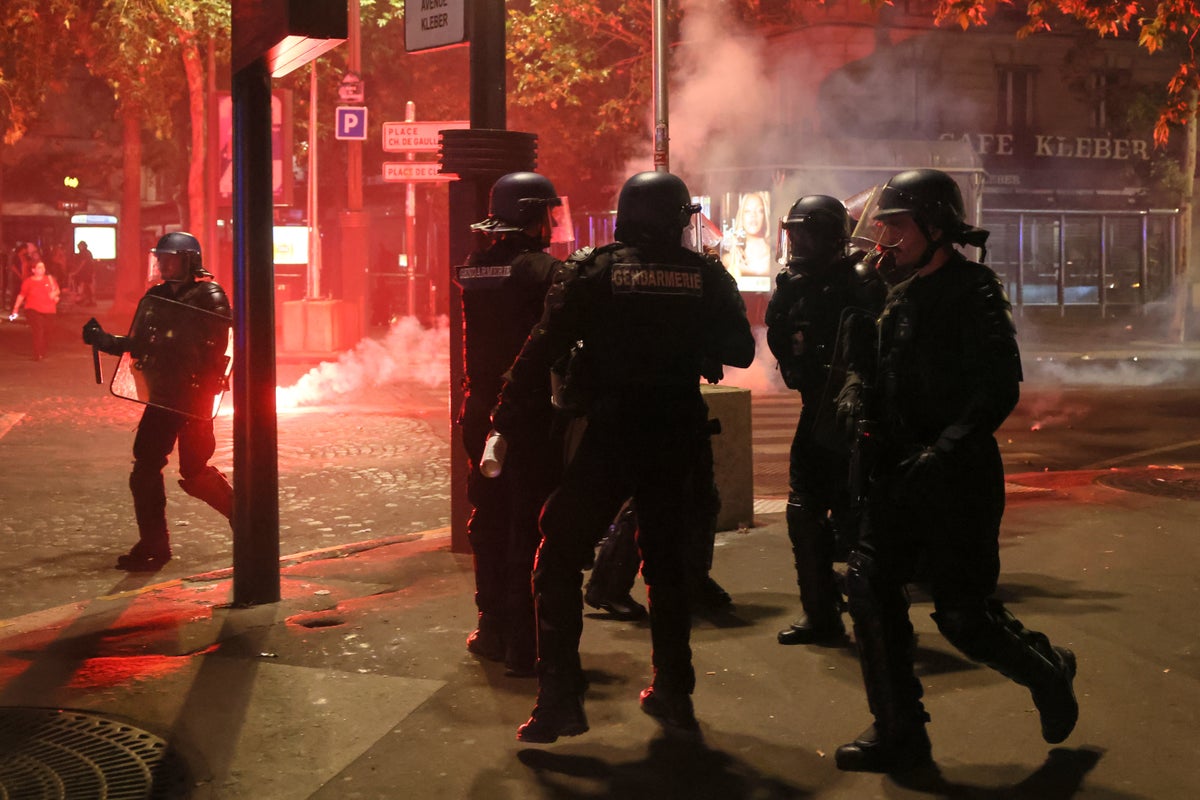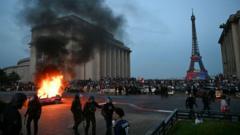
Winning the biggest trophy in European football is supposed to be a moment of pure euphoria. Instead, for the second year in a row, Paris looked like a war zone.
When Paris Saint-Germain clinched their back-to-back Champions League title against Arsenal in a brutal penalty shootout in Budapest, the party on the streets of France didn't just spill over. It exploded. What started as 20,000 fans singing near the Arc de Triomphe quickly degenerated into running battles with riot police, shattered storefronts, and burning vehicles.
By the time the smoke cleared on Sunday morning, the French Interior Ministry confirmed a staggering 780 detentions nationwide. Out of those, 480 happened in the Paris area alone. Formal custody was handed down to 277 individuals, including 82 minors. The charge sheets read like a rap sheet for a localized insurrection: assaulting police officers, theft, vandalism, and destroying public property.
If you think this is just a case of a few bad apples getting too rowdy after a couple of beers, you're missing the bigger picture. This has become a structural pathology in French sports culture.
The Battle of the Eighth Arrondissement
Let's look at what actually happened on the ground because the raw numbers don't tell the whole story. The French government knew something was brewing. They deployed 22,000 police officers across the country, with 8,000 pinned directly to the capital. They shut down tram lines, boarded up luxury boutiques, and closed metro stations. It didn't matter.
While thousands celebrated peacefully, splinter groups of hardcore ultras and local opportunists weaponized the crowd. In the upmarket 8th arrondissement, a mob literally tried to storm a local police station before being beaten back with tear gas. Think about that for a second. This wasn't a drunken scuffle outside a pub. It was a direct, coordinated assault on law enforcement infrastructure.
Over at the Parc des Princes stadium, where 40,000 people watched the match on giant screens, a secondary frontline formed. Five thousand people who couldn't get inside loitered outside. A group of 150 tried to ram their way through a stadium gate. When police blocked them, the crowd retaliated by hurling commercial-grade fireworks and heavy projectiles. Rental bikes from the street were dragged into the middle of the road to form makeshift barricades. A local bakery and a restaurant were smashed up in the process.
The violence wasn't even contained to the sidewalks. Groups of fans repeatedly invaded the Périphérique—the massive ring road that encircles Paris—completely blocking traffic while letting off flares. In one of the night's worst incidents, a driver lost control of a vehicle and plowed directly into a restaurant terrace, leaving two people injured, one of them fighting for their life.
Why France Can't Control Its Post-Match Chaos
Every time this happens, politicians trot out the same talking points. Interior Minister Laurent Nuñez called the violence "absolutely unacceptable" while simultaneously trying to spin the narrative, claiming the security system was solid and most celebrations were peaceful. On the other side, right-wing politicians like Marine Le Pen immediately weaponized the chaos, sniping on social media that "only in France does a football club's victory spark riots."
Both sides are dodging the uncomfortable truth.
The reality is that major football victories in France have become an annual license for civil unrest. Last year, when PSG won their first Champions League title against Inter Milan, two people died and over 200 were injured. The police made 500 arrests then. The fact that the numbers rose to 780 arrests this year proves that heavy-handed policing tactics aren't acting as a deterrent anymore.
The underlying issue is a toxic cocktail of deep-seated social friction, urban alienation, and a subculture of ultra-fans who view the police as an occupying army rather than public servants. When you look at the demographics of those arrested—including nearly a hundred minors in Paris alone—it's clear that these matches are being used as a backdrop for youth grievances that have nothing to do with what Bukayo Saka or Ousmane Dembélé did on the pitch in Budapest.
The High Cost of Winning
For ordinary Parisians, the morning after a historic sports victory shouldn't involve stepping over broken glass and smelling burnt rubber on their way to buy a croissant. The physical toll of Saturday night speaks for itself:
- 57 police officers injured in clashes across 15 different cities.
- Multiple cars and electric rental bikes torched on major avenues.
- Small businesses, from bakeries to bistros, facing massive repair bills despite boarding up their windows in anticipation.
Yet, despite the wreckage, the institutional machinery moves right along. The planned victory parade at the Champ de Mars went ahead on Sunday afternoon under massive security. The PSG squad was still booked for a luxury reception with President Emmanuel Macron at the Élysée Palace.
There's a surreal disconnect here. The elites celebrate a sporting triumph in gilded palaces while the shopkeepers on the Champs-Élysées sweep up the ruins of their livelihoods.
If you're a sports fan traveling to Paris for a major fixture or a championship celebration in the near future, you need to change how you navigate the city. Don't assume that a victory parade or an outdoor screening is a safe family event. Stick to well-lit, peripheral areas. Avoid the immediate vicinity of major landmarks like the Arc de Triomphe or stadium gates once the final whistle blows. If you see crowds starting to drag bikes or bins into the street, leave immediately. The window between a rowdy chant and a tear-gas canister opening up is usually less than sixty seconds. Until the French government addresses the systemic social rifts that turn football into a tribal battlefield, the beautiful game will keep leaving ugly scars on the streets of Paris.