The detection of Andes hantavirus (ANDV) onboard the MV Hondius expedition vessel represents a significant shift in maritime biosecurity and zoonotic disease tracking. Traditionally classified as a localized, rural threat linked to the inhalation of aerosolized rodent excreta, the virus has demonstrated its capacity to exploit closed, high-density human environments. Understanding the mechanics of this outbreak requires breaking down the transmission sequence, evaluating the ecological drivers behind expanding rodent vectors, and modeling the risk of human-to-human viral propagation.
A systematic analysis of the timeline reveals the vulnerability of modern travel nodes to highly lethal pathogens. By mapping the movement of the index case against the incubation period of the virus, epidemiologists can isolate the primary infection source from subsequent transmission vectors.
The Incubation Timeline and Index Case Mechanics
Pinpointing the origins of an outbreak within a mobile population requires tracking individual movement across known endemic zones and calculating back from the onset of symptoms. The index case, a Dutch passenger who embarked from Ushuaia, Argentina, on April 1, developed a fever and gastrointestinal symptoms on April 6, dying five days later on April 11.
Given that hantaviruses possess a mean incubation period of 22 days, the onset of symptoms just five days after embarkation mathematically isolates the initial exposure to a terrestrial source prior to boarding. The transmission framework hinges on three discrete phases of tracking:
[Phase 1: Terrestrial Exposure]
   └── Index case visits endemic regions (Mendoza/Malargüe) -> Inhales aerosolized viral particles.

[Phase 2: Viral Incubation]
   └── 22-day average window -> Passenger boards the vessel in Ushuaia while asymptomatic.

[Phase 3: Pathogen Manifestation & Amplification]
   └── Day 5 post-embarkation -> Symptoms present -> Human-to-human transmission sequence begins.
Local authorities in Ushuaia have contested claims that the city was the point of origin, citing zero recorded hantavirus cases since monitoring began in 1996. Because the Andes strain is not historically endemic to the Tierra del Fuego archipelago, investigators shifted focus toward the index patient's overland travel corridor.
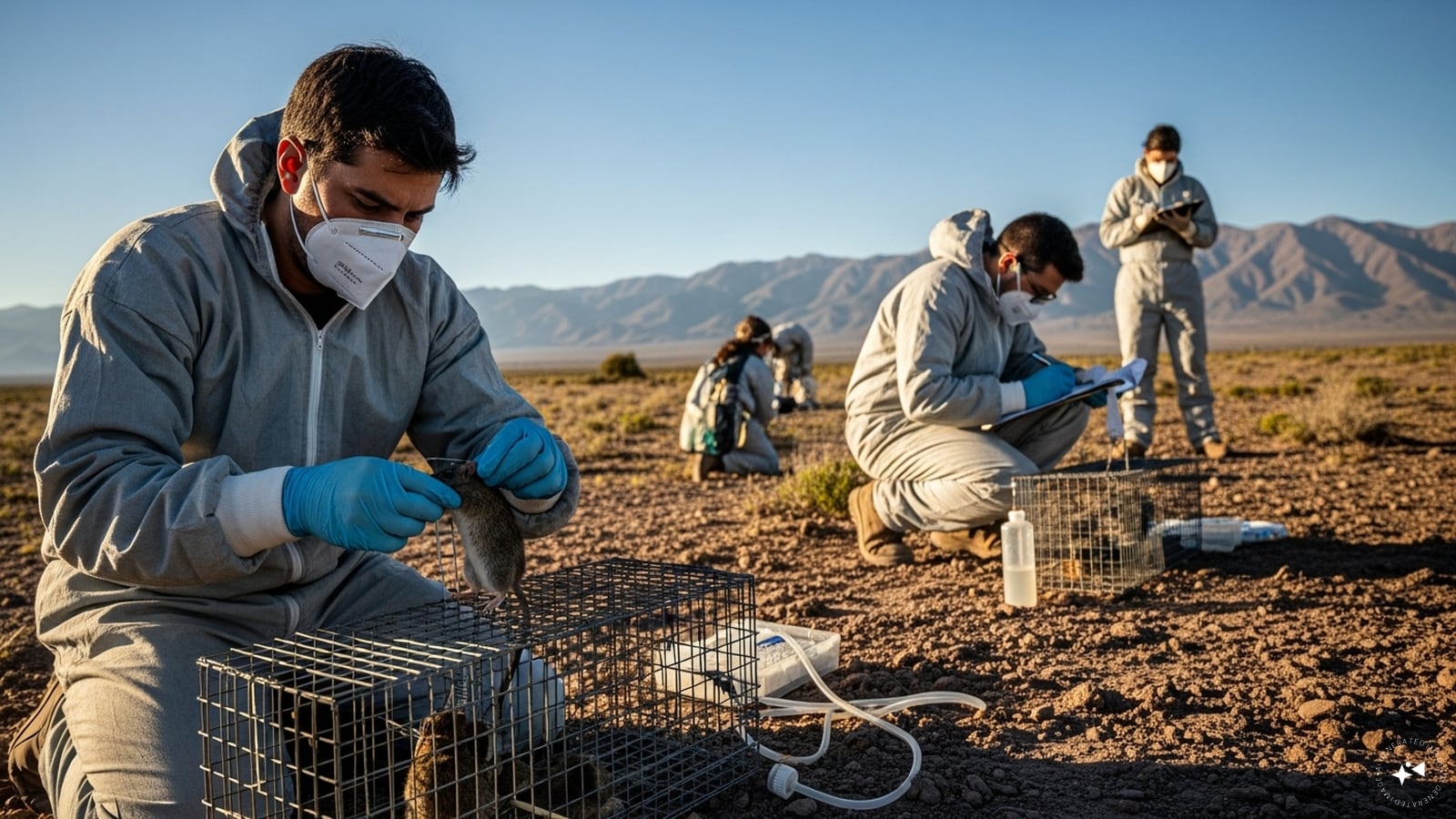
Prior to arriving at the port, the patient completed a monthslong journey through the western winemaking province of Mendoza, specifically the municipality of Malargüe. This region matches the ecological profile required to maintain the reservoirs of the long-tailed pygmy rice rat (Oligoryzomys longicaudatus), the primary vector for the Andes strain. Joint teams from Argentina's Malbrán Institute and the U.S. Centers for Disease Control and Prevention are trapping and testing rodent populations in these sectors to map the viral load and match genetic sequences.
Vector Dynamics and the Environmental Multiplier
The surge of hantavirus cases within South America cannot be viewed as an isolated statistical anomaly. Argentina reported 101 infections over the preceding twelve-month cycle—roughly double the volume of the previous annual period—alongside a case fatality rate hovering near 33 percent. This escalation is driven by an environmental multiplier effect that alters vector density and human-rodent contact rates.
The core relationship governing vector-borne viral risk is defined by two primary ecological disruptions:
Trophic Cascades and Feed Aggregation
Changes in regional precipitation and warming patterns trigger asynchronous seed production in native bamboo and agricultural crops. This sudden abundance of primary food sources leads to rapid rodent population growth. As food supplies dry up, these dense rodent populations migrate into human structures, barns, and campgrounds, increasing the likelihood of human exposure.
Microclimate Shifts
Warmer winter baselines eliminate natural thermal barriers that previously restricted Oligoryzomys longicaudatus populations to specific altitudes and latitudes. This allows the reservoir species to expand into agricultural territories, such as Mendoza's vineyards, and closer to rural tourism corridors.
When rodents colonize closed spaces, their dried urine, feces, and saliva mix with dust. Human activities like sweeping or disturbing these areas aerosolize the viral particles. Inhalation of these particles introduces the virus directly to the alveolar epithelium of the host, bypassing cutaneous immune barriers.
The Mechanics of Closed-Environment Transmission
The MV Hondius cluster is highly unusual because it involves the Andes hantavirus strain, the only known hantavirus variant capable of human-to-human transmission. While typical North American strains like the Sin Nombre virus end with the infected individual, the Andes strain can spread through close personal contact. This capability poses serious risks in shared indoor environments.
The secondary and tertiary cases identified among passengers highlight the high transmission risks within a ship's ecosystem. The second casualty, the spouse of the index case, developed symptoms on April 24, exactly 13 days after the index case died. This timeline aligns with the established incubation period for secondary human-to-human transmission.
The physical layout of an expedition vessel accelerates this transmission through several environmental factors:
- Shared Air Volumes: While modern ships use high-efficiency particulate air (HEPA) filtration in primary supply lines, individual cabins and communal dining spaces often feature low structural turnover rates of ambient air, which can sustain micro-droplet suspension.
- Prolonged Contact Velocity: The prolonged, close proximity of passengers over multi-week itineraries increases the frequency of exposure to respiratory droplets or direct contact with contaminated surfaces.
- Delayed Diagnostics: Early symptoms of hantavirus pulmonary syndrome—such as fever, myalgia, and vomiting—mirror common sea-sickness and mild respiratory tract infections, delaying isolation protocols.
By the time a patient develops severe respiratory distress or acute respiratory distress syndrome (ARDS), the viral load in respiratory secretions is highly elevated. This creates a high-risk window for close contacts and medical staff before strict bio-containment measures are deployed.
Containment Metrics and Quarantine Windows
Managing a multi-jurisdictional outbreak across international waters requires strict quarantine protocols based on clear epidemiological data. Because passengers on the vessel represented more than 20 nationalities, contact tracing networks had to track over 600 individuals across 32 countries after they disembarked.
The key to preventing further outbreaks on land is choosing an appropriate quarantine length. Public health organizations use a statistical model based on the distribution of known incubation times to determine when it is safe to release a contact.
[35-Day Isolation Window]  --->  91% Probability of Zero Viral Shedding
[42-Day Isolation Window]  --->  96% Probability of Zero Viral Shedding
[45-Day Isolation Window]  --->  Standard Safety Baseline for High-Risk Contacts
A 35-day isolation strategy carries a 9 percent risk of missing an active case that could seed a new infection chain on land. Extending the active monitoring phase to 42 or 45 days lowers the risk of post-quarantine transmission to near zero, providing a more reliable safety margin for public health agencies managing potential human-to-human strains.
Biosecurity Protocols for Maritime Operations
Preventing future outbreaks requires a shift from reactive contact tracing to proactive environmental controls at ports and on vessels. Operators cannot assume that a clean ship is safe if passengers are entering endemic wilderness areas before boarding. Ship operators must implement a two-part safety framework.
Pre-Embarkation Screening and Travel Audits
Vessels operating out of high-risk gateways must require detailed travel logs covering the 30 days prior to arrival. Passengers who have hiked, camped, or visited rural structures in known hantavirus zones should undergo targeted clinical evaluations, including pulse oximetry checks to detect early signs of respiratory issues.
Environmental Sanitation Controls
Crew members must be trained in wet-cleaning protocols using specialized disinfectants or diluted bleach solutions to neutralize potential rodent contaminants without generating dust. Traditional dry sweeping or vacuuming without HEPA filters must be banned on ships operating near endemic regions, as these practices can aerosolize viral particles if rodents enter baggage areas or provisioning docks.
The strategic challenge for global health systems is that hantaviruses are difficult to detect early, carry a high mortality rate, and lack specific antiviral treatments or approved vaccines. Containment relies entirely on fast, systematic tracing, strict quarantine enforcement, and a clear understanding of environmental risks.
For a deeper clinical understanding of how this outbreak progressed on board the vessel, you can watch this Detailed breakdown of the cruise ship hantavirus timeline, which tracks the international response and the movement of the patients.