Beijing has signaled a sharp escalation in its rhetorical defense of Tehran, framing the United States’ maritime strategy and port-focused sanctions as a threat to global supply chains. While the diplomatic language focuses on international law and "dangerous" interference, the underlying reality involves a desperate scramble for energy security and the survival of a "shadow fleet" that keeps the Chinese economy fueled. The friction at Iranian ports is not just a regional dispute; it is a direct challenge to the dollar-based financial system that the US uses to police global trade.
The Infrastructure of Defiance
The mechanics of this confrontation happen in the darkness of the Persian Gulf and the South China Sea. For years, the US has tightened the screws on Iran’s ability to export crude oil, specifically targeting the tankers and the port authorities that facilitate these transactions. China, the largest buyer of Iranian oil, views these maneuvers as a direct assault on its sovereign right to trade.
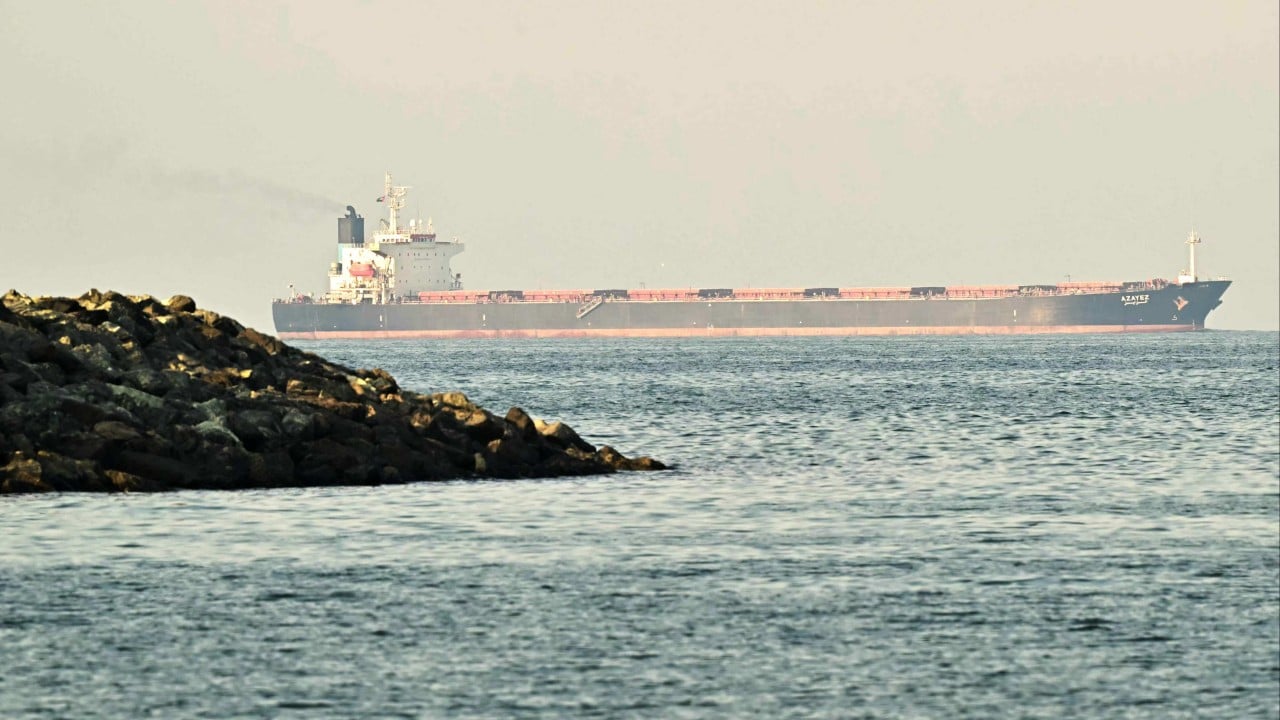
The friction centers on the "ghost tankers." These vessels often turn off their Automatic Identification Systems (AIS), engage in ship-to-ship transfers in the middle of the night, and use complex layers of shell companies to hide the origin of the oil. When the US Treasury Department blacklists a port or a shipping firm, it effectively cuts them off from the global banking system. For Beijing, this is not just "irresponsible" policy; it is a blockade by another name.
China’s reaction reflects a deeper anxiety. If the US can successfully shut down Iranian ports through a combination of secondary sanctions and naval presence, it establishes a precedent that could be applied to any Chinese energy partner. This is about the control of the sea lanes. Beijing knows that its manufacturing engine requires a steady flow of discounted Iranian crude to maintain its competitive edge against Western markets.
The Discounted Crude Engine
Money talks louder than diplomatic cables. Iranian oil typically flows into China at a significant discount compared to Brent or WTI benchmarks. This price gap provides a massive subsidy to Chinese independent refiners, often referred to as "teapots," located primarily in Shandong province. These refineries are the backbone of China’s domestic fuel supply and a major source of petrochemical exports.
- The Price Gap: Iranian Light crude often trades $5 to $10 below global market rates due to the risk premium associated with sanctions.
- The Payment Loop: Transactions frequently bypass the SWIFT system, utilizing the Chinese yuan or even barter arrangements for consumer goods and infrastructure projects.
- The Risk Factor: Every time the US Navy or Coast Guard intercepts a vessel or the Treasury adds a new entity to the SDN (Specially Designated Nationals) list, the cost of insurance for these shipments spikes.
By hitting out at the US "blockade," China is attempting to protect this financial arrangement. The rhetoric about "freedom of navigation" is a calculated mirror of Washington’s own talking points in the South China Sea. Beijing is essentially telling the world that if the US can claim the right to police the Pacific, China can claim the right to protect its energy interests in the Gulf.
The Role of Port Technology and Surveillance
The battle is also moving into the digital and logistical space. Modern ports are no longer just docks and cranes; they are massive data hubs. The US has increasingly focused on the software and logistical platforms that manage port traffic. If a port uses Chinese-made cranes or management software, the US raises security alarms. Conversely, if the US exerts influence over the maritime insurance databases or the shipping registries based in London or Singapore, it can effectively "blind" Iranian ports.
China has responded by investing heavily in its own maritime infrastructure projects under the Belt and Road Initiative. The goal is to create a parallel shipping universe. This includes everything from proprietary satellite tracking to alternative maritime insurance pools that do not rely on Western capital. The more the US pressures Iranian ports, the faster China builds the walls of its own independent trade ecosystem.
The Strategic Miscalculation of Pressure
There is a prevailing theory in Washington that enough economic pain will force a change in Tehran’s behavior or a pivot in Beijing’s loyalty. This ignores the historical resilience of the "Resistance Economy." For the Iranian leadership, the ports are the lungs of the country. For China, they are a vital energy tap. Neither side sees a graceful way to back down without looking weak on the global stage.
The pressure has actually hardened the "No Limits" partnership between Moscow, Tehran, and Beijing. We are seeing a consolidation of an anti-sanction bloc. When the US blocks an Iranian port, it doesn't just stop oil; it pushes Iran further into the arms of Chinese state-owned enterprises. These firms are now providing the technology for port automation and refinery upgrades that Iran can no longer buy from Europe or Japan.
The "dangerous and irresponsible" tag used by Chinese officials is a warning. It suggests that the maritime shadow-boxing has reached a point where a single miscalculation—a seized tanker or a skirmish near a loading terminal—could trigger a broader conflict. This isn't just about oil anymore. It's about who writes the rules for the world's oceans.
The Broken Consensus on Sanctions
For decades, the US could rely on a broad international consensus when it came to isolating "rogue states." That consensus has shattered. The global South increasingly views these port blockades as a form of economic warfare that hurts developing nations by driving up energy costs. China is positioning itself as the champion of these "aggrieved" nations, arguing that US unilateralism is the primary source of global instability.
The US faces a dilemma. If it relaxes the pressure on Iranian ports, it loses leverage over Iran's nuclear program and regional influence. If it increases the pressure, it risks a direct confrontation with Chinese naval assets that are increasingly patrolling these same waters. The "blockade" is becoming a stress test for American hegemony.
The Logistics of the Shadow Fleet
To understand why China is so incensed, one must look at the sheer scale of the logistical effort required to bypass US restrictions.
- Identity Shifting: Vessels are frequently re-flagged to "flags of convenience" like Panama or Liberia, though these registries are also under US pressure to de-list sanctioned ships.
- Point-to-Point Obfuscation: Oil is often moved from an Iranian tanker to a neutral vessel in international waters, then mixed with oil from another country to change its chemical signature.
- Terminal Integration: Chinese ports have developed specialized "bonded zones" where this oil can be stored and "cleansed" of its Iranian origin before entering the domestic market.
The US knows exactly how this works. The "blockade" isn't a physical wall of ships; it's a digital and financial net. By targeting the ports, the US is trying to cut the net at its anchor points. China’s outcry is a signal that the net is starting to pull too tight on their own economic interests.
Beyond the Diplomatic Spat
This is a cold war being fought with bills of lading and insurance certificates. The rhetoric coming out of Beijing is meant to delegitimize the US role as the guarantor of maritime order. If China can convince the world that the US is the one "endangering" trade, it creates the moral and political space for its own expansion.
The US strategy of maximum pressure on Iranian ports has reached the point of diminishing returns. Instead of isolating Iran, it has created a sophisticated, parallel economy that is now large enough to resist Western interference. China isn't just defending Iran; it is defending the architecture of this new, US-free trade zone. Every time a tanker successfully docks at a Chinese port with Iranian crude, the power of the US dollar flickers.
The move toward "multipolarity" is often discussed in abstract political terms, but it is actually happening at the waterline. When the US Treasury attempts to freeze a port’s assets, and China responds by providing a yuan-based credit line, the global financial map is being redrawn in real-time. This is why the language has become so heated. This is no longer a localized dispute over a few barrels of oil. It is a fundamental disagreement over who has the right to stop a ship at sea.
Washington is betting that it can maintain control through the sheer weight of its financial system. Beijing is betting that the world’s need for energy will eventually outweigh its fear of US sanctions. In this high-stakes game, the Iranian ports are merely the first line of a much larger battlefront. The real conflict is over the future of the global commons.
The escalation of words is the precursor to an escalation of presence. As China continues to build out its blue-water navy, the ability of the US to enforce port-side sanctions will be challenged not just with angry statements, but with physical escorts. The "shadow fleet" will soon have shadows of its own—grey hulls with Chinese flags, ensuring that the oil keeps flowing regardless of what the Treasury Department writes in a memo.
The era of uncontested American maritime policing is ending. The fight over Iran's ports is the opening chapter of a period where trade routes are determined by raw power rather than international consensus. Beijing’s "outrage" is the sound of a rising power setting the stage for its own rules of engagement.
The US must now decide if the cost of maintaining this blockade is worth the total decoupling of the Chinese energy market from the Western financial system. If the current trajectory holds, the "shadow fleet" will simply become the "new fleet," and the ports of the Persian Gulf will become the western outposts of a Chinese-led trade network that Washington can neither see nor stop.