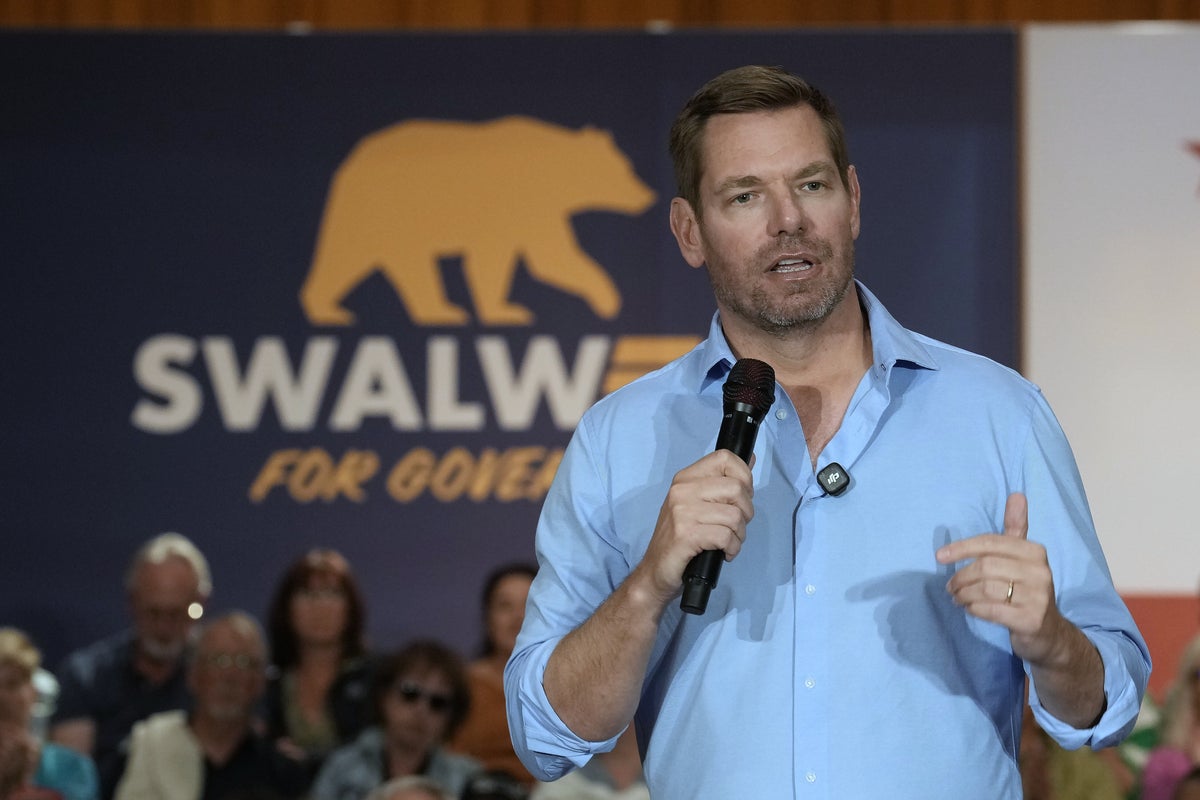
Eric Swalwell’s bid for the California governorship has hit a wall that no amount of cable news exposure or social media snark can climb. The congressman from Dublin, once considered a frontrunner for the 2026 race, is facing a growing chorus of demands to exit the primary following a series of sexual misconduct allegations that have paralyzed his fundraising and alienated his core support base. This is no longer a localized scandal; it is a case study in how the political infrastructure of California responds when a nationalized brand meets a localized ethical crisis.
The pressure is not just coming from the usual partisan critics. High-level Democratic strategists and donor networks in Silicon Valley and Los Angeles are quietly moving their chips to other tables. They see a candidate who is no longer viable in a state where "Me Too" era sensibilities are baked into the electoral DNA. For Swalwell, the math is simple and brutal. He cannot win a statewide race while litigating his personal history in the court of public opinion.
The Architecture of a Campaign Collapse
Political campaigns rarely die from a single blow. They bleed out through a thousand small withdrawals of support. In Swalwell's case, the hemorrhage started when the first detailed accounts of inappropriate workplace conduct and harassment began to circulate in Sacramento circles. These were not anonymous whispers; they were documented grievances that painted a picture of a power dynamic gone wrong.
In California, the primary system is a "top-two" jungle. This means a Democrat doesn't just have to worry about a Republican challenger; they have to worry about being outflanked by a more disciplined member of their own party. With heavyweights like Lieutenant Governor Eleni Kounalakis and former Senate President Pro Tem Toni Atkins already in the mix, the margin for error is non-existent. Swalwell's presence in the race has become a liability for a party that prides itself on being the vanguard of progressive labor and gender standards.
The allegations strike at the heart of his "everyman" persona. Swalwell built a career on being the relatable, tech-savvy millennial who wasn't afraid to take the fight to the opposition on national television. But the gap between the public defender of democratic norms and the private actor described in these reports has created a credibility vacuum. When a politician’s brand is built on moral clarity, any gray area in their personal conduct acts as an accelerant for their downfall.
The Donor Exodus and the Silicon Valley Shift
Money is the ultimate truth-teller in politics. You can track the viability of a candidate by the frequency and size of their checks from the state’s primary industries: tech, entertainment, and agriculture. Since the misconduct allegations gained steam, Swalwell’s FEC and state filings show a sharp decline in new commitments.
Donors in Palo Alto and Menlo Park are notoriously risk-averse when it comes to social scandals. They want their contributions to buy influence and policy outcomes, not to fund a legal defense or a crisis management firm. The "Swalwell Fatigue" is real. He has been a fixture of the national scene for years, often punching above his weight class in terms of media presence, but that national fame does not translate to local loyalty when the headlines turn sour.
Historical Context of California Scandals
California history is littered with the remains of promising careers that underestimated the speed of a reputational shift. From the fall of Bob Filner to the legislative resignations of 2017 and 2018, the state has developed a specialized internal mechanism for purging compromised assets.
- The 2017 Reckoning: The California Legislature saw multiple resignations after a group of women, including lobbyists and staffers, signed a letter titled "We Said Enough."
- The Filner Precedent: A popular mayor of San Diego was forced out within months once a critical mass of allegations reached the public domain.
Swalwell is currently navigating this same gauntlet. The difference now is the speed of information. In the past, a candidate might try to "wait out" a news cycle. Today, the cycle is 24/7, and every minute he remains in the race, he forces his colleagues to answer questions about him rather than their own platforms. This is the fastest way to lose friends in the Capitol.
The Strategic Necessity of the Drop Out
The calls for Swalwell to drop out are not merely punitive. They are strategic. For the Democratic Party, a damaged Swalwell creates a "spoiler" effect. He occupies a lane that could be filled by a candidate with less baggage, and he risks dragging the entire ticket into a debate about character rather than housing, insurance crises, or the state’s fluctuating budget.
If he stays in, he risks a humiliating third or fourth-place finish that would effectively end his political career permanently. If he exits now, citing a need to "focus on his family" or "address these matters privately," he maintains a shred of the narrative control required for a future comeback or a shift into the private sector. The ego of a politician is a powerful thing, but the reality of a zero-percent chance of victory is usually more persuasive.
Labor unions, the traditional backbone of Democratic victories in the Golden State, are also distancing themselves. These organizations have strict protocols for endorsements, and a candidate under a cloud of sexual misconduct allegations is an impossible sell to a diverse membership base. Without the "ground game" of organized labor, a California campaign is just an expensive series of television ads that nobody is watching.
The Media Saturation Problem
Swalwell’s biggest asset has always been his visibility. He is a creature of the camera. However, this visibility is now working against him. Every time he appears on a news program to discuss national security or the latest DC drama, the chyron below his face reminds viewers of his current predicament in California.
The media, once his greatest ally, has shifted its tone. The questioning has turned from policy to personal accountability. This transition is often irreversible. Once a journalist stops asking about your bill and starts asking about your behavior, the "policy expert" brand is dead. It is replaced by the "embattled politician" archetype, a role that rarely leads to the governor's mansion.
Comparative Polling Data
Recent internal polling—the kind that never makes it to a public press release—reportedly shows Swalwell’s "unfavorable" ratings spiking among suburban women, a demographic he absolutely must win to be competitive.
| Demographic Group | Support Pre-Allegations | Support Post-Allegations |
|---|---|---|
| Suburban Women | 42% | 18% |
| Young Professionals | 38% | 22% |
| Bay Area Residents | 51% | 29% |
These numbers are a death sentence. You cannot recover a 24-point drop among your base in the middle of a crowded primary. The math doesn't work, and the money won't follow a sinking ship.
Power Dynamics and the New Accountability
The "why" behind the push for his exit is rooted in a fundamental shift in how political power is exercised. It is no longer enough to be a reliable vote for your party. In the current environment, the candidate is the product, and if the product is defective, the distributors—the party leaders and donors—will pull it from the shelves.
There is also the matter of the "China connection" that has haunted Swalwell for years. While he was cleared of wrongdoing in that specific instance, it created a baseline of "scandal readiness" in the minds of voters. When new allegations of a different nature surfaced, they didn't land on a clean slate. They landed on a pre-existing pile of controversy. This cumulative effect makes the current situation far more dangerous than a standalone incident would be.
The "how" of his eventual exit will likely be a coordinated effort. It starts with the op-eds in the Los Angeles Times and the San Francisco Chronicle. It continues with the public "withdrawal of support" from local officials in his own district. Finally, it ends with a Friday afternoon press release.
Swalwell’s team has attempted to frame the allegations as a partisan hit job, but that defense is failing because the loudest calls for his resignation are coming from inside the house. When your own allies are the ones pointing at the exit, the "partisan" defense loses its teeth.
The governor’s office in California is the most powerful state-level position in the country. It requires a candidate who can command respect not just from their supporters, but from the massive state bureaucracy and the global business community. A candidate who is perpetually on the defensive, answering for their own conduct, cannot lead a state that functions as the world's fifth-largest economy.
The political infrastructure of California is moving on. The race for 2026 is already being redefined by who is stepping up to fill the void Swalwell is leaving behind. He can choose to leave with a modicum of dignity now, or he can wait until the voters force him out in a public and decisive fashion. The window for a graceful exit is closing, and the state’s political machinery waits for no one.