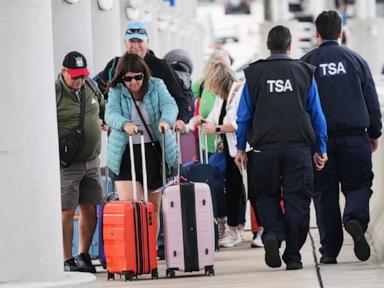
The structural integrity of U.S. aviation security is failing not at the checkpoint, but on the balance sheet. Federal aviation security operates under an unsustainable operational paradox: it requires absolute labor stability to execute a critical national security mission, yet it relies on a federal funding mechanism prone to systemic, politically driven disruptions. During fiscal cycles marked by legislative gridlock, Transportation Security Administration (TSA) officers routinely face prolonged funding lapses. In recent legislative stalemates, transportation security officers endured 119 days under shutdown conditions—forcing approximately 40% of the fiscal year's workforce to report to checkpoints without contemporary compensation. This localized labor instability directly degrades operational throughput, manifests as systemic employee absenteeism, and fundamentally compromises checkpoint security integrity.
Resolving this structural vulnerability requires evaluating two competing, systemic interventions currently debated within the House Committee on Homeland Security: the forced privatization of regional airport screening via the expansion of the Screening Partnership Program (SPP), and the capitalization of automated screening infrastructure via the repatriation of the 9/11 Passenger Security Fee.
The Cost Function of Security Outsourcing
The White House fiscal strategy aims to transition airport screening from a fixed federal labor cost to a variable, contracted service. The explicit proposal involves spending $477.3 million to transition approximately 250 smaller, regional U.S. airports to private screening contractors under the SPP framework. Concurrently, the plan eliminates over 4,500 federal TSA positions, projecting a gross reduction of $529.3 million in federal compensation and benefits obligations. This yields a projected net budgetary arbitrage of $52.0 million annually.
To evaluate whether this structural shift optimizes or degrades the systemic efficiency of aviation security, operations must be analyzed through a rigorous input-output framework.
+---------------------------------+
|      Systemic Inputs            |
|  - $477.3M Contract Allocations |
|  - 4,500+ Position Eliminations |
+---------------------------------+
                |
                v
+---------------------------------+
|   Operational Micro-Mechanisms  |
|  - Labor Cost Arbitrage         |
|  - Equipment Procurement Shift  |
+---------------------------------+
                |
                v
+---------------------------------+
|      Systemic Outputs           |
|  - Projected $52M Net Savings   |
|  - Variable Labor Utilization   |
+---------------------------------+
The Labor Cost Arbitrage Mechanism
Federal screening operations carry inflexible long-term liabilities, including federal pensions, standardized healthcare allocations, and rigid step-increase pay scales. Private contractors alter this cost function by adjusting wage-and-benefit structures to localized market clearing rates. At small regional hubs—specifically those handling scheduled flights of 10-to-30 seat aircraft or irregular charter operations—the utilization rate of a full-time federal employee is structurally inefficient. Passenger volume arrives in highly concentrated, discrete tranches rather than a continuous distribution. Private contractors lower the per-passenger screening cost by deploying part-time labor and flexible scheduling models that federal civil service rules restrict.
The Equipment Procurement Decentralization
A secondary mechanism in this privatization model is the regulatory shift allowing SPP contractors to independently acquire and maintain screening hardware, such as Advanced Imaging Technology (AIT) and Computed Tomography (CT) scanners. Historically, equipment procurement was a centralized, capital-intensive federal function managed by the TSA. Decentralizing this to private vendors shifts capital expenditure (CapEx) away from the federal balance sheet and converts it into amortized operational expenditure (OpEx) embedded within the service contracts.
However, this model introduces severe structural limitations that private-sector optimization models frequently ignore:
- The Symmetrical Quality-Margin Tradeoff: Private security firms operate on explicit profit-margin targets. Because labor comprises the vast majority of checkpoint operational expense, margin expansion is heavily correlated with wage suppression. Lowering compensation relative to the federal baseline frequently triggers higher employee turnover rates. In high-consequence security environments, elevated turnover systematically degrades systemic institutional knowledge, forcing a continuous, inefficient cycle of baseline training.
- The Capital Investment Deficit: While large-scale hubs like San Francisco International (SFO) or Hartsfield-Jackson Atlanta (ATL) possess the localized market scale to attract highly capitalized private security vendors capable of maintaining rigorous performance standards, tier-three and tier-four regional airports lack this scale. Enforcing a mandatory SPP transition on 250 small airports risks creating a thin vendor market, reducing competitive bidding efficiency and potentially driving contract costs above the initial federal baseline.
Capital Depreciation and the Fee Diversion Bottleneck
The primary alternative to structural labor reorganization is the aggressive acceleration of technology-for-labor substitution. Checkpoint throughput and threat-detection probability are functions of capital deployment—specifically the transition from legacy X-ray systems to algorithmic, high-throughput CT scanning systems. However, the deployment of this technology faces a severe capital allocation bottleneck driven by federal fiscal architecture.
Since its inception in 2002, the 9/11 Passenger Security Fee has levied a statutory $5.60 charge per one-way domestic trip. The fundamental economic fiction of this mechanism is that the revenue directly capitalizes aviation security operations. In 2013, statutory adjustments diverted a significant percentage of these collected fees to the general U.S. Treasury to offset the broader federal deficit.
The scope of this capital starvation is quantifiable:
- Cumulative Fee Diversion: Approximately $15 billion in passenger-generated security fees has been diverted away from aviation security capital budgets to general deficit reduction.
- Annual Opportunity Cost: In typical fiscal periods, nearly half of the annual revenue generated by the $5.60 fee is withheld from the TSA's technology acquisition pipeline.
This systematic diversion directly starves the aviation security network of necessary capital investments, creating an artificially extended equipment depreciation cycle. The operational consequence is measurable: legacy screening systems require higher labor inputs per passenger to maintain baseline threat-detection levels. For example, older-generation baggage screening architecture demands manual physical inspections at a significantly higher rate than contemporary CT systems that leverage automated target recognition algorithms. By diverting capital, the federal government has structurally locked the TSA into an inefficient, labor-heavy operational equilibrium.
The Bifurcated Strategic Intervention
The optimization of U.S. aviation security requires resolving both the capitalization bottleneck and the structural liabilities of the screening workforce. The data indicates that neither absolute federalization nor absolute privatization represents an optimal systemic solution. Instead, maximizing system efficiency and national security readiness requires executing a bifurcated capital-and-labor strategy.
1. Execute Capital Restructuring via Fee Repatriation
Legislative priority must focus on passing the bipartisan framework introduced by the House Committee on Homeland Security to double the TSA administrator's statutory capital reimbursement ceiling from $250 million to $500 million. This must be paired with the formal termination of the 9/11 Passenger Security Fee diversion, instantly repatriating an estimated $1.68 billion annually to the aviation security infrastructure pipeline.
+------------------------------------------------------------------------+
|                      PROPOSED REVENUE REALLOCATION                      |
+-----------------------------------+------------------------------------+
| CURRENT DISPOSITION               | PROPOSED REPATRIATION              |
+-----------------------------------+------------------------------------+
| - ~50% to General Treasury        | - 100% Retained within TSA Ecosystem|
| - $1.68B Diverted to Deficit      | - $500M Direct Airport Capital     |
| - Extended Equipment Lifecycle    | - $250M Dedicated Tech Fund/Year   |
+-----------------------------------+------------------------------------+
This capital influx must be legally ring-fenced into a permanent, non-discretionary $250 million annual screening technology fund. By transitionally substituting capital for labor—replacing manual screening protocols with algorithmic CT technology—the system can achieve higher threat detection probabilities while structurally reducing the total headcount requirement, minimizing the impact of future federal labor funding disruptions.
2. Implement an Optional, Tier-Based Screening Framework
The administration’s proposal to mandate privatization across approximately 250 regional airports introduces severe market-thinning risks. A highly rigorous approach requires preserving the optionality of the Screening Partnership Program for tier-one and tier-two hubs, while deploying private contractors to tier-three and tier-four regional airports strictly via a standardized, performance-incentivized bidding framework.
Airports must retain local autonomy to choose between federal TSA staff and SPP contractors, as localized airport authorities are best positioned to calculate the trade-offs between municipal labor supply, passenger arrival distributions, and physical space constraints. For small, low-frequency regional nodes, private contractors should handle security checkpoints using highly flexible, multi-role labor models (where screeners can execute cross-functional airport operational tasks), thereby eliminating the systemic inefficiency of underutilized, full-time federal personnel. Concurrently, Congress must pass statutory guarantees ensuring that remaining federal TSA officers receive continuous compensation during fiscal lapses, eliminating the acute spikes in employee absenteeism that threaten systemic aviation network throughput.


