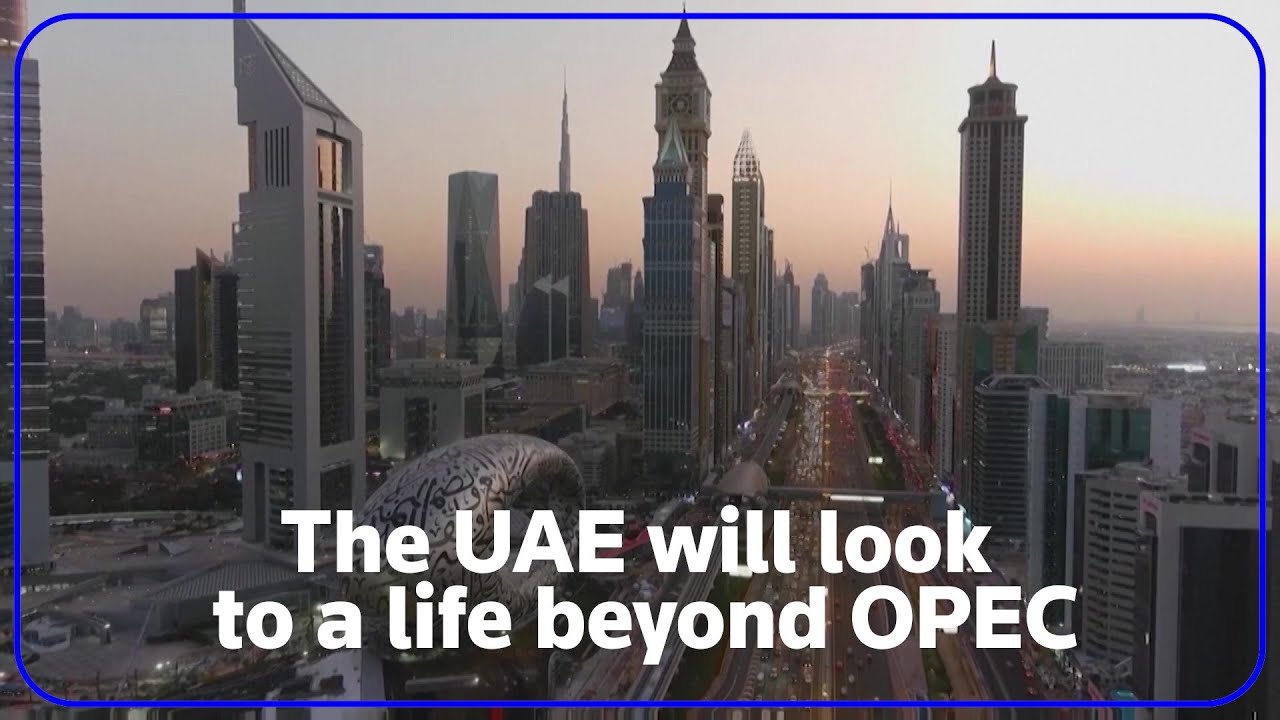
The narrative suggesting that a United Arab Emirates exit from the Organization of the Petroleum Exporting Countries (OPEC) acts primarily as a signal of geopolitical alignment with the United States or a byproduct of the Abraham Accords misidentifies the primary driver. Geopolitics is the tail, not the dog. The fundamental issue is a structural conflict between the UAE’s domestic capital expenditure strategy and the production constraints imposed by the OPEC quota system.
When a sovereign entity invests billions into production capacity, it does so to maximize revenue flows. When a cartel mandates that a significant portion of that capacity remain offline to maintain price floors for the benefit of higher-cost producers, it creates a persistent drag on the return on investment (ROI). This tension forms the core of the current strategic divergence.
The Capital Allocation Problem
The UAE, through the Abu Dhabi National Oil Company (ADNOC), has systematically expanded its upstream production capacity. The long-term plan aims to push capacity toward 5 million barrels per day (bpd).
The conflict arises because the OPEC+ framework functions on a system of scarcity. By limiting supply, the cartel forces members to trade volume for price stability. However, the UAE’s economic calculus has shifted. The state now views oil reserves as assets that require monetization within a finite window—before the energy transition reduces global demand.
Operating under a quota creates three distinct economic inefficiencies:
- Stranded Capacity: Billions in capital expenditure (CAPEX) sit idle. Assets that should be generating cash flow are locked behind artificial output caps.
- Market Share Erosion: Higher-cost competitors gain market share at the expense of lower-cost producers (like the UAE) who are prevented from exercising their cost advantage.
- Fiscal Misalignment: The UAE’s national budget requires specific revenue levels to fund its post-oil diversification projects. If the cartel refuses to adjust quotas to match the UAE's internal investment timeline, the cartel ceases to be a tool for economic growth and becomes an obstacle to it.
The Myth Of Security Alignment
Commentary regarding US-UAE alignment often focuses on defense pacts and diplomatic normalization with Israel. While these are meaningful, they are secondary to the energy reality. The United States does not require the UAE to exit OPEC to secure energy flows. The US energy sector is self-sufficient enough that the primary concern is price volatility, not supply shortages.
The US interest in a UAE exit is based on the desire to break the cartel’s power to dictate global pricing. If the UAE—a core OPEC producer—were to exit, the remaining OPEC structure would struggle to effectively control global supply. The market would transition from an oligopoly to a more fragmented, supply-responsive environment.
The Abraham Accords provide the logistical and technological bridge to make this exit feasible. Cooperation with Israel, particularly in energy technology, surveillance, and data analytics, allows the UAE to optimize production and distribution. This technological infusion improves the efficiency of extraction, further widening the gap between the UAE's production capabilities and those of less technically advanced OPEC peers. The alliance is not a cause for the exit; it is a mechanism that allows the UAE to exit without losing its competitive edge.
The Geopolitical Trilemma
The UAE faces a trilemma: satisfy the cartel and maintain regional diplomatic consensus, prioritize domestic economic expansion and risk isolation, or forge a new, independent energy path supported by Western technology and intelligence.
The traditional OPEC model assumes that every member benefits from the same price floor. However, the UAE’s economy is now distinct from peers like Saudi Arabia, Iran, or Iraq. The UAE has higher levels of economic diversification, a different cost structure, and a deeper integration with global financial systems. The OPEC quota is a "one-size-fits-all" solution that fits a country with the UAE's specific profile increasingly poorly.
Operational Consequences Of Independence
If the UAE exits, the immediate aftermath would involve a recalibration of global oil prices.
- Production Volatility: Without the constraint of a quota, the UAE would likely ramp up production to monetize its investments. This creates a supply shock, exerting downward pressure on prices.
- Price Discovery: Oil markets would shift toward a more transparent, supply-demand based pricing mechanism. Producers with the lowest extraction costs would win the volume battle.
- Security Architecture: The UAE would need to replace the informal security guarantees provided by the status quo of regional energy stability with specific bilateral agreements. This explains the intensity of the UAE-US-Israel security cooperation.
The Strategic Path Forward
The decision to exit is not a political statement; it is a financial optimization strategy. The UAE has already signaled that its investment in non-oil sectors (logistics, tourism, technology, and renewables) requires the cash flow that its oil reserves should produce.
The tactical move is to ignore the diplomatic noise regarding the "alignment" with the US and focus on the internal economics of production. The UAE will likely continue to test the boundaries of its quota, creating public friction with OPEC to normalize the idea of independent production.
The end game is not to leave the organization in a single dramatic act, but to render the quota system irrelevant through sheer operational output. By investing in upstream capacity and technological efficiency, the UAE creates a state of "de facto autonomy." When the cost of staying within the cartel exceeds the cost of diplomatic friction with neighbors, the exit will follow as a formality, not a surprise.
The UAE’s next move is the aggressive expansion of its export infrastructure and the acceleration of its technological integration with non-OPEC partners. This is not an abandonment of regional security; it is the decoupling of economic survival from the constraints of a cartel that is no longer aligned with its national growth trajectory. The transition from a quota-constrained producer to an independent, high-volume energy exporter is already underway.