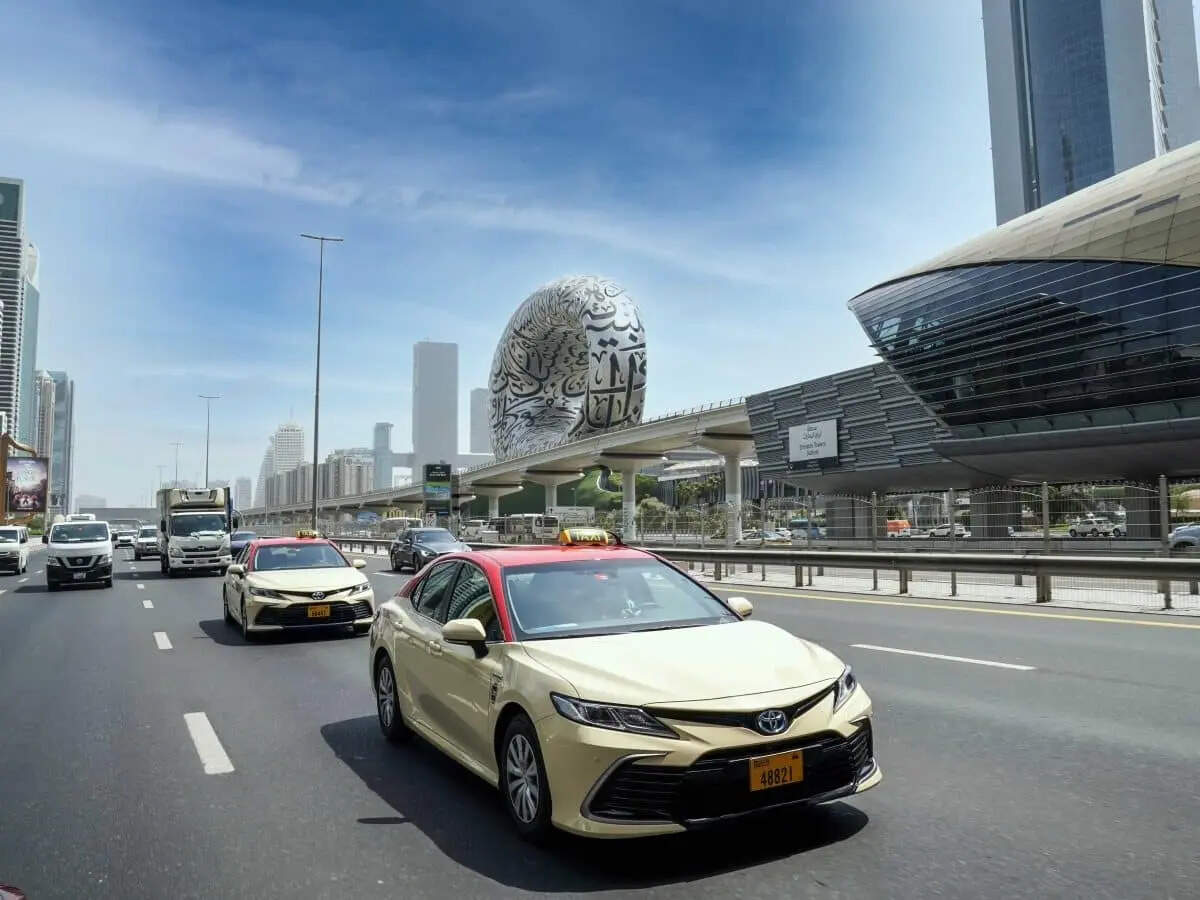
Free parking and slashed taxi fares are not the economic win you think they are.
The headlines are buzzing with the Road and Transport Authority's (RTA) latest announcement: a 50% discount on taxi fares and free parking for specific categories of residents, including senior citizens and people of determination. On the surface, it looks like a masterstroke of social welfare. It looks like a city giving back to its most vulnerable or respected demographics. For a different look, see: this related article.
It isn't. It is a massive behavioral experiment in urban density.
If you think this is purely about "affordability," you are missing the mechanics of how a global hub actually functions. Dubai does not make moves based on sentiment. Every policy shift is a data-driven attempt to solve the "last mile" problem and redistribute how people occupy physical space in a city that is rapidly outgrowing its own infrastructure. Similar analysis on the subject has been published by TIME.
The Subsidy Trap: Why Lower Fares Create Higher Friction
The logic of a 50% taxi discount seems flawless: lower the cost, increase the quality of life. But in the world of urban transport, demand is elastic. When you cut the price of a service in half, you don’t just help the existing user base; you invite a surge in usage that the current fleet cannot handle during peak hours.
Imagine a scenario where the supply of taxis remains stagnant while the eligible user base doubles their trip frequency because the financial barrier has evaporated. You haven't made transport more accessible; you’ve made the "Waiting" status on the Careem app the new default.
I have watched cities try to "subsidize" their way out of congestion for a decade. It never works. By lowering the fare for a massive segment of the population, the RTA is effectively devaluing the time of the driver and the efficiency of the network. A taxi sitting in traffic with a 50% discounted fare is a net loss for the ecosystem's velocity. We are prioritizing the cost of the trip over the speed of the city.
Free Parking Is An Economic Hallucination
The "free parking" benefit is the most misunderstood part of this rollout. To the average resident, free parking is a "perk." To an urban planner, free parking is a tragedy of the commons.
Space in Dubai is at an absolute premium. By removing the price signal from parking—which is what a fee actually is—you remove the incentive for people to move their vehicles. Parking fees are not just revenue generators for the RTA; they are a heartbeat. They ensure turnover. They ensure that when you need to drop into a pharmacy in Jumeirah or a clinic in Deira, there is a spot available because the previous person didn't want to pay for a fourth hour.
When you make parking free for specific groups, you aren't just giving them a discount. You are giving them a license to occupy a fixed asset indefinitely. This creates "dead zones" in high-traffic areas.
- The Real Cost: The merchant loses a customer because the "free" spot is taken for eight hours.
- The Environmental Cost: Three other drivers circle the block for twenty minutes looking for a space, spiking emissions.
- The Psychological Cost: The frustration of "no parking" outweighs the benefit of "free parking" every single time.
The Eligibility Myth
The RTA has outlined clear eligibility: Senior citizens (Thukher card holders) and People of Determination (Sanad card holders). The "lazy consensus" says this is a targeted, fair approach.
The contrarian truth? It creates a two-tier mobility class that ignores the "Working Poor" and the "Struggling Middle."
If the goal is truly social equity, a blanket discount based on age or physical ability is a blunt instrument. A wealthy retiree living in a penthouse in Dubai Marina receives the same 50% taxi discount as a person of determination living on a fixed income in a remote part of the city. This isn't equity; it's a lack of granular data application.
A superior system would tie these benefits to a combination of mobility needs and economic status. By focusing on broad categories, the RTA is essentially subsidizing people who don't need the help, while the delivery driver or the entry-level hospitality worker—the people actually keeping the city's gears turning—gets zero relief from the rising costs of transport.
The "Social Gold Card" Is Actually A Tracking Tool
Let’s be brutally honest about the tech. These benefits are tied to the Sanad and Thukher cards. This isn't just about a discount; it’s about the RTA perfecting its "Human Digital Twin" model.
By incentivizing these demographics to use their cards for every single movement—every parking session, every taxi ride—the RTA is gathering a goldmine of behavioral data. They are learning where the elderly congregate, what times of day people of determination are most active, and which sectors of the city are failing to provide adequate organic accessibility.
The discount is the "bribe" for the data. In any other context, we’d call this surveillance. In Dubai, we call it a benefit. The trade-off is clear: you get 50% off your ride, and the government gets a 100% accurate map of your life.
Stop Fixing The Fare, Fix The Flow
The competitor's article wants you to celebrate the "savings." I want you to question the "system."
If Dubai wants to be the most livable city in the world, the answer isn't making taxis cheaper for some. It’s making taxis unnecessary for all. The fact that we are still talking about taxi discounts in 2026 proves that the metro and tram systems are still not reaching the "nodes" where people actually live and work.
A 50% discount is a band-aid on a gash. It's an admission that the last-mile connectivity is still too expensive or too difficult. If the infrastructure worked perfectly, a senior citizen wouldn't need a discounted taxi; they would have a climate-controlled, seamless, and free autonomous shuttle waiting at their door.
The Invisible Downside: Driver Incentives
Nobody is talking about the drivers. RTA taxis are operated by humans who work on razor-thin margins. When a fare is cut by 50%, who absorbs that? If it's the RTA, the taxpayer or the city’s budget takes the hit. If it’s the taxi franchises, the pressure on the driver to perform more "trips per hour" becomes immense.
This leads to:
- Aggressive Driving: More trips are needed to hit the same revenue targets.
- Service Refusal: Drivers avoiding "benefit-heavy" areas where fares are lower.
- Burnout: Longer shifts to compensate for the "subsidized" economy.
You cannot disrupt the pricing of a service without disrupting the quality of the service. You are not just buying a cheaper ride; you are likely buying a more dangerous one.
The Actionable Truth For The Resident
If you are eligible for these benefits, use them—but don't rely on them. The influx of demand will inevitably lead to longer wait times and less availability.
The smart move isn't to celebrate the 50% discount. The smart move is to realize that the city is signaling a shift. They are moving toward a "controlled mobility" model where every movement is logged, subsidized, and directed.
Don't look at your bank account and see a saving of 20 Dirhams. Look at the street and see a city that is desperately trying to manage its own overcrowding by pulling the only levers it has left: price and data.
The RTA isn't giving you a gift. They are buying your cooperation in a grand experiment to see if they can keep a 20th-century transport model alive in a 21st-century metropolis.
Get out of the taxi. Start looking at the map. The real "benefit" is knowing when the system is about to break.