Most people think of Don Juan as a simple womanizer. A rake. A guy who spends his life chasing skirts and dodging husbands. But if you’ve ever sat through a performance of Don Juan in Hell, you know George Bernard Shaw had something much weirder and more brilliant in mind. It’s actually the third act of his massive play Man and Superman, but it’s so dense and self-contained that people usually just perform it as a standalone piece.
It’s basically a long, intense therapy session in the afterlife.
Imagine four people sitting in a void, arguing about the meaning of life while everything around them is literally falling apart. No pitchforks. No fire. Just talk. Shaw basically turned the traditional concept of damnation on its head. He suggests that hell isn't a place of torture—it's a place of ultimate comfort and boredom. That’s a terrifying thought when you really chew on it.
What Actually Happens in Don Juan in Hell?
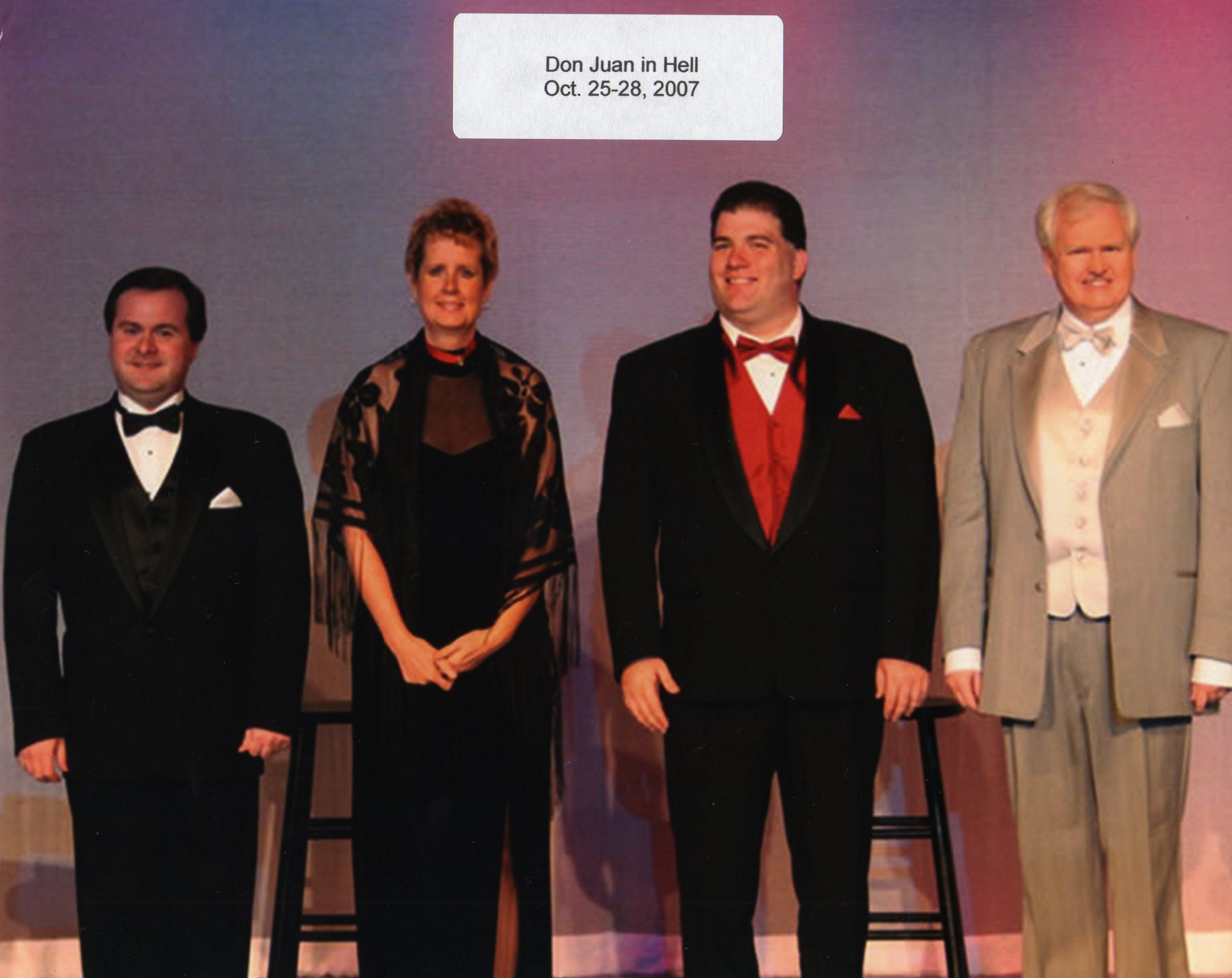
The setup is pretty straightforward, even if the dialogue isn't. We have Don Juan (the legendary lover), Doña Ana (the woman who arguably died of grief because of him), the Statue (Ana’s father, whom Juan killed), and the Devil himself.
They’re just chatting.
Juan is bored out of his mind. He’s tired of the "happiness" of hell. In Shaw’s universe, hell is where you go if you just want to be entertained and avoid the hard work of evolving. Heaven, on the other hand, is for the "masters of reality." It’s a place of rigorous thought and purpose. Juan wants out. He wants to go to heaven, not because he’s suddenly become a saint, but because he’s a philosopher who’s sick of the party.
Doña Ana is horrified. She spent her whole life being "good" and expected a reward, only to find out she’s in the same place as her murderer. The interaction between these two is where the play really finds its teeth. It challenges the Victorian morality of Shaw’s time—and honestly, it challenges ours, too.
The Devil as a Nice Guy
One of the most jarring things about Don Juan in Hell is how likable the Devil is. He’s not a monster. He’s a refined, cultured gentleman who just wants everyone to have a good time. He’s the patron saint of the "easy life."
He argues that humans are naturally destructive and that their only real talent is finding new ways to kill each other. He’s not wrong, which is the scary part. He points to the invention of the Maxim gun and the way we use technology for slaughter rather than progress. Shaw wrote this in 1903, but read those lines today and they’ll give you chills. The Devil basically says, "Why bother with heaven? It’s hard work. Stay here, listen to some music, and pretend everything is fine."
Why the Life Force Matters
If you want to understand what Shaw was actually getting at, you have to look at his concept of the "Life Force." This isn't some hippie-dippie energy; it’s a cold, driving biological necessity.
Juan argues that the Life Force is trying to create a "Superman"—a higher form of consciousness that can actually solve the problems of the world. He sees sex and romance not as ends in themselves, but as the messy, often annoying tools the Life Force uses to keep the species moving forward.
- The Goal: Moving from unconscious instinct to conscious intellect.
- The Obstacle: Human laziness and the desire for "happiness."
- The Solution: Constant struggle and the refusal to be satisfied with the status quo.
It’s a bit elitist? Yeah, definitely. Shaw was never one for modesty. But it’s also incredibly stirring. It’s a call to action. It’s a reminder that being "comfortable" is often just a slow way of dying.
The Performance History is Wild
Because it’s so long—the full Man and Superman can run over five hours—Don Juan in Hell was often cut entirely from early productions. It wasn't until the mid-20th century that it really came into its own as a "drama of ideas."
The most famous version happened in the early 1950s. You had Charles Loyer, Charles Laughton, Agnes Moorehead, and Cedric Hardwicke. They didn't even use sets. They just stood behind microphones in evening wear and read the text. And it was a massive hit. It proved that audiences actually want to think. They want to be challenged by complex arguments, provided the actors are good enough to pull it off.
Laughton, who also directed, realized that the words were the special effects. You don't need a lake of fire when you have Shaw’s wit. The rhythmic quality of the prose is almost like music. If a performer misses a beat, the whole thing can collapse, but when it works, it’s hypnotic.
Misconceptions About the Ending
People often think Juan "wins" the argument because he’s the protagonist. But Shaw is smarter than that. He lets the Devil have the best lines. He lets the Statue represent the absurdity of "honor."
When Juan finally leaves for heaven, it’s not a triumphant exit with a chorus of angels. It’s a lonely, difficult choice. He’s choosing a life of effort over a life of ease. Ana, meanwhile, realizes she isn't "finished" yet. She cries out for a father for the Superman. It’s an ending that leaves you feeling a bit unsettled, which is exactly what great art should do.
How to Approach the Text Today
If you’re coming to this for the first time, don't try to read it like a standard play. Treat it like a debate. Or a long-form podcast where the guests are the smartest, most cynical people you’ve ever met.
The language is dense. You’ll probably have to re-read sections. That’s okay. Shaw isn't writing for the casual viewer; he’s writing for people who are bored with easy answers. He’s poking fun at the church, at the state, and especially at our romanticized ideas of love.
Honestly, it’s refreshing. In a world of soundbites and 15-second videos, watching characters spend 90 minutes discussing the soul is a radical act.
Key Takeaways for the Modern Reader
- Question your comfort. If you’re perfectly happy and never challenged, you might actually be in Shaw’s version of hell.
- Intellect is a tool. Don Juan isn't just "smart"; he uses his mind as a weapon against stagnation.
- The "Superman" is a metaphor. It’s not about capes; it’s about the potential for humanity to be better than it currently is.
Don't let the "classic" label scare you off. Don Juan in Hell is biting, funny, and surprisingly mean-spirited in the best possible way. It’s a reminder that the greatest battles aren't fought with swords, but with ideas.
Next Steps for Deepening Your Understanding:
- Listen to the 1952 First Drama Quartet recording: It’s the definitive way to hear the rhythm of the dialogue.
- Read the "Epistle Dedicatory" to Man and Superman: Shaw explains his "Life Force" philosophy in detail here, and it’s arguably as entertaining as the play itself.
- Compare with Mozart’s Don Giovanni: Shaw was obsessed with Mozart, and seeing how he flips the operatic ending is crucial for context.
- Watch a modern staged reading: Many theaters still do "script-in-hand" performances of this act because the focus remains entirely on the intellectual gymnastics.