The completion of the UCI Health-Irvine medical complex represents a shift from symbolic environmentalism to functional carbon-neutral engineering in high-acuity healthcare environments. While residential and commercial sectors have transitioned toward electrification with relative ease, the modern hospital remains an energy-intensive anomaly, typically requiring massive natural gas combustion to satisfy the simultaneous demands of steam sterilization, space heating, and 24/7 climate control. The Irvine facility breaks this dependency by deploying a central power plant that eliminates on-site combustion for routine operations, setting a technical benchmark for the "All-Electric" designation in a $1.3 billion infrastructure investment.
The Tri-Node Energy Strategy
The facility's ability to operate without a traditional boiler plant rests on three engineering pillars: a massive heat-recovery chiller system, a dedicated electrical substation, and a high-voltage distribution network. In a standard hospital, heat is treated as a waste byproduct of cooling; it is stripped from the building and exhausted via cooling towers. The UCI Health model treats thermal energy as a closed-loop asset.
- Thermal Scavenging (Heat Recovery): The primary mechanical innovation is the use of centrifugal heat-recovery chillers. These units capture the heat generated by the medical equipment, lighting, and human occupants—energy that would otherwise be wasted—and repurpose it to create the hot water required for sterilization and space heating. This creates a "thermal balance" where the energy cost of cooling one zone provides the energy required to heat another.
- Grid-Scale Electrification: Because the facility lacks natural gas infrastructure for its primary loads, the electrical demand is significantly higher than a comparable gas-hybrid hospital. The project required the installation of a 66kV substation capable of managing the peak loads of a 144-bed acute care tower and an extensive ambulatory center.
- Variable-Frequency Optimization: To manage the fluctuating loads of a high-acuity center, the HVAC systems utilize variable-frequency drives (VFDs) that adjust motor speeds in real-time. This prevents the "all-or-nothing" energy spikes characteristic of legacy pneumatic systems.
The Decoupling of Sterilization and Combustion
A significant hurdle in hospital electrification is the requirement for high-temperature steam. Traditionally, this necessitates large-scale natural gas boilers to reach the temperatures required for surgical instrument sterilization and humidification. UCI Health-Irvine bypasses this by segmenting the thermal requirements. Instead of heating the entire building’s water supply to boiling temperatures, the facility utilizes localized, high-efficiency electric steam generators at the point of use.
This decentralized approach reduces the "parasitic loss" inherent in transporting steam through miles of insulated piping. By generating steam only where it is needed—primarily in the sterile processing department—the hospital eliminates the standby energy losses of a central steam plant that must remain pressurized 24 hours a day, regardless of actual demand.
Redundancy and the Regulatory Bottleneck
The "all-electric" label carries a necessary asterisk defined by the Office of Statewide Health Planning and Development (OSHPD) and California building codes. Current life-safety regulations require that acute care hospitals maintain 72 to 96 hours of on-site backup power that is independent of the municipal grid.
As of 2026, battery energy storage systems (BESS) at the scale required for a 144-bed surgical hospital are not yet economically or spatially viable to replace emergency generators. Consequently, the UCI Health-Irvine facility maintains large-scale diesel generators for emergency backup. The distinction is operational: under normal conditions, the carbon footprint is near zero, but the safety architecture remains anchored in liquid fuel.
This creates a dual-system cost burden:
- CapEx Overhead: The facility must pay for the full electrical infrastructure (substations, heat recovery) while also paying for the full cost of emergency diesel systems.
- Maintenance Divergence: Facilities teams must maintain expertise in both high-voltage electrical distribution and traditional internal combustion mechanics.
The Economics of Long-Term Decarbonization
The financial logic of an all-electric hospital is built on the projected "Social Cost of Carbon" and the volatility of the natural gas market. While the initial capital expenditure for a heat-recovery central plant is roughly 15% to 20% higher than a traditional gas-boiler setup, the operational expenditure (OpEx) follows a different trajectory.
- Carbon Tax Insulation: As California’s Cap-and-Trade program and building performance standards (like SB 253) tighten, gas-reliant hospitals will face increasing compliance costs.
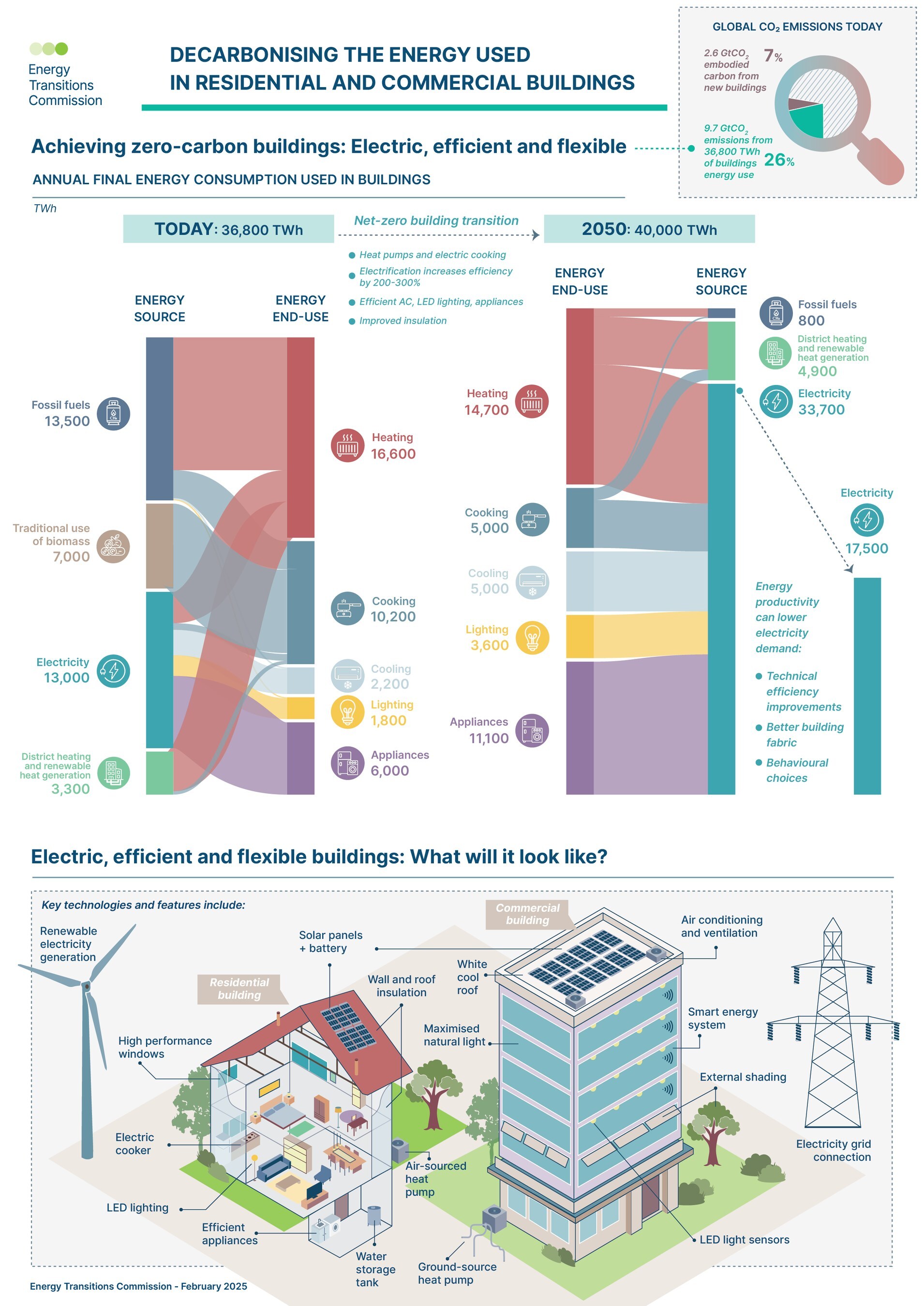
- Efficiency Ratios: A high-efficiency gas boiler has a maximum theoretical efficiency of approximately 95%. In contrast, a heat-recovery chiller can achieve a Coefficient of Performance (COP) of 4.0 or higher, meaning it moves four units of heat energy for every one unit of electrical energy consumed.
- Maintenance Simplification: Eliminating the central steam plant removes the need for high-pressure vessel inspections, chemical water treatment for boilers, and the maintenance of gas-delivery infrastructure.
Clinical Benefits of Electrification
The transition to all-electric systems is not merely an environmental or financial play; it has direct implications for clinical outcomes and staff performance.
- Air Quality and Pathogen Control: Traditional combustion-based heating systems can contribute to localized outdoor air pollution near hospital air intakes. By removing on-site combustion, the facility improves the micro-climate of the campus, reducing the risk of introducing particulate matter into the highly filtered air of the surgical suites.
- Acoustic Optimization: Electric heat pumps and recovery chillers operate with significantly lower vibration and noise profiles compared to high-pressure steam valves and massive gas burners. In a "Healing Environment" framework, reducing the ambient decibel level in patient rooms is linked to lower cortisol levels and improved sleep cycles for recovering patients.
- Thermal Precision: Electric-actuated HVAC systems allow for more granular zone control. In an operating room, where surgeons require low temperatures and humidity while the patient must be kept warm, the responsiveness of an all-electric thermal loop outperforms the lag associated with steam-to-water heat exchangers.
Scalability and the Infrastructure Gap
The Irvine project serves as a proof-of-concept for the "Greenfield" hospital—new construction built on undeveloped land. However, the industry faces a significant "Brownfield" challenge. Retrofitting an existing urban hospital to be all-electric is often physically impossible due to the footprint required for the electrical substations and the depth of the thermal loops needed.
The UCI Health-Irvine model highlights the necessity of integrated design. The building’s orientation, the high-performance glazing of its "curtain wall," and the thermal mass of the structure are all calibrated to minimize the load on the electrical plant. If the building envelope were less efficient, the electrical demand would exceed the capacity of the local grid.
Strategic Operational Forecast
The success of the UCI Health-Irvine facility will be measured by its "Energy Use Intensity" (EUI) over its first 36 months of operation. The healthcare industry average is approximately 230-250 kBtu/sq. ft. For this all-electric model to be considered a strategic success, it must demonstrate an EUI below 150.
Hospitals following this blueprint should prioritize three immediate tactical moves:
- Phase One: Decoupling Thermal Loads: Isolate high-temp steam requirements from general space heating to allow for the installation of low-temp electric heat pumps.
- Phase Two: Submetering and AI-Driven Load Balancing: Implement granular energy monitoring at the department level to identify "phantom loads" and optimize chiller cycles.
- Phase Three: Future-Proofing for Long-Duration Storage: Design mechanical rooms with the spatial footprint and structural load-bearing capacity to swap diesel generators for hydrogen fuel cells or solid-state batteries as those technologies reach maturity.
The transition to all-electric healthcare is no longer a matter of technological capability, but of architectural integration and grid readiness. The UCI Health-Irvine facility is not just a building; it is a live-scale stress test of the electrical grid's ability to support life-critical infrastructure.
Would you like me to analyze the specific Energy Use Intensity (EUI) metrics or the comparative CapEx-to-OpEx ratios of all-electric versus hybrid hospital designs?