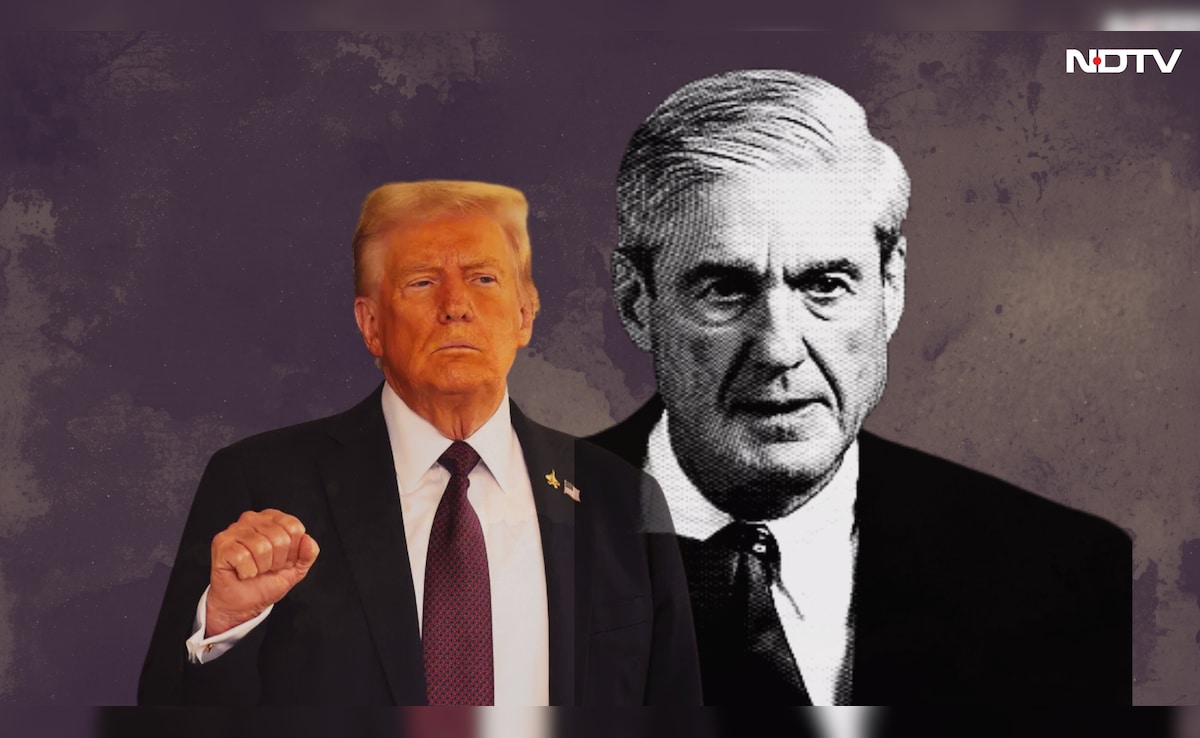
On Friday night, Robert S. Mueller III, the former FBI Director and Special Counsel whose name became shorthand for the most scrutinized chapter of modern American history, died at the age of 81. The news, confirmed by his family on Saturday, triggered an immediate and visceral response from the man who spent years casting Mueller as the architect of a "witch hunt."
"Robert Mueller just died. Good, I'm glad he's dead," Donald Trump wrote on Truth Social. He followed the declaration with a familiar refrain: "He can no longer hurt innocent people!"
The comment was not a slip of the tongue or a late-night lapse in judgment. It was a calculated coda to a decade of hostility. For Trump, Mueller’s passing is more than the end of a personal rivalry; it is the symbolic burial of an era where institutional guardrails—no matter how flawed or hesitant—attempted to fact-check the presidency. While critics label the outburst as moral bankruptcy, the move serves a specific political function. It reinforces a narrative of victimhood to a base that views the late Special Counsel not as a public servant, but as a deep-state inquisitor.
The Man Who Transformed the Bureau
To understand why Mueller remained a singular target of Trump’s ire, one must look past the 2017 Special Counsel appointment. Mueller took the helm of the FBI on September 4, 2001. One week later, the world changed.
He inherited an agency designed to chase bank robbers and mobsters, then forcibly pivoted it toward counterterrorism. This transformation was not without controversy. The expansion of surveillance powers and the aggressive pursuit of sleeper cells drew fire from civil libertarians. Yet, within the beltway, Mueller was the "Marine’s Marine," a decorated Vietnam veteran with a Bronze Star and a Purple Heart who personified the stoic, non-partisan ideal of federal law enforcement.
He served twelve years, spanning the Bush and Obama administrations. He was the second-longest-serving director in history, eclipsed only by J. Edgar Hoover. That longevity created a sense of permanence—an idea that the Bureau existed on a plane above the electoral cycle.
The Special Counsel Trap
When Jeff Sessions recused himself and Rod Rosenstein appointed Mueller as Special Counsel in May 2017, the move was initially cheered by both sides of the aisle. Republicans saw a fair arbiter; Democrats saw a savior.
Both were eventually disappointed.
The investigation lasted 22 months. It resulted in 34 indictments, including top Trump associates like Paul Manafort, Rick Gates, and George Papadopoulos. It meticulously documented "sweeping and systematic" interference by the Russian government in the 2016 election. However, the 448-page final report stopped short of a definitive conclusion on obstruction of justice.
Mueller’s adherence to Department of Justice policy—specifically the Office of Legal Counsel (OLC) memo stating a sitting president cannot be indicted—became his greatest shield and his greatest weakness. He famously stated, "If we had confidence after a thorough investigation of the facts that the President clearly did not commit a crime, we would so state."
Trump viewed this ambiguity as a license to claim "Total Exoneration." Mueller’s refusal to speak in the punchy, aggressive language of modern media allowed the White House to fill the silence. The stoicism that made Mueller a legend in the Department of Justice made him a punching bag in the arena of public opinion.
A Pattern of Posthumous Scorched Earth
The "Glad he’s dead" comment follows a long-established pattern of Trump refusing to observe the traditional "truce of the grave."
In 2019, months after Senator John McCain’s death, Trump continued to attack the war hero’s record, famously stating at a tank factory in Ohio, "I was never a fan of John McCain and I never will be." He later attacked the late Representative John Dingell, suggesting the long-serving congressman might be looking "up" from hell rather than looking down from heaven.
These attacks serve a dual purpose. First, they signal to followers that no enemy is ever truly forgiven, even by the passage of time. Second, they act as a stress test for the political establishment. When Trump celebrates the death of a figure like Mueller, he forces his allies to either defend the rhetoric or remain silent, further consolidating his control over the party's moral compass.
The Long Shadow of Parkinson’s and the Quiet Exit
While Trump’s digital bullhorn dominated the weekend headlines, the reality of Mueller’s final years was far more subdued. Last year, reports surfaced that Mueller had been battling Parkinson’s disease. He had retreated almost entirely from public life, residing in his quiet home in the D.C. suburbs, far removed from the headlines he once generated.
His death marks the end of a specific type of Washington figure: the institutionalist who believed that the process would protect the Republic. Mueller’s reliance on the written report and the formal testimony proved insufficient in an age of viral disinformation. He brought a law book to a street fight, and in the eyes of many, he lost.
The "hurt innocent people" line in Trump's post refers to the lives upended by the Russia probe—the indictments of subordinates and the legal fees incurred by aides. For the President, the investigation was never about national security; it was a personal affront. By celebrating Mueller’s death, he is attempting to ensure that the "Witch Hunt" label is the final word on the Special Counsel's legacy.
The Erosion of the Institutional Ideal
The reaction to Mueller’s passing from the broader political landscape was split along the predictable fault lines. Senator Adam Schiff and Governor Gavin Newsom were quick to condemn the President's "cruelty." Meanwhile, most Republican leadership remained silent, wary of crossing a President who still holds the keys to their electoral futures.
Mueller’s FBI was defined by a belief in the objective truth. He believed that if you laid out the evidence clearly enough, the conclusion would be inescapable. He died in a country where that belief is increasingly seen as a relic of a bygone century.
Trump’s victory over Mueller wasn't found in the legal findings of the 2019 report. It was found in the fact that, seven years later, the President can dance on the investigator's grave with total impunity. The guardrails didn't just fail; they were dismantled, and the man who tried to maintain them died as a villain in the eyes of half the country.
The finality of Mueller’s death leaves the Justice Department in a precarious position. There is no longer a "silver bullet" figure left to invoke. The era of the Special Counsel as a national savior is over. In its place is a raw, unvarnished power struggle where the only thing that matters is who survives to write the tweet.
Robert Mueller spent his life serving a system that prized order and precedent. He died in a world that has largely moved on from both.