The air inside the auditorium smelled faintly of floor wax and nervous sweat. It was late February, the kind of brutal New York winter morning where the cold seeps straight into your marrow. Inside the Albert Einstein College of Medicine, hundreds of medical students sat crammed into plastic seats, heavy winter coats draped over their laps. They were exhausted. They always were.
To understand what happened next, you have to understand the specific weight of a Tuesday morning in medical school. You are 24 years old. You haven't slept more than four consecutive hours in three weeks. Every time you close your eyes, flashcards about renal failure dance behind your eyelids. But the real problem lies elsewhere. It sits in the back of your mind, a silent, ticking ledger.
Every lecture, every round at the hospital, every textbook page turned is costing you money you do not have.
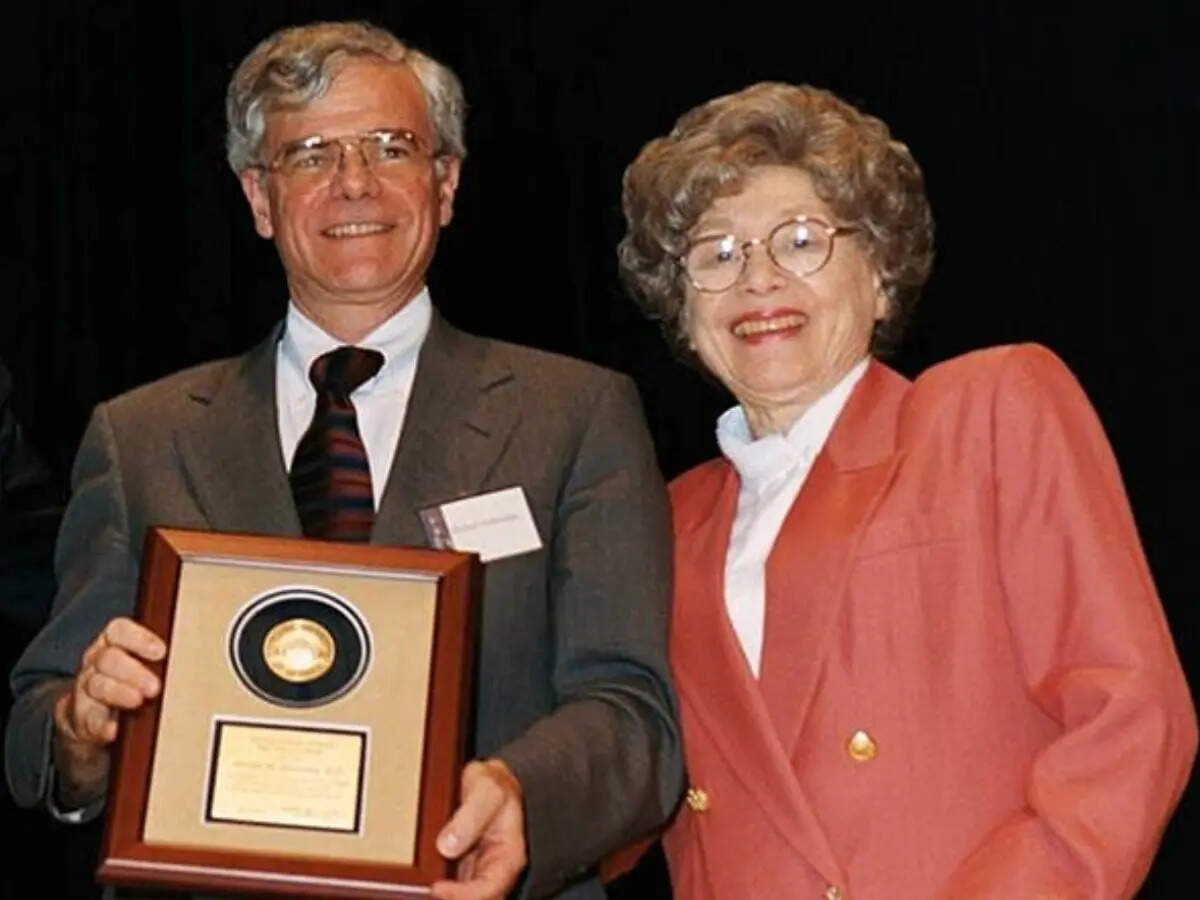
Then, a 93-year-old woman in a bright patterned blazer walked up to the podium. Dr. Ruth Gottesman, a longtime professor at the institution, adjusted the microphone. She spoke clearly, without the dramatic flourish of a theatrical performer. She simply stated a fact. Starting in August, all tuition at the Albert Einstein College of Medicine would be free. Furthermore, all current fourth-year students would be reimbursed for their spring semester.
For a second, the room froze. The human brain is notoriously slow to process a sudden shift in reality. Then, a collective gasp ripped through the crowd. Students leaped from their chairs. Some began to scream. Others dropped to their knees, burying their faces in their hands, their shoulders shaking with violent, sobbing relief.
They weren't just cheering for a free education. They were cheering because the invisible handcuffs had just been unlocked.
The Anatomy of an Invisible Suffocation
Consider a hypothetical student. Let us call her Maya. Maya grew up three subway stops away from the medical school campus in the Bronx. She is brilliant, the kind of person who sees a complex biological system and tracks its flaws like a master mechanic. She wants to practice family medicine. She wants to open a clinic in her old neighborhood to treat diabetes and hypertension before they turn into amputations and strokes.
But Maya is facing a number of that defies comprehension.
The average medical school debt in the United States hovers around $200,000. At Einstein, before this announcement, the annual tuition alone was nearly $60,000. When you add in the cost of living in New York City, books, insurance, and equipment, a four-year stay easily clears a quarter of a million dollars.
Now, look at the math from the system's perspective. A specialized plastic surgeon or an orthopedic specialist in Manhattan can easily earn $500,000 a year. A pediatrician or a primary care doctor in an underserved borough like the Bronx might make a fraction of that. When the interest on your student loans is compounding daily, the system makes the choice for you. It forces the brightest minds away from the communities that need them most and funnels them directly into high-paying specialties.
The crisis of medical debt is not just a financial burden for the students. It is a public health disaster for the rest of us.
We wonder why it takes six months to see a primary care physician. We wonder why rural hospitals are closing and why urban clinics are staffed by rotating shifts of exhausted temps. The reason is simple: we have turned the healing arts into a luxury good that requires a lifetime of indentured servitude to pay off.
The Secret History of a Billion-Dollar Choice
The money came from a ghost. David "Sandy" Gottesman, Ruth’s late husband, was an early investor in a modest textile-turned-holding company run by a man named Warren Buffett. That company was Berkshire Hathaway. Over decades, that early bet grew into a mountain of generational wealth.
When Sandy passed away in 2022, he left his wife a simple instruction: "Do whatever you think is right with it."
It is worth sitting with that moment for a beat. Imagine inheriting an amount of money that allows you to buy superyachts, islands, or sports franchises. Imagine the temptation to build a monument with your own name etched into the marble. Instead, Ruth Gottesman looked at the Bronx—the poorest borough in New York City, a place where health outcomes lag drastically behind the rest of the state—and decided to dissolve the barrier entry.
She did something else remarkable, something that speaks volumes about her intent. She refused to let the school change its name to honor her. The institution would remain the Albert Einstein College of Medicine.
The focus was to remain entirely on the students and the borough.
The Ripples in the Bronx River
The immediate impact of a $1 billion endowment is obvious: it wipes out the tuition bill. But the secondary effects are where the real story lives.
First, consider the applicant pool. Historically, medical school has been an enclave for the affluent. According to data from the Association of American Medical Colleges, more than half of all medical students come from households in the top quintile of income. If you are a brilliant kid from an immigrant family living in a cramped apartment in the South Bronx, the sheer financial terror of medical school keeps you from even buying the study guides for the MCAT.
By removing the price tag, Einstein did not just help its current students; it opened the floodgates for an entirely different demographic of future doctors.
Suddenly, the kid who watched their grandmother struggle with a language barrier at the local clinic can afford to become the doctor who speaks that language natively. The institutional memory of the neighborhood is brought directly into the examination room. That is not just a win for diversity; it is a clinical upgrade. Patients are more likely to follow medical advice, attend follow-up appointments, and report symptoms accurately when they trust the person holding the stethoscope.
But what happens to the existing students?
Consider what happens next for a fourth-year student who was staring down a $2,500 monthly loan payment starting in six months. That student can now choose to go into research. They can study rare, neglected diseases that do not offer lucrative pharmaceutical payouts. They can choose to work at a community health center. They can buy a home, start a family, or simply sleep through the night without the crushing anxiety of financial ruin.
The Complicated Truth of Philanthropy
It is easy to get swept up in the romance of a billion-dollar gift. It feels like a fairy tale. But as someone who has watched the healthcare system grind people down for years, I find myself sitting with a profound sense of unease alongside the joy.
We must ask ourselves a hard question: Why does the survival of our healthcare infrastructure depend on the whims of elderly billionaires?
A system that requires a singular act of extraordinary charity to make medical education accessible in a major metropolis is a system that is fundamentally broken. Ruth Gottesman’s gift is a magnificent bandage on a gaping wound. It solves the problem for one school, in one borough, for the foreseeable future. But across the river at Columbia, NYU, and Mount Sinai, and across the country in hundreds of other institutions, the bleeding continues.
The cost of higher education in America has outpaced inflation by terrifying margins for forty years. We have accepted this as a natural law, like gravity or the changing of the seasons. It is not. It is a policy choice. Other nations train their physicians without saddling them with the cost of a suburban mansion before they ever touch a patient. They treat medical training as an investment in national security and public welfare. We treat it as a personal business venture.
The Room That Kept Screaming
Let us return to that Tuesday morning in the Bronx.
After Dr. Gottesman finished speaking, she stood by the podium for a long time, watching the chaos she had unleashed. The video of that moment went viral, viewed by millions of people around the world. What struck me most watching it was not the volume of the noise, but the sheer, raw texture of the relief.
It was the sound of a weight being lifted that these young people had assumed they would carry for the rest of their working lives.
One student, tears streaming down his face, hugged the classmate next to him so hard they both nearly fell over. Another sat quietly, staring at the ceiling, her mouth open in a perfect O of disbelief, as if she was waiting for someone to walk into the room and tell her it was all a cruel joke.
The money will be managed, the investments will yield returns, and every year, a new class of doctors will walk through those doors in the Bronx without receiving a bill. They will learn how to stitch skin, how to read an MRI, and how to deliver devastating news to a family with grace. And they will do it all with a clear conscience, unburdened by the shadow of the debt collector.
The long-term success of this experiment won't be measured in dollars or percentages. It will be measured twenty years from now, in quiet clinic rooms throughout the Bronx, where a doctor can look at a patient, take their time, and make a medical decision based entirely on what that human being needs—rather than what the loan officer requires.