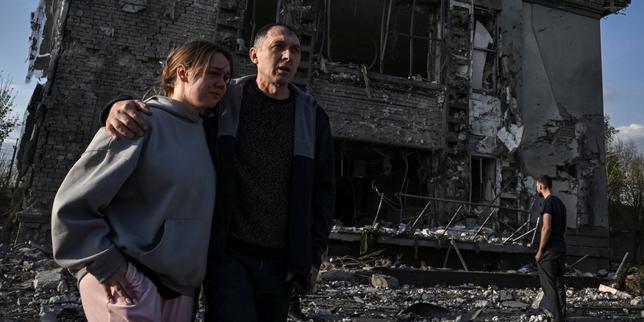
The targeted strikes on Izmaïl represent more than just local property damage. They are a calculated strangulation of the last viable artery for Ukrainian global trade. When the port infrastructure at the mouth of the Danube smolders, the shockwaves hit the commodities pits in Chicago and the breadlines in North Africa almost instantly. This isn't just about grain. It is about the systematic dismantling of a logistics network that the world spent three decades building.
Izmaïl has long been the "Plan B" of Ukrainian exports. When the Black Sea Grain Initiative collapsed and deep-sea ports like Odesa were effectively neutralized by naval blockades, this riverine hub became the primary exit point. It is a humble setting for such high stakes. The Danube is shallow, the barges are small, and the logistics are a nightmare of bureaucracy and narrow channels. Yet, in the absence of deep-water access, these river banks became the world's most critical square mile of mud and concrete.
The Logistics of Vulnerability
Exporting millions of tons of corn and wheat via a river requires a precision that most observers fail to grasp. It is an exercise in extreme patience. Deep-sea vessels cannot enter the Danube. Instead, grain must be moved by rail or truck to the river ports, loaded onto small barges, and then sent downstream to the Romanian port of Constanța. There, the grain is transshipped—moved from the small barges back onto massive bulk carriers.
Every time a drone or missile hits a silo in Izmaïl, that chain breaks. It is not just about the grain lost to the flames. The real damage is the fear. Insurance premiums for vessel owners skyrocket. Crews refuse to sail into the Sulina Channel. The throughput of the entire river system drops because the risk of being a stationary target at a loading dock becomes too high. We are seeing a "risk tax" being applied to every loaf of bread on the planet.
Why the Danube Matters Now
The shift to the Danube was a desperate move, but it was working. Before the recent escalations, Ukraine managed to ramp up its river exports to nearly 2 million metric tons per month. This was a logistical miracle achieved through sheer grit and a chaotic assembly of tugboats from across Europe.
However, river ports have a hard ceiling. Unlike the deep-water berths of Odesa, which can load a Panamax vessel in days, Izmaïl is a game of inches. The water level fluctuates. The dredging is constant. When an explosion damages a crane or a conveyor belt, it cannot be easily replaced. These are specialized parts, often sourced from European manufacturers who are hesitant to send technicians into a combat zone.
The technical reality is bleak.
- Storage capacity is the first casualty. If silos are destroyed, the grain stays on the trucks.
- Rail links are the second. If the tracks leading to the port are severed, the river becomes useless.
- Electronic navigation is the third. GPS jamming in the Delta region has made night navigation a gamble that many captains are no longer willing to take.
The Failure of Neutrality
For months, there was a silent assumption that the proximity of the Danube ports to NATO territory—specifically Romania—would provide a "security umbrella." Izmaïl is a stone's throw from the Romanian border. You can stand on the Ukrainian side and see the Romanian flags across the water. This proximity was supposed to be a deterrent.
That theory has been dismantled. The strikes have become more precise and more frequent, testing the limits of international tolerance. The debris of drones has landed on NATO soil, yet the response remains diplomatic rather than kinetic. This has emboldened the aggressor. The calculated risk is that as long as the primary damage stays on the Ukrainian bank, the global community will treat it as a "localized incident" rather than a threat to international waters.
The Economic Aftermath
When Izmaïl is hit, the market reacts with a predictable spike. But the long-term trend is more insidious. We are witnessing the permanent rerouting of global trade. Buyers who once relied on cheap Ukrainian grain are signing long-term contracts with suppliers in Brazil, Argentina, and Australia.
This is a market share war. Once a supply chain is broken and the infrastructure is pulverized, it doesn't just "come back" when the shooting stops. The capital flight from the Ukrainian agricultural sector is massive. Farmers are looking at their unharvested fields and realizing that if the ports are gone, their crops are effectively worthless. They cannot afford the diesel to harvest if they cannot sell the product to pay for the seeds.
The numbers tell a story of attrition.
- Transport costs from the farm gate to the Danube are now four times higher than the pre-war cost to Odesa.
- Insurance rates for Danube transit have seen a 300% increase in some quarters.
- Demurrage fees—the penalty for delays—are eating what little profit remains for the exporters.
Tech and Tonnage
There is a technical struggle occurring in the shadows of the kinetic war. Ukraine is trying to deploy mobile loading units—smaller, truck-mounted conveyors that can be moved quickly to avoid being targeted. This "guerrilla logistics" is clever, but it cannot replace the sheer scale of a fixed industrial port. You cannot feed the world with a thousand small trucks.
The hardware being used to defend these ports is also under strain. Soviet-era air defense systems are being exhausted, and modern Western equivalents are being diverted to protect major cities or frontline troops. This leaves the "grain corridor" guarded by a thin line of defense. The economic value of the grain in those silos is high, but the value of the missiles required to protect them is often higher. It is a math problem where the solution always results in a loss for the producer.
The Myth of Alternative Routes
People often point to the "Solidarity Lanes"—the rail and road routes through Poland and the Baltic states—as a solution. They are not. The rail gauges are different, requiring every train to be unloaded and reloaded at the border. The border crossings are choked with protests and bureaucratic red tape. The volume that can be moved by rail is a fraction of what a single bulk carrier can take from a port.
The Danube was the only real alternative. It was the only route that could move the volume necessary to keep the Ukrainian economy breathing and the global food supply stable. By targeting Izmaïl, the strategy is to move the conflict from the trenches to the stomach. It is an attempt to prove that Ukraine cannot exist as a sovereign economic entity if it cannot touch the water.
Looking at the Infrastructure Scarring
The damage to Izmaïl isn't just a hole in a roof. It is the destruction of the electrical substations that power the grain elevators. It is the warping of the metal piers that allow ships to dock safely. These are repairs that take years, not weeks. Every night that the sirens wail over the Danube is a night that pushes the recovery of the region further into the next decade.
The global community talks about "reconstruction," but that is a word for the future. In the present, the task is survival. The port workers of Izmaïl are performing a dangerous dance, unloading grain under the constant threat of a drone strike that could come with only minutes of warning. They are the unsung technicians of a global survival strategy, working in a port that was never designed to be the center of the world's attention.
The reality of the Danube bottleneck is that there is no backup for the backup. If Izmaïl is rendered inoperable, the "grain corridor" becomes a historical footnote. The world will find other ways to eat, but they will pay more, and the people of Ukraine will be left holding a harvest they can neither eat nor sell.
The focus must move beyond "damage reports" and toward the realization that the Danube is now the front line of a global economic war. This is a deliberate attempt to turn a fertile nation into a landlocked island. Without the ports, the grain is just dust. Without the river, the economy is a ghost. The strikes on Izmaïl are not collateral damage; they are the main event in a campaign to ensure that even if Ukraine wins the war, it loses its future.