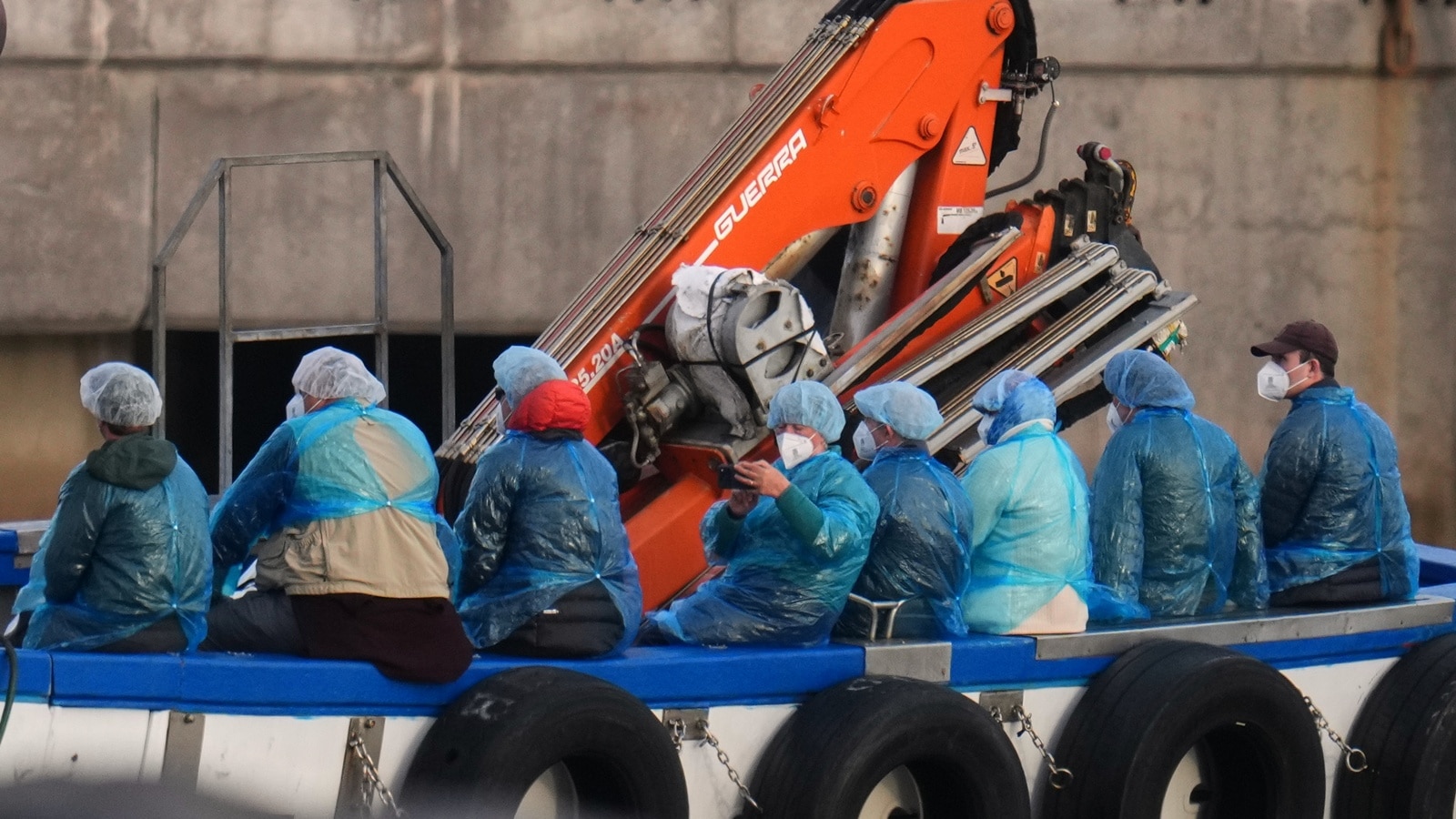
The containment of infectious diseases on the high seas has shifted from a matter of public health to a recurring human rights crisis. When reports surfaced of British passengers facing isolation due to Hantavirus concerns, the immediate reaction followed a predictable script: fear of the virus, followed by the clinical logistics of quarantine. However, the true story lies in the psychological wreckage left behind when a luxury vacation transforms into a floating prison.
Hantavirus is not a typical cruise ship guest. Unlike the norovirus outbreaks that frequently sweep through dining halls, Hantavirus is generally associated with rodent contact and is not known for easy person-to-person transmission in the way respiratory viruses are. Yet, the mere mention of a high-mortality pathogen triggers a "containment at all costs" protocol that often ignores the mental stability of those locked behind cabin doors. For the British travelers caught in this specific vacuum, the trauma is not a side effect. It is a direct result of a maritime industry that prioritizes liability over the lived experience of its passengers.
The Mechanics of Isolation Trauma
Quarantine on a ship is uniquely punishing. You are trapped in a small, windowless or balcony-restricted space while the ocean moves beneath you. There is no escape, no fresh air, and often, a dwindling supply of information.
Psychologists who study forced isolation point to a phenomenon known as "situational stress reaction." This isn't just a bad mood. It is a physiological response to the loss of agency. When a passenger is told they cannot leave a ten-by-fifteen-foot room for an indefinite period, the brain enters a state of high alert. The cortisol spike is massive. Over days, this evolves into a deeper, more corrosive anxiety.
The industry calls it a safety measure. The victims call it a nightmare.
One of the most significant factors in this trauma is the lack of a clear timeline. Uncertainty acts as a force multiplier for psychological distress. If a passenger knows they are staying put for forty-eight hours, they can rationalize the discomfort. When the timeline remains "until further notice," the mind begins to fracture. For older travelers or those with existing health conditions, this isolation can lead to a rapid decline in cognitive function and physical health, far more dangerous than the low statistical risk of contracting a rare virus like Hantavirus in a controlled environment.
Why Hantavirus Changes the Narrative
The shift from common gastrointestinal issues to Hantavirus represents a massive escalation in the stakes of maritime quarantine. While most Hantavirus strains found in the Americas, such as the Sin Nombre virus, carry a high mortality rate—sometimes reaching 38 percent—the risk of a massive outbreak on a cruise ship is scientifically slim. These viruses are typically contracted through the inhalation of aerosolized droppings or urine from infected rodents.
Unless a cruise ship has a catastrophic infestation in its ventilation system, the risk to the average passenger is negligible.
This raises a difficult question for the industry. Why the heavy-handed isolation? The answer is often found in the legal departments of the major cruise lines rather than in the medical bays. Ships operate in a legal gray area, often under "flags of convenience" that allow them to skirt the labor and safety laws of the countries they visit. However, the threat of a lawsuit from a Western passenger is the one thing they truly fear. By enforcing a draconian quarantine, the cruise line creates a paper trail of "decisive action." They are protecting their balance sheets, even if it means breaking the spirits of the people on board.
The British Contingent and the Failure of Consular Support
British travelers often find themselves in a specific kind of bureaucratic limbo when these incidents occur in international waters. While the Foreign, Commonwealth & Development Office (FCDO) provides "consular assistance," the reality on the ground—or on the water—is often limited to a few phone calls and a list of local lawyers.
The sense of abandonment is profound. When you are a thousand miles from home, locked in a room because of a virus you likely don't have, and your government tells you to "follow local protocols," the isolation becomes absolute. This perceived abandonment is a primary driver of long-term Post-Traumatic Stress Disorder (PTSD) in survivors of maritime quarantine. They realize that the thin veneer of civilization and protection they paid for with their ticket price is non-existent the moment a health emergency is declared.
The Hidden Costs of Shipboard Confinement
- Financial hemorrhaging: Many travel insurance policies have specific clauses that exclude "acts of government" or specific quarantine orders, leaving passengers to fight for refunds that may never come.
- Medical neglect: In the rush to isolate, routine care for non-related issues—diabetes management, heart medication, or physical therapy—often falls by the wayside.
- Social erosion: The "us vs. them" mentality that develops between the crew and the isolated passengers creates a hostile environment that lingers long after the ship docks.
A Systemic Lack of Transparency
The cruise industry is notoriously opaque. When an outbreak occurs, the flow of information is tightly controlled by the corporate communications team. Passengers often receive news via a muffled PA system or a slipped piece of paper under the door.
This lack of transparency is not accidental. By keeping passengers in the dark, the cruise line maintains control. But from a mental health perspective, this is the worst possible approach. Totalitarian control over information creates a breeding ground for rumors and panic. If a passenger hears through a social media post that there is a Hantavirus scare before the captain announces it, the trust is broken forever.
We saw this during the early days of the 2020 pandemic, and the industry appears to have learned very little from those failures. The focus remains on the physical body—checking temperatures, sanitizing surfaces—while the mind is left to rot in the dark.
The Argument for Reform
There is a growing movement among maritime legal experts and mental health advocates to establish a "Bill of Rights" for quarantined passengers. This would not be a mere suggestion but a mandatory set of standards that every ship must follow if they intend to dock in a major port.
These standards would include:
- Mandatory Daily Mental Health Check-ins: Not a temperature check, but a conversation with a trained professional via video link or phone.
- Information Parity: Passengers must receive the same updates as the media and the corporate office in real-time.
- Physical Access to Fresh Air: Even in quarantine, human beings require sunlight and air to prevent physiological collapse.
- Guaranteed Repatriation Pathways: Governments must play a more active role in extracting their citizens from private corporate custody on the high seas.
The current model is unsustainable. You cannot continue to sell "the dream of a lifetime" while maintaining the infrastructure of a medium-security prison for use at a moment's notice.
The Long Road to Recovery
The trauma of being trapped doesn't end when the cabin door is finally unlocked. For many, the return to "normal life" is marked by hyper-vigilance, a fear of enclosed spaces, and a deep-seated distrust of travel authorities.
We are seeing a rise in what some therapists call "Quarantine Re-entry Syndrome." Survivors find it difficult to reconcile the luxury they were promised with the clinical coldness they experienced. The "trauma" mentioned in headlines is not a hyperbole used to sell papers; it is a clinical reality for hundreds of people who thought they were going on a holiday and ended up in a case study for human endurance.
The industry needs to recognize that a ship is more than a vessel; it is a community. When that community is fractured by fear and isolation, the damage is systemic. If the goal is truly "passenger safety," then that safety must encompass the mind as well as the lungs.
The next time a ship hits the headlines for a Hantavirus scare or any other biological threat, the focus shouldn't just be on the infection rate. We need to look at the people behind the portholes. We need to ask how many of them will ever feel safe in a locked room again. The maritime industry has spent decades perfecting the art of the buffet and the excursion, but it has failed miserably in the art of human dignity under pressure.
Unless there is a fundamental shift in how quarantine is handled, the cruise ship will remain the most dangerous place in the world—not because of the viruses, but because of the people in charge of the keys. Owners of these fleets must decide if they are in the business of hospitality or the business of confinement. You cannot be in both.