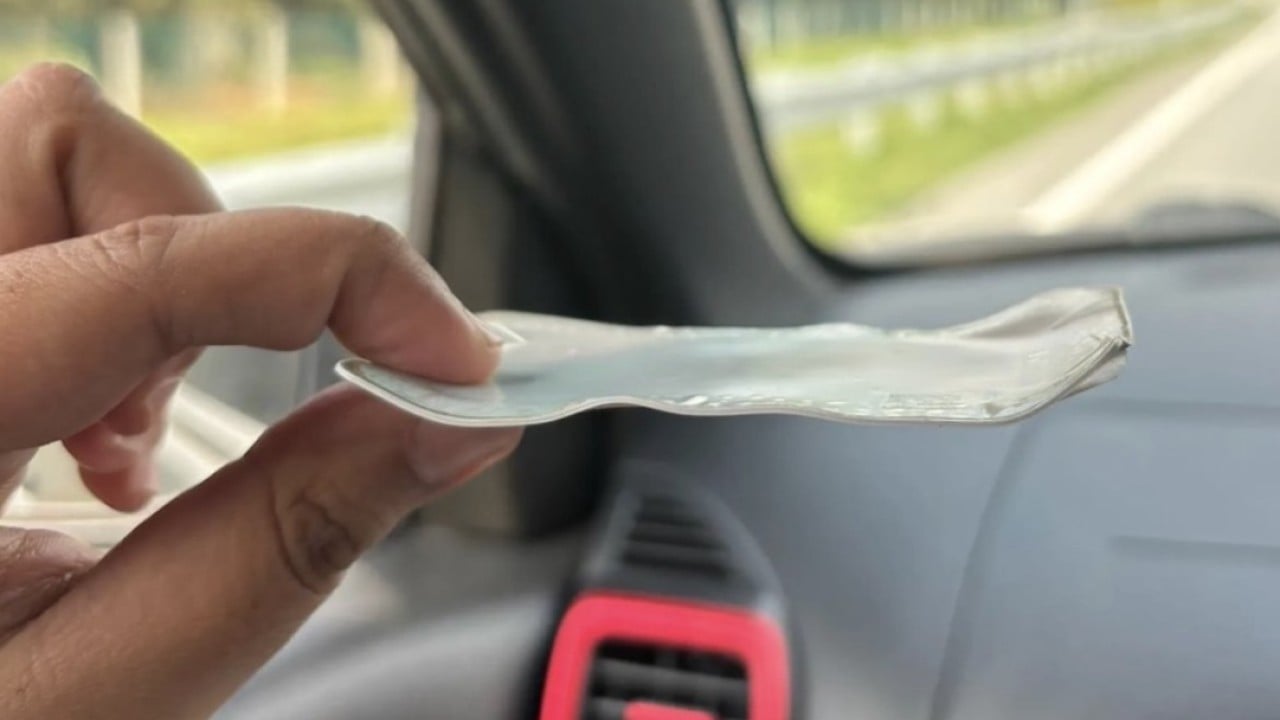
It happened at a busy petrol station in Petaling Jaya. A driver tried to slide his CIMB Visa into the outdoor payment terminal, but the card hit a snag. It wouldn't go in. When he pulled it out, the plastic looked like a Pringle. It was warped, bubbled, and completely useless.
This isn't an isolated tech glitch. It's a structural failure of PVC plastic under the brutal Malaysian sun. We aren't just talking about "hot" weather anymore. We're dealing with ambient temperatures that turn car interiors into industrial-grade ovens. If you leave your wallet on the dashboard or even in a side pocket during a three-hour lunch in Bangsar, you're basically slow-cooking your bank accounts.
Most people think their cards are indestructible. They aren't. Standard payment cards are made of Polyvinyl Chloride (PVC). This material has a specific "glass transition temperature." Once the plastic hits that threshold, it loses its rigidity and starts to flow. In Malaysia, we're hitting those numbers daily.
Why Your Card Can’t Stand the Heat
Most credit and debit cards are designed to withstand temperatures up to about 50°C to 60°C. That sounds high until you realize how fast a parked car in Kuala Lumpur heats up. On a 34°C afternoon, the interior of a car parked in direct sunlight can hit 70°C in less than an hour.
The dashboard acts as a heat sink. It absorbs solar radiation and radiates it back into the cabin. If your wallet is sitting there, the PVC layers in your card begin to delaminate. These cards aren't one solid piece of plastic. They're multiple layers of film pressed together with heat and adhesive. When they get too hot, those layers expand at different rates. That's how you get those annoying bubbles on the surface or a card that looks like a miniature skateboard ramp.
It's not just the shape that changes. The internal components are at risk too. Modern cards rely on an EMV chip and an antenna coil for contactless payments. The antenna is a thin wire embedded in the plastic. If the card warps significantly, that wire can snap. Suddenly, your "Wave" function stops working, and you're stuck digging for cash at the grocery checkout.
The Dashboard Trap and Other Mistakes
The biggest mistake is the "quick dash." You think you're only popping into the pharmacy for five minutes, so you leave your pouch in the center console. In those five minutes, the air inside the car is already climbing.
I've seen people keep their secondary cards in the sun visor. That’s a death sentence for plastic. The visor is right against the windshield, which is the primary entry point for UV and infrared heat. You're effectively putting your Maybank card under a magnifying glass.
Another hidden danger is the magnetic stripe. While we mostly use chips now, the stripe still matters for some older terminals or international travel. High heat can agitate the magnetic particles on that strip. It leads to data corruption. You might not see the damage, but the card reader will spit out a "Read Error" every single time.
Metal Cards Aren’t the Perfect Shield
Premium metal cards from banks like HSBC or UOB are becoming more common. You might think these are the solution to the melting card epidemic. They aren't. While the metal core won't warp at 70°C, most "metal" cards are actually hybrid. They have a metal front and a plastic back to allow the antenna signal to pass through.
The heat can cause the adhesive between the metal and plastic layers to fail. I’ve seen metal cards where the plastic backing literally peeled off like a scab. Even worse, metal conducts heat. A metal card sitting in the sun will get hot enough to actually burn your fingers when you pick it up. It stays hot longer than plastic, potentially damaging the leather or synthetic pockets of your wallet.
Protecting Your Plastic in a Tropical Oven
You don't need to keep your wallet in a cooler box, but you do need to be smarter about where it lives. Stop treating your car like a storage unit. If you aren't in the car, your wallet shouldn't be either.
- The Floorboard Rule. If you absolutely must leave a bag in the car, put it on the floor behind the front seat. It's the coolest part of the interior because it’s shielded from direct sunlight.
- Insulated Wallets. Some tactical or "EDC" wallets use aluminum frames. These provide some structural rigidity that can help keep a softening card flat, though they won't stop the heat entirely.
- Switch to Digital. This is the most practical move. Apple Pay, Google Pay, and Samsung Pay don't warp. By moving your primary transactions to your phone or watch, you can keep your physical cards tucked away in a cool, dark place at home or deep inside a bag.
What to Do When the Warp Happens
If you pull out your card and it looks like a piece of lasagna, don't try to bend it back immediately. If the plastic is still warm, you might snap the internal antenna. Let it cool down naturally on a flat surface.
Don't put it in the freezer. Rapid temperature shifts can make the plastic brittle. Once it's at room temperature, you can try placing it under a heavy book for 24 hours. But honestly? The structural integrity is gone. Even if it looks flat, the internal layers are likely compromised.
Your best bet is to report it as "damaged" in your banking app. Most Malaysian banks like CIMB, Maybank, or Public Bank will issue a replacement for a small fee, usually around RM12 to RM15. It's a small price to pay to avoid the embarrassment of a stuck card in an ATM.
Check your wallet right now. Look for any slight curves or peeling edges. If you see them, your storage habits need a rewrite before the next Malaysian heatwave claims another victim. Move your cards to a cool spot, set up your digital wallet today, and never leave your plastic on a dashboard again.