The air inside the Philippine House of Representatives doesn't move. It sits heavy, thick with the scent of floor wax and the unspoken weight of a thousand political dynasties. When the gavel finally fell on a Tuesday that felt like any other, it didn't just signal the end of a session. It sounded like a hairline fracture in a windshield.
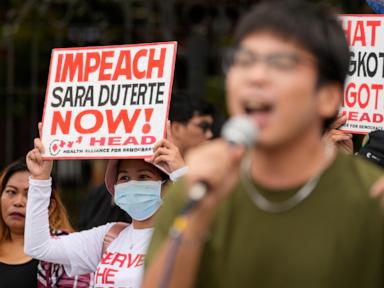
A committee of lawmakers had just decided that there was enough "substance" to move forward with the impeachment of Vice President Sara Duterte. To a casual observer, this is a procedural box being checked. To anyone who has watched the shifting tides of Manila’s power corridors, it is a declaration of war.
History in this archipelago is rarely written in ink; it is carved in the blood of broken alliances.
The Ghost of a Secret Fund
Think of a household budget. You have money for rice, money for electricity, and a little tucked away for a rainy day. Now, imagine if your spouse took millions of that money, refused to say where it went, and told you that asking about it was an act of betrayal.
This is the eye of the storm. At the heart of the committee’s ruling are the "confidential funds"—a staggering sum of 125 million pesos spent in just 11 days. For the average Filipino worker earning 610 pesos a day, that number is more than a statistic. It is an insult. It represents lifetimes of labor vanished into a black hole of "security requirements" that no one is allowed to see.
The lawmakers sitting on that committee weren't just looking at spreadsheets. They were looking at the optics of a vice president who, when asked for an accounting, chose defiance over transparency. Sara Duterte did not show up to explain. She did not send a ledger. Instead, she sent a message that her office was above the scrutiny of the "little people" in Congress.
But the "little people" have the power to unmake a queen.
The Alliance That Wasn't
To understand why this is happening now, we have to look back at the 2022 election. It was marketed as "Uniteam"—a glossy, high-production marriage of two of the most powerful families in the country: the Marcoses and the Dutertes. It was a juggernaut. It felt inevitable.
But political marriages in Manila are built on sand.
The crack started small. A disagreement over a cabinet post here, a subtle snub at a gala there. Then came the public barbs. Former President Rodrigo Duterte, Sara’s father, began calling President Ferdinand Marcos Jr. a "drug addict." Marcos responded with a polished, icy smirk, suggesting the elder Duterte’s mind was failing.
The Vice President found herself caught between a father who built a legacy on iron-fisted rhetoric and a partner who was busy rebranding the family name into something sophisticated and global. She chose her father.
When she walked away from her post as Education Secretary, the divorce was finalized. The impeachment move is simply the filing for legal separation. It is the Marcos-aligned Congress telling the Duterte camp that the immunity of the "Uniteam" has expired.
The Human Cost of High Drama
Imagine a school teacher in a remote province in Mindanao. Let’s call her Maria.
Maria teaches forty children in a room where the roof leaks every time the monsoon hits. She buys chalk with her own money. She hears about the 125 million pesos spent in 11 days and she does the math. That money could have built hundreds of classrooms. It could have fed every child in her village for a decade.
When we talk about impeachment, we talk about constitutional law and "high crimes." We talk about the House Committee on Justice and the technical definition of "betrayal of public trust." But for Maria, the betrayal isn't a legal term. It’s the feeling of being forgotten while the giants at the top fight over who gets to keep the keys to the vault.
The committee’s ruling isn't just about whether Sara Duterte broke a specific law. It’s about whether the system can still hold the powerful to account when the cameras are off. If a Vice President can spend 125 million pesos without a receipt, what is the point of a budget? What is the point of a tax?
The Mechanics of the Fall
The process is a slow-motion car crash.
First, the committee finds "sufficiency in substance." This means the accusations aren't just gossip; they have enough meat on the bones to warrant a trial. Next comes the vote in the plenary. If one-third of the House signs off, the Vice President is impeached. Then, it moves to the Senate, which transforms into a high-stakes courtroom.
The Senate is where the real theater happens. It is a room full of egos, each senator weighing their own presidential ambitions for 2028 against the risk of angering the Duterte base.
Sara Duterte still has a base. In the south, she is a hero. To her supporters, this impeachment isn't about corruption; it's a "witch hunt" orchestrated by the Manila elite to clear the path for a Marcos dynasty that lasts forever. They see a strong woman being bullied by a room full of men in Barong Tagalogs.
This is the danger. When politics becomes purely about tribalism, the truth becomes a secondary casualty.
The Invisible Stakes
If Sara Duterte is removed, it changes the trajectory of the Philippines for the next half-century. It signals the end of the Duterte era and the total consolidation of power under the Marcos administration. It would be a surgical strike against a populist movement that has dominated the national psyche since 2016.
But if the impeachment fails—if the Senate acquits her or the House loses its nerve—she becomes a martyr. She becomes the wounded survivor who returns in 2028 with a vengeance that could burn the palace down.
The lawmakers know this. They are playing a game of chess where the pieces are made of glass. One wrong move and the whole board shatters.
As the sun sets over Manila Bay, painting the sky in bruises of purple and orange, the Vice President remains in her office. She is quiet, but it is the silence of a gathering storm. She has survived her father’s wars, and she is a product of a city, Davao, that prides itself on never backing down.
The committee has ruled. The evidence is on the table. The spreadsheets are printed, and the witnesses are waiting in the wings. But this isn't about numbers anymore. It is about a country trying to decide if it is a democracy governed by rules, or a kingdom governed by names.
The fracture in the windshield is growing. You can hear it if you listen closely—a tiny, sharp click as the weight of the world shifts.
Below the grand arches of the session hall, the janitors are sweeping up the day’s debris. They move around the heavy wooden desks where the fate of the Republic is being debated. They don't look at the news. They don't need to. They know that no matter who wins the trial, they will still be there tomorrow, sweeping the same marble floors, while the giants above them decide which version of the truth they are willing to sell.
A gavel is a small thing, made of wood and polish. But when it hits the block, the sound travels all the way to the edges of the sea, where the people wait to see if anyone is actually listening.