Stop buying 20-piece cookware sets. You don't need three different sized ladles and a tiny frying pan that barely fits a single egg. Most of those "mega-bundles" are just a clever way for brands to offload cheap filler while making you feel like you’re getting a deal. If you’re looking for the best cookware sets in 2026, you need to think about heat retention and handle ergonomics, not how many shiny lids come in the box.
I’ve spent years in professional kitchens and home setups. I’ve seen non-stick coatings flake off after six months and "stainless steel" that rusts if you look at it wrong. The truth is that the right pots and pans shouldn't just sit in your cabinet. They should make you a better cook.
Why Multi Clad Stainless Steel is King
If you want one set to last until 2040, buy fully clad stainless steel. Most people get confused by "impact-bonded" bases. That’s just a thick disc stuck to the bottom of a thin pan. It works, but it’s uneven. Fully clad means layers of aluminum or copper are sandwiched between stainless steel all the way up the sides.
The All-Clad D3 remains the industry standard for a reason. In 2026, they’ve finally updated the handles to be less "stabby" on the palms, but the heating remains flawless. You can sear a steak, deglaze the pan for a pan sauce, and throw it in the dishwasher without a second thought. It's expensive. It’s heavy. It’s also nearly indestructible.
Don't let the price tag scare you. Buying one $600 set that lasts 20 years is cheaper than buying a $150 "ceramic" set every two years because the coating stopped working. Ceramic is great for the environment until it ends up in a landfill because it lost its slip.
The Problem With Modern Non Stick
We need to talk about the "forever chemical" rebranding. By now, most of you know about PTFE and PFOA. The market in 2026 is flooded with "green" and "mineral-based" pans. They're better for the planet, sure, but they still have a shelf life.
Even the highest-rated ceramic non-stick sets, like those from Caraway or GreenPan, have a mechanical limit. The smooth surface is basically a microscopic mountain range that gets leveled down every time you use a spatula or high heat. If you must go non-stick, only use it for eggs and delicate fish.
I tell my friends to buy a "hybrid" set if they hate maintenance but want performance. HexClad has dominated this space recently. It uses a laser-etched stainless steel hexagon pattern to protect the non-stick valleys. It’s not as non-stick as a traditional pan, and it’s not as good at searing as pure steel. It’s a compromise. Sometimes compromises are exactly what a busy Tuesday night needs.
Carbon Steel Is the Professional Secret
You probably have a cast iron skillet. You probably hate how heavy it is. Enter carbon steel. In 2026, brands like Made In and Mauviel have made these sets mainstream.
Think of carbon steel as the middle ground between cast iron and stainless steel. It seasons like a wok, meaning it develops a natural, slick patina over time. It’s lighter than cast iron but holds heat just as well.
- It's cheaper than high-end stainless steel.
- It lasts forever if you don't soak it in water.
- It handles high-heat searing better than anything else.
The downside? You can't cook highly acidic foods like tomato sauce in them for long periods, or the acid will eat your seasoning. This is why a "set" is often a mistake. You’re better off mixing and matching.
Copper Is No Longer Just for French Chefs
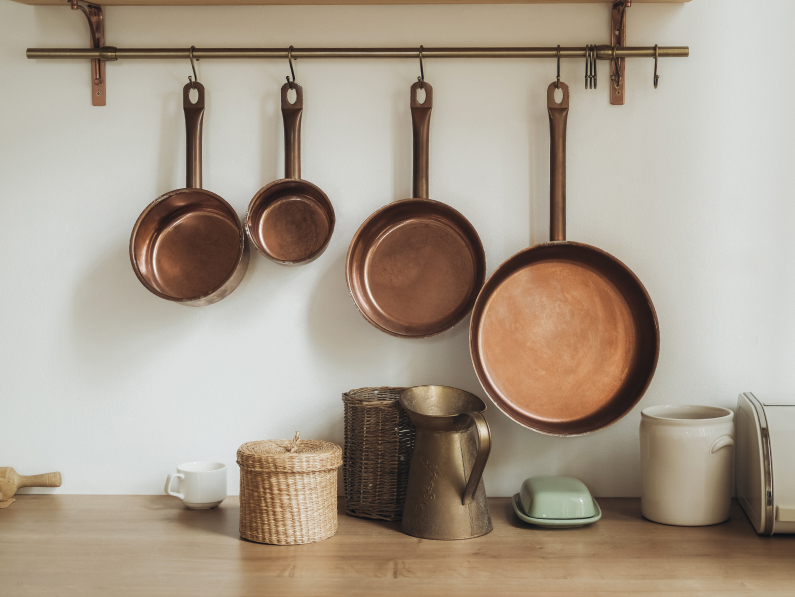
For a long time, copper was too much work. You had to polish it. You had to worry about the tin lining melting. But the new generation of copper cookware, specifically the Hestan CopperBond series, has changed the math.
These sets use a wrap-around stainless steel base and interior with a thick copper core. You get the lightning-fast temperature control of copper—meaning when you turn the flame down, the heat actually drops instantly—without the maintenance nightmares. If you’re a serious saucier or someone who makes a lot of delicate confections, this is your gold standard.
Induction Compatibility Is Non Negotiable
If you’re shopping in 2026, your cookware must be induction-ready. Even if you have a gas stove now, your next one likely won't be. Gas is being phased out in new builds across several states due to indoor air quality concerns.
To check if your current pans work, stick a magnet to the bottom. If it sticks hard, you’re good. Aluminum and pure copper won't work on induction. This is why "tri-ply" and "five-ply" stainless steel sets are so popular; the outer layer is usually a magnetic grade of steel specifically for induction burners.
Stop Falling for the High Piece Count Trap
Marketing teams love to brag about 15-piece sets. Let’s count what’s actually in there:
- A 2-quart saucepan (useful).
- A 3-quart saucepan (redundant).
- A 5-quart Dutch oven (too small for a whole chicken).
- A 10-inch frying pan (good).
- An 8-inch frying pan (only for one egg).
- Four cheap plastic spatulas (garbage).
- Five lids (they count these as "pieces").
You're paying for five things and getting ten pieces of clutter. A truly "best" set for 2026 is a 5-piece or 7-piece collection that focuses on the essentials. You need a 10 or 12-inch skillet, a 3-quart saucier (curved sides are better for whisking), and a 6 to 8-quart stockpot. That’s it.
How to Care for Your Investment
Don't put your pans in the dishwasher. I know the box says "dishwasher safe." The box is lying. The harsh detergents and high-pressure grit will dull the finish of your stainless steel and destroy the rivets over time.
Use Bar Keepers Friend for stainless steel. It’s a mild acid that removes that rainbow heat tint and burnt-on oil effortlessly. For carbon steel and cast iron, just hot water and a stiff brush. If you treat a high-quality pan well, your kids will be cooking on it.
Go to a kitchen supply store. Hold the handles. If a pan feels unbalanced when it's empty, it'll be a nightmare when it's full of hot soup. Buy the best three pans you can afford instead of twelve mediocre ones. Your cooking—and your cabinet space—will thank you.