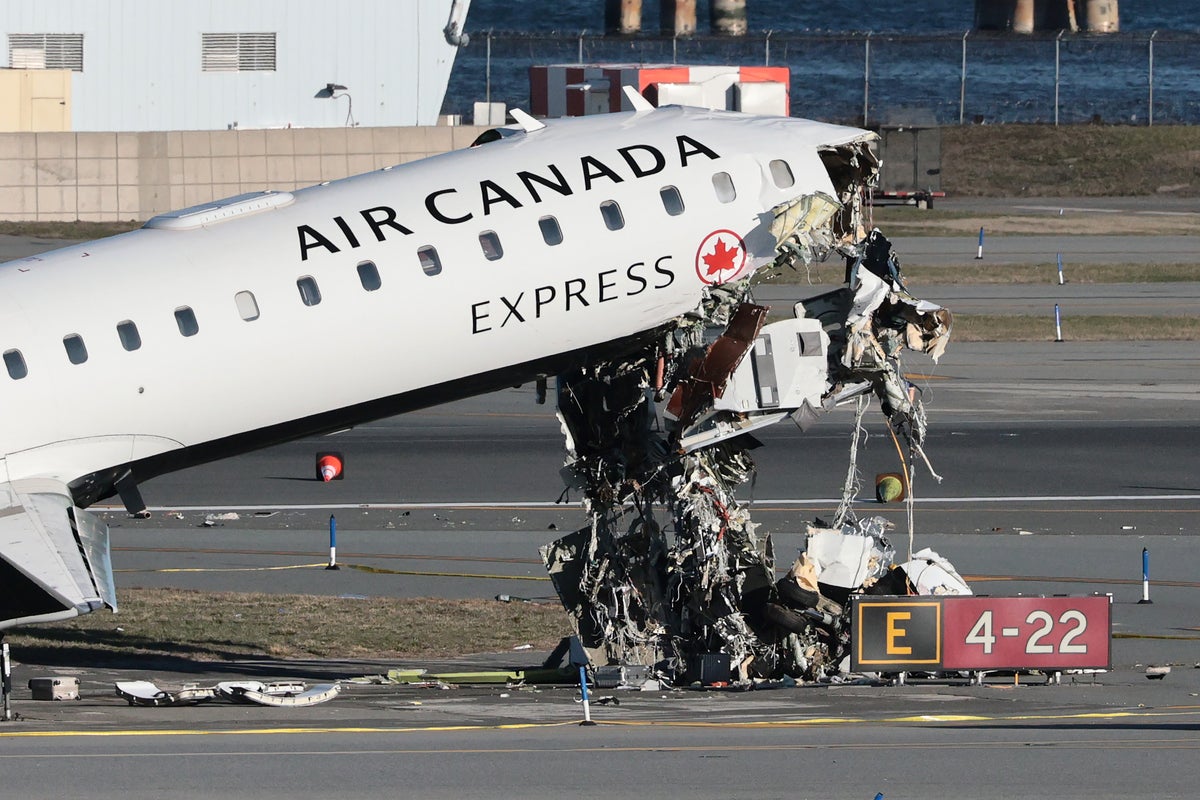
The National Transportation Safety Board (NTSB) has pulled back the curtain on a terrifying lapse in coordination at LaGuardia Airport, where a breakdown in radio discipline and human psychology nearly resulted in a catastrophic collision. While initial reports focused on a confused firefighter, the underlying data reveals a systemic failure in how ground crews and air traffic control interact under pressure. The incident centers on a misunderstood command—a frantic "stop, stop, stop" transmitted over the radio—that was intended to prevent a disaster but instead created a moment of paralyzing ambiguity for the very people tasked with airport safety.
The Anatomy of a Near Miss
On the morning of the incident, an aircraft was cleared for takeoff while an airport rescue and firefighting (ARFF) vehicle was operating near the active runway. The NTSB report details a sequence of events where the firefighter in the vehicle heard the command to stop but was unsure if the directive was meant for him or the departing aircraft. This hesitation is not a simple case of individual error. It is a symptom of a cluttered frequency.
When a pilot is at full throttle and a ground vehicle is in the path of travel, every millisecond counts. In this instance, the firefighter’s confusion stemmed from a lack of "call sign" clarity. Standard aviation protocol requires every command to be preceded or followed by a specific identifier. When someone shouts "stop" without a name attached, it belongs to everyone and no one at the same time. The firefighter stopped, then moved, then stopped again, caught in a loop of indecision while a multi-ton jet accelerated toward his position.
Systems Designed to Fail Under Stress
Aviation safety relies on the concept of "closed-loop communication." You hear a command, you repeat it back, and the sender confirms you heard it correctly. This system works perfectly in a vacuum. It fails when the environment becomes high-tempo. At LaGuardia, one of the most congested pieces of airspace in the world, the radio waves are often a wall of sound.
The NTSB findings highlight that the firefighter was monitoring multiple frequencies. This is a common practice intended to increase situational awareness, but it often has the opposite effect. It creates "auditory masking," where the brain struggles to prioritize which voice matters most. The firefighter heard the urgency in the voice on the radio, but because the command lacked a specific vehicle number, his brain searched for context that wasn't there. He was looking for a reason to stay put while his training told him he needed to clear the area.
The Fatal Flaw in Radio Discipline
Radio discipline is the backbone of ground operations. However, the report suggests a loosening of these standards during routine maneuvers. When air traffic controllers or lead fire officials use shorthand, they save seconds but sacrifice certainty.
The "Stop" Command Problem
- Ambiguity: Without a call sign, "Stop" applies to any moving body on the airfield.
- Frequency Bleed: Ground crews hearing tower commands can mistake a directive to a pilot as a directive to themselves.
- Panic Response: High-pitched, rapid-fire commands trigger a fight-or-flight response that can bypass the analytical part of the brain.
In this specific case, the "stop" command was actually issued by a supervisor who saw the impending conflict. While the supervisor’s intent was to prevent a collision, the delivery of the message lacked the formal structure required to make it actionable. The firefighter was left guessing in a situation where guessing is usually a precursor to a funeral.
Technological Gaps in Ground Safety
We often assume that because we have GPS and advanced radar, the "human element" is just a backup. The LaGuardia report proves that the human element is still the primary point of failure. The airport uses Surface Movement Guidance and Control Systems (SMGCS), which are supposed to track every moving part on the tarmac. Yet, these systems are only as good as the humans interpreting the screens.
The NTSB pointed out that while the technology flagged a potential conflict, the communication of that conflict was purely verbal. There is no "in-cockpit" or "in-dash" visual alert for ground vehicles that mirrors the sophisticated Collision Avoidance Systems (TCAS) found in modern airliners. Firefighters are essentially driving into high-stakes traffic with 1970s-era communication tools. They are relying on their ears in an environment that is deafeningly loud and mentally taxing.
The Psychological Burden of the First Responder
We expect firefighters to be cool under pressure. We don't often discuss the cognitive load they carry while navigating an active airfield. A firefighter at an airport isn't just a driver; they are an amateur air traffic controller, a navigator, and a first responder all at once.
When the NTSB interviewed the personnel involved, a pattern emerged. The firefighter felt a sense of "perceived urgency" that overrode his standard operating procedures. He knew something was wrong, but the lack of clear, labeled instructions caused a mental "vapor lock." This isn't just about training; it's about how the brain processes fear. When the voice on the radio sounds panicked, the listener’s heart rate spikes, and their peripheral vision—and peripheral hearing—narrows. This "tunnel effect" made it impossible for him to discern the source or the target of the transmission.
Training for the Exception Not the Rule
Most airport training focuses on the routine. You drive from Point A to Point B, you stay behind the lines, you wait for the green light. The LaGuardia incident happened in the "gray space" where the rules are being bent by an emergency. The NTSB’s deep dive suggests that current training modules do not sufficiently simulate the chaos of a radio frequency during a near-miss event.
Simulated drills are often too clean. They don't include the static, the overlapping voices, or the incorrect terminology that actually happens in a real crisis. To fix this, ARFF training needs to move toward "stress-inoculation" programs. Drivers need to be forced to make split-second decisions while being bombarded with conflicting or ambiguous radio traffic.
The Institutional Memory of LaGuardia
LaGuardia is a unique beast. Its runways are short, its taxiways are cramped, and its volume of traffic is relentless. This creates a culture of "efficiency over formality." Everyone is trying to move fast because any delay ripples through the entire Northeast corridor.
The NTSB report subtly points to this culture. When people are in a rush, they truncate their speech. They skip the call signs. They assume the other person knows what they are thinking. This "assumption of shared knowledge" is the most dangerous thing on a runway. The firefighter assumed the "stop" wasn't for him because he thought he was in the clear. The supervisor assumed the firefighter knew he was the target of the shout. These two assumptions almost met at the center of the runway.
Beyond the Cockpit Ground Safety Oversight
For decades, aviation safety has obsessed over what happens at 30,000 feet. We have perfected the flight deck. We have automated the engines. But the tarmac remains a frontier of manual labor and verbal cues. The LaGuardia incident is a wake-up call that ground safety oversight has lagged behind.
The NTSB recommends a more rigorous audit of ground-to-tower communications. It isn't enough to just record the tapes; we need to analyze them for linguistic errors before an accident happens. We need to treat a missing call sign on a Tuesday as if it were the cause of a crash on a Wednesday.
The Missing Link in Vehicle Hardware
If a truck is on a runway, it should have a physical, visual indicator of its status that is linked to the tower’s computer. Relying on a human to hear a specific word amidst the roar of jet engines is a design flaw. The industry needs to push for "Heads-Up Displays" (HUDs) in emergency vehicles that can flash a red "STOP" signal triggered directly by the air traffic control computer.
This takes the ambiguity out of the equation. If the screen in front of your face says stop, you stop. It doesn't matter what you think you heard on the radio. It doesn't matter if you think the command was for the Delta flight behind you.
Rethinking the Role of the Fire Supervisor
The supervisor who shouted "stop, stop, stop" was trying to save lives. But in the high-stakes world of aviation, "trying to help" can sometimes hurt if it doesn't follow the script. The NTSB's focus on this specific transmission highlights a need to redefine the roles of supervisors during active runway crossings.
There needs to be a single, authoritative voice. If too many people have the "authority" to override the radio, the result is a cacophony. The firefighter was essentially listening to a committee when he needed a commander. The report suggests that the chain of command on the ground was muddled, leading to a situation where the driver didn't know whose voice took precedence—his immediate supervisor or the tower controller.
Moving Toward Direct Digital Communication
The ultimate solution to the confusion seen at LaGuardia is the elimination of voice-only commands for critical safety maneuvers. Digital Data Link technology, which is already used for some pilot communications, needs to be extended to the ground fleet.
A digital command is immutable. It doesn't have an accent. It doesn't sound panicked. It appears as a clear text instruction on a screen. "VEHICLE 4—HOLD SHORT RUNWAY 4." This removes the psychological pressure of interpreting tone and the physical difficulty of hearing over noise. While the cost of retrofitting every airport vehicle in the country is high, the cost of a hull loss and the resulting loss of life at LaGuardia would be infinitely higher.
The firefighter didn't fail because he was incompetent. He failed because he was a human being placed in a system that expected him to be a computer. He was asked to filter out the noise of a busy airport, interpret an incomplete command, and overcome the natural instinct to clear a path, all within a few seconds. The NTSB report isn't a condemnation of one man's confusion; it is an indictment of a communication system that is no longer fit for the intensity of modern aviation.
Ground operations are the last "analog" part of a "digital" industry, and until we close that gap, we are just waiting for the next misunderstood word to trigger a tragedy. The fix isn't more training on how to listen. The fix is a system where listening is no longer the only thing keeping people alive. Ensure every vehicle has a dedicated, automated override that can be triggered by the tower, removing the human from the decision loop when a collision is imminent.