The sea is never truly empty, but some ships are more invisible than others. In the shimmering heat of the Mediterranean, where luxury yachts zip between the Greek islands and cargo vessels carry the world's sneakers and citrus, a rusted giant is treading water. It has no destination. It has no insurance. If you look at the digital maps that trackers use to keep the oceans safe, this ship doesn't exist.
It is a ghost.
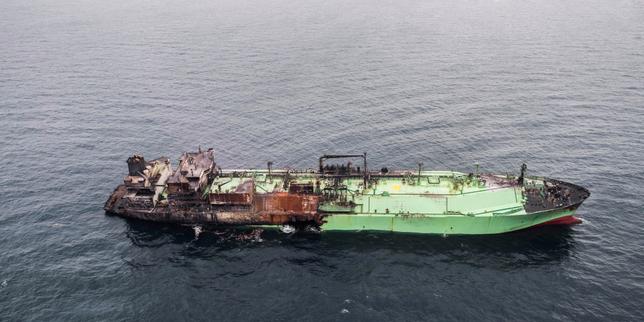
This is the Asya Energy. On paper, it is a massive carrier of Liquified Natural Gas (LNG). In reality, it is a floating stick of dynamite in a geopolitical poker game. It is part of Russia’s "shadow fleet," a ragtag assembly of aging vessels designed to do one thing: bypass global sanctions and keep the Kremlin’s war chest overflowing. But as this ship lingers off the coast of Greece, it represents something far more personal than a line item on a trade balance sheet. It is a ticking environmental and safety clock.
The Anatomy of a Shadow
To understand why a single ship matters, we have to look at the mechanics of deception. Usually, shipping is a transparent, if boring, business. Every move is logged by the Automatic Identification System (AIS). Think of it as a digital heartbeat. You can see where a ship started, where it’s going, and exactly how fast it’s moving.
The Asya Energy went dark.
In early August, the vessel did something that would get any commercial pilot stripped of their license: it turned off its transponder. It vanished from the maps. While the world blinked, it slipped into the Arctic, docked at the sanctioned Arctic LNG 2 terminal, and loaded up with super-chilled gas. When it reappeared days later, its hull sat lower in the water. It was heavy with cargo that, legally speaking, no one is supposed to buy.
Imagine a delivery driver removing their license plates, putting on a mask, and driving a truck full of contested goods through your neighborhood. Now imagine that truck is the size of three football fields and filled with a substance kept at -162°C.
The Ghost at the Gate
The Mediterranean is currently playing host to this charade. The Asya Energy has been loitering near the Peloponnese, performing a slow, rhythmic dance in international waters. It isn't there for the view. It is waiting for a "ship-to-ship" transfer.
This is the most dangerous part of the shadow game. In a standard port, transferring LNG is a high-tech feat of engineering, managed by dozens of specialists and backed by billions of dollars in insurance. In the shadow fleet, it’s a back-alley handoff. Two massive ships pull alongside one another in the open ocean. They connect hoses. They pray the swells stay low.
If something goes wrong—a snapped line, a hull breach, a mechanical failure—there is no safety net. Because these ships operate outside the traditional banking and insurance systems (like the International Group of P&I Clubs), there is no guaranteed payout for a cleanup. There is no clear chain of responsibility. If the Asya Energy spills its guts into the Mediterranean, the cost falls on the coastal towns of Greece, Turkey, or Italy.
The blue water that brings millions of tourists to the Mediterranean every year is currently being used as a laboratory for risk.
The Human Toll of Invisible Trade
We often talk about sanctions as if they are abstract legal puzzles. They aren't. They are choices that force people into desperate corners.
Consider the crew on a ship like the Asya Energy. These aren't high-ranking naval officers or political ideologues. They are often sailors from developing nations—men from India, the Philippines, or Eastern Europe—who took a job because the pay was slightly better than the legal alternative. They are sailing on a vessel that has been rejected by reputable inspectors. They are operating without the protection of international maritime law. If they are injured, or if the ship is seized, they are ghosts too.
They live in a world of constant anxiety. They know they are being watched by satellites. They know that if their engines fail, no reputable tugboat company will want to touch them for fear of being "tainted" by the Russian association. They are trapped on a steel island, carrying a cargo that makes them international pariahs.
Why the Mediterranean?
The choice of location isn't accidental. The Mediterranean is the crossroads of three continents. It is crowded, messy, and legally complex. By hovering just outside the territorial waters of EU nations, these ghost ships exploit a loophole in the law of the sea. They are close enough to the markets of Asia and Europe to be convenient, but far enough away to remain untouchable by local coast guards.
Russia is betting on our exhaustion. They are betting that the world will get tired of tracking every hull, every shell company, and every fake flag of convenience. Since the invasion of Ukraine, the shadow fleet has grown to include hundreds of vessels. Some are old tankers that should have been sold for scrap a decade ago. Others, like the Asya Energy, are sophisticated pieces of technology forced into a life of crime.
The sheer scale of the operation is staggering. We aren't talking about a few crates of contraband. We are talking about millions of tons of energy being moved through the world’s most sensitive ecological zones by ships that are effectively uninsured.
The Fragility of the System
The global economy relies on trust. We trust that the ship coming into the harbor has been inspected. We trust that the captain is who they say they are. We trust that if there is a disaster, someone will pay to fix it.
The shadow fleet breaks that trust. It creates a two-tiered ocean. On one side, you have the "white" fleet: regulated, insured, and visible. On the other, you have the "shadow" fleet: unregulated, anonymous, and dangerous. The problem is that they share the same water. They use the same narrow straits.
Think of it as a highway where half the cars have functioning brakes and insurance, and the other half are driving at night with their headlights off, hoping they don't hit anyone. Eventually, the odds catch up.
A Choice Between Heat and Honor
There is a temptation to look at the Asya Energy and see a victory for ingenuity—a way for a nation to survive under the thumb of global pressure. But that view ignores the cost. The gas on that ship is being sold to fund a conflict that has already claimed hundreds of thousands of lives. The ship itself is a middle finger to the idea of international environmental standards.
The shadow fleet isn't just a Russian problem; it’s a global liability. Every day that the Asya Energy sits in the Mediterranean, the stakes get higher. It is a game of chicken played with the health of the sea and the safety of the people who live along its shores.
We find ourselves in a strange moment in history where the most important battles aren't being fought with missiles, but with transponders and insurance certificates. The silence of the Asya Energy is deafening. It tells a story of a world where the rules are melting, where the ocean is becoming a frontier again, and where a single ghost ship can hold a whole coastline hostage.
The sun sets over the Mediterranean, casting long, golden shadows across the water. From the shore, you might see a distant silhouette on the horizon, a massive shape sitting still against the waves. It looks like any other ship. It looks peaceful. But underneath that calm exterior, the pressure is building, the temperature is rising, and the ghost is waiting for its next move.
The ocean has a way of revealing secrets eventually. Usually, it happens when something breaks. And by then, the people who sent the ship are long gone, leaving only the crew, the rust, and the freezing gas to face the waves.