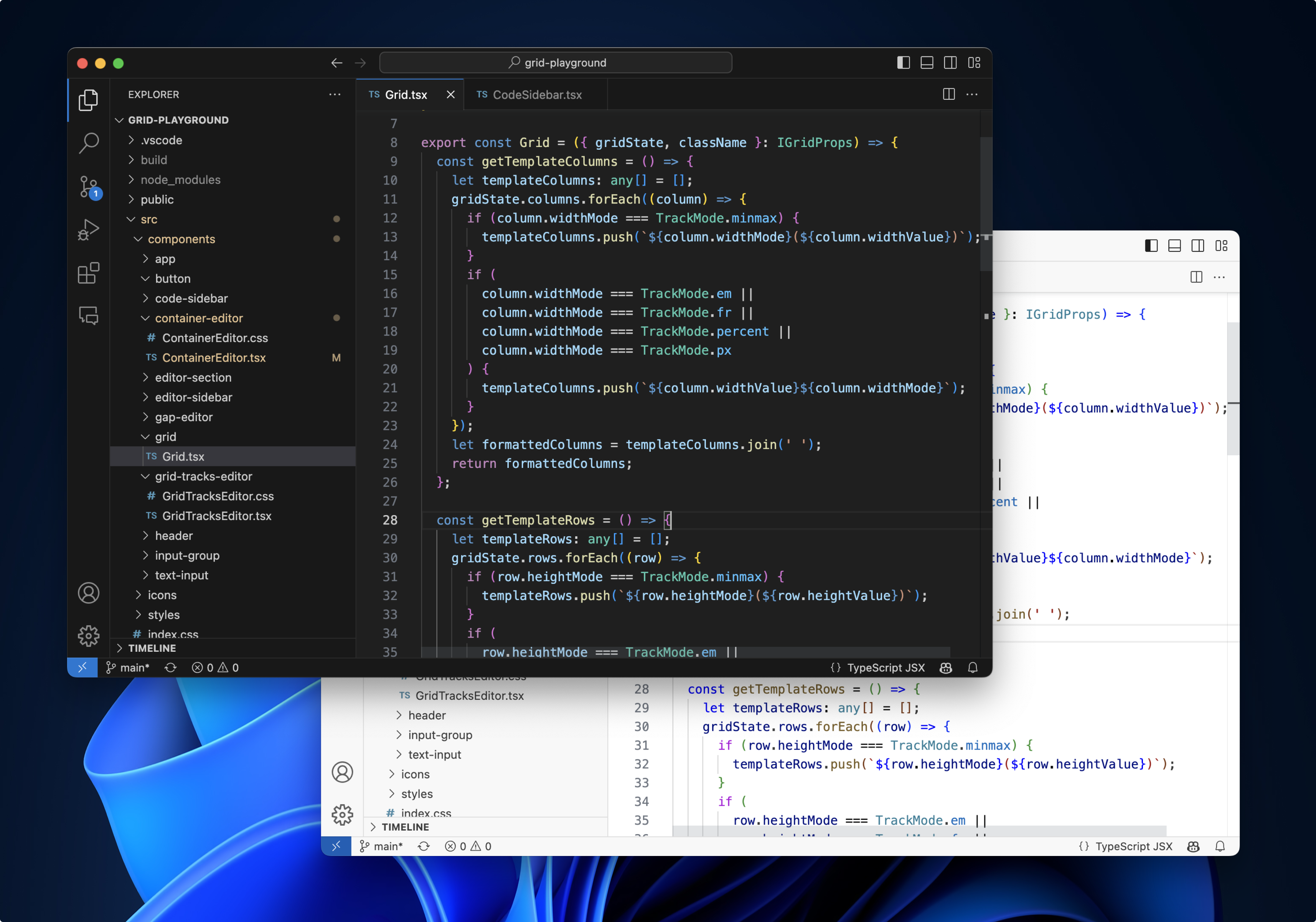
The glow of a dual-monitor setup at 3:15 AM does strange things to the human eye. It turns the walls gray. It makes a cold cup of coffee look like an existential crisis. For Sarah, a senior engineer at a logistics startup, that glow was her entire world. She was three hours away from a critical deployment deadline. Her fingers hovered over the keyboard, but she wasn’t typing. She was waiting for a ghost in the machine to finish her sentence.
For months, that ghost had a name: GitHub Copilot. It was Microsoft’s crown jewel, the undisputed vanguard of the artificial intelligence coding revolution. To Sarah, it felt like an invisible, hyper-intelligent pair programmer sitting right next to her. She would type a vague comment, and Copilot would cascade lines of functional, elegant Python code down her screen. It was magic. It made her faster, smarter, and liberated her from the mind-numbing repetition of boilerplate syntax.
Then, the cursor stopped blinking.
The predictive text vanished. In its place, a small, spinning wheel of death appeared in the corner of her Integrated Development Environment. A few seconds later, an error message popped up: Connection timeout.
Sarah checked her Wi-Fi. It was perfect. She checked the news. And there it was, rippling across social media and developer forums. GitHub was down. Again.
To the average consumer, a website outage means you can’t refresh your feed or order a pair of shoes for an hour. To the global infrastructure of software development, a GitHub outage is a heart attack. When the servers hosting the world's code go dark, the wheels of modern commerce grind to a screeching halt. But this wasn’t just a routine maintenance hiccup. This was a crack in the foundation of Microsoft’s grand strategy to dominate the next century of computing.
The Weight of Two Million Minds
To understand how Microsoft found itself in this fragile position, you have to look at the sheer scale of what they built. GitHub is not just a repository; it is the central nervous system of the software world. More than 100 million developers use it. When Microsoft acquired the platform in 2018 for $7.5 billion, the tech industry held its breath. Many feared the tech giant would ruin the open-source paradise. Instead, Microsoft did something brilliant. They weaponized it.
By feeding the vast, public oceans of GitHub's code into OpenAI’s large language models, Microsoft birthed Copilot. It was a masterstroke of vertical integration. They had the data, they had the Azure cloud infrastructure, and they had the distribution channel. By 2024, Copilot had amassed over 1.8 million paying subscribers. It wasn't just winning the AI coding race; it had already crossed the finish line while competitors were still lacing their shoes.
But code is a heavy thing to carry.
Every time a developer types a character in their editor, Copilot sends a request to a cloud server, processes it through a massive neural network, and fires a suggestion back across the internet in milliseconds. The sheer computational overhead is staggering. Now, multiply that by millions of developers, working simultaneously across every time zone on Earth.
During peak business hours in San Francisco and New York, the load on GitHub’s infrastructure resembles a permanent, distributed denial-of-service attack. The system began to buckle under its own success. Throughout late 2023 and the first half of 2024, GitHub experienced a string of highly visible degraded performances and outright outages.
Consider the mathematical reality of modern engineering timelines. Companies no longer price developer time purely by the hour; they price it by velocity. When Copilot went offline for just two hours during a major incident, it didn't just inconvenience individual hobbyists. It paralyzed entire enterprise engineering teams who had structurally altered their workflows to depend on AI assistance. Engineers who had stopped memorizing complex library APIs because "the AI knows it" suddenly found themselves staring at blank screens, stripped of their digital prosthetics.
The Illusion of the Flawless Machine
We have fallen into a collective psychological trap with artificial intelligence. Because the output feels human, we assume the delivery mechanism possesses a human-like resilience. We talk about AI as if it exists in an ethereal, cloud-based heaven, free from the constraints of physics.
It does not.
Every line of code suggested to Sarah at 3:15 AM requires a physical server rack somewhere in Virginia or Dublin to draw power from a power grid. It requires fiber-optic cables running along ocean floors. It requires cooling systems pumping thousands of gallons of water to keep silicon from melting. When Microsoft positioned GitHub to win the AI race, they built the most sophisticated brain in the world, but they hooked it up to an aging heart.
The technical post-mortems released by GitHub during these outages reveal a recurring theme: database contention, resource exhaustion, and cascading failures in the underlying architecture. When one service slowed down under the weight of AI requests, it created a bottleneck that choked out traditional GitHub services like pull requests and code hosting. The foundational tools of software collaboration were being sacrificed to feed the insatiable appetite of the AI generator.
This created an opening. In business, a monopoly is only secure until it becomes inconvenient.
As GitHub stumbled, the ecosystem reacted. Competitors who lacked GitHub’s massive legacy infrastructure saw an opportunity to build lean, hyper-focused alternatives. Startups like Cursor and established players like GitLab began pushing their own AI integrations. Crucially, many of these competitors allowed for local model execution or diversified cloud backends. They realized that the modern developer's greatest fear isn't a lack of features; it is a lack of availability.
When the Assistant Becomes the Bottleneck
The real damage of these infrastructure failures isn't measured in lost subscription revenue. It is measured in trust. Trust is a non-linear asset. It takes a decade to build, a day to lose, and an eternity to buy back.
When Sarah’s IDE disconnected from the cloud, the narrative shifted. Copilot stopped feeling like a superpower and started feeling like a liability. She had to revert to the old way of doing things: digging through outdated documentation, scrolling through forum posts, and writing every line of data validation by hand. The shift was jarring. It felt like stepping out of a sports car and into a horse-drawn carriage. The three hours she had left before her deadline evaporated into a frantic scramble just to make the login screen work.
This is the hidden tax of the AI era. We are rapidly trading our self-reliance for efficiency. When the efficiency works, the gains are spectacular. When it breaks, we are left more helpless than we were before the technology existed.
Microsoft’s strategy assumed that whoever had the best model would win the market. They forgot that in enterprise software, reliability is a feature. A model that is 95% accurate but online 99.99% of the time will always beat a model that is 99% accurate but goes dark during a critical deployment window.
The engineering community is notoriously unforgiving of downtime. Developers are naturally cynical creatures; they spend their entire lives looking for bugs, flaws, and edge cases. When the tool designed to help them fix errors becomes the source of the error itself, the irony is not lost on them. The sentiment on developer forums transformed from awe to irritation. The magical assistant had become an unpredictable coworker who randomly walked out of the office in the middle of a crisis.
The Architecture of Tomorrow
The race is no longer about who can build the largest neural network. The frontier has shifted to the unglamorous, gritty world of infrastructure engineering. The winner of the AI coding race will not be the company that writes the most poetic code generator, but the one that figures out how to keep the lights on when a hundred million people use it at the same time.
Microsoft is pouring billions into upgrading its Azure data centers, trying to outrun the demand curve they created. They are rewriting legacy codebases, decoupling critical version-control systems from the volatile AI pipelines, and attempting to stabilize the ship. But the ship is moving at mock speed in a storm.
For developers like Sarah, the lesson was learned the hard way. Her deployment went live two hours late, after a grueling night of manual troubleshooting that left her eyes bloodshot and her coffee long cold. She didn't cancel her Copilot subscription the next morning. The tool is too valuable, its promises too alluring to abandon entirely.
But something fundamental had changed. She no longer trusted it blindly. She kept a tab open with the raw documentation. She started writing down her own architecture notes again on a physical pad of paper next to her keyboard. She learned that the ghost in the machine is only helpful when it can find a signal through the wires.
The next time she sat down to code in the quiet darkness of the early morning, she watched the AI suggestions populate across her screen with a new perspective. She appreciated the speed, but she kept her fingers firmly anchored to the home row, ready to take the wheel the exact second the machine went silent again.
The code was blinking. For now.