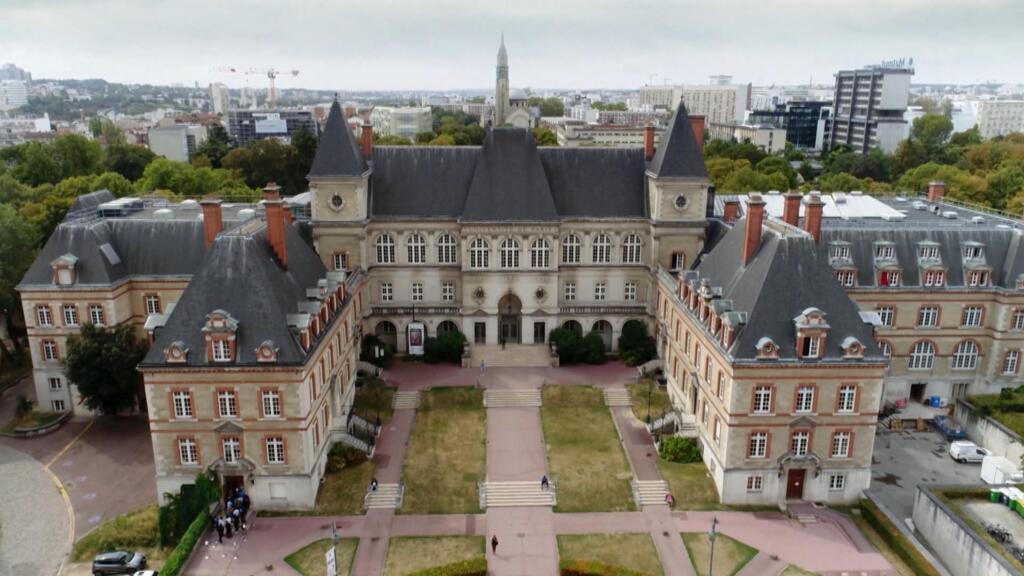
The Cité Internationale Universitaire de Paris (CIUP) is frequently romanticized as a "school of human relations" or a "shrine to pacifism" born from the ashes of World War I. This narrative is a comfortable lie. We love the idea that if we just put students from different countries in the same cafeteria, world peace will somehow manifest through shared trays of ratatouille.
I have walked these grounds with diplomats and urban planners who mistake architectural diversity for functional integration. The reality is that the CIUP is a stunning collection of national silos that reinforces the very borders it claims to dissolve. It is a gated 1920s fantasy struggling to survive in a 2026 reality.
The Myth of the Melting Pot
The lazy consensus suggests that the Cité Universitaire "defies war" by housing 12,000 students from 150 nationalities. But physical proximity does not equal cultural synthesis.
If you look at the "brassage" (shuffling) policy—the rule that requires houses to accept a percentage of residents from other nationalities—it looks great on a brochure. In practice, it creates a superficial layer of tolerance that never reaches the level of true intellectual friction. You aren't "defying war" by living next to a Swedish engineering student; you are merely participating in a high-end dormitory program subsidized by the French state.
Most residents gravitate toward their own national pavilions for the very thing the Cité claims to discourage: tribal comfort. The Maison du Japon, the Maison de l'Inde, and the Pavillon Suisse are architectural masterpieces, yes, but they serve as psychological embassies. They are sanctuaries of the familiar. Real peace requires uncomfortable confrontation, not a scenic walk through a 34-hectare park.
Architecture as a Tool of Segregation
Le Corbusier’s Pavillon Suisse and Willem Marinus Dudok’s Collège Néerlandais are hailed as triumphs of Modernism. Critics drool over the pilotis and the functionalist lines. They miss the point entirely.
By allowing nations to build their own "houses" using their own national architects and styles, the CIUP institutionalized nationalism. It didn't break down walls; it gave every country a prestigious plot of land to assert its ego.
Imagine a scenario where we actually wanted to foster global unity. We wouldn't build a "Maison de la Corée." We would build massive, integrated living complexes where identity is defined by discipline or interest, not by the passport in your pocket. The current setup is essentially a permanent World’s Fair—a format that has been obsolete since the mid-20th century because it treats culture as a static exhibit rather than a fluid, evolving exchange.
The Economic Hypocrisy of "Equal" Housing
The Cité is often framed as a social project, yet the barrier to entry remains sky-high. While it offers lower rents than the predatory Parisian private market, the selection process is a nightmare of bureaucracy and elitism.
To get into the prestigious houses, you don't just need a pulse and a student ID. You need a pedigree. You are competing against the children of the global 1%. The "struggling scholar" trope used to market the CIUP is largely a ghost. When you concentrate the future leaders of nations in a single park in the 14th Arrondissement, you aren't creating a grassroots peace movement. You are creating a networking hub for the global elite.
The "School of Human Relations" Has No Curriculum
People also ask: "How does the Cité Universitaire promote peace?"
The honest answer? It doesn't. It provides a bed and a view.
There is no structured pedagogical framework for the "peace" the CIUP claims to produce. It relies on "serendipity," a word used by people who don't have a plan. Peace is a technical challenge. It requires mediation training, rigorous debate, and the deconstruction of historical biases.
The CIUP offers concerts and the occasional art exhibit. These are aesthetic experiences, not diplomatic ones. I’ve seen more actual conflict resolution happen in a crowded Paris Metro car than in the manicured gardens of the Cité. If the institution were serious about its founding mission, every resident would be required to engage in credit-bearing diplomacy workshops. Instead, they just share a laundry room.
The Neutrality Trap
The Cité prides itself on being a "neutral" territory. This neutrality is its greatest weakness. By remaining neutral, it becomes a bystander to the very conflicts it was built to prevent.
When tensions flare between nations, the CIUP remains a quiet enclave. It doesn't take stands; it doesn't facilitate the hard, ugly conversations that lead to breakthroughs. It is a bubble. And bubbles, by definition, are detached from the atmosphere around them.
The founders—André Honnorat and Émile Deutsch de la Meurthe—were visionaries, but they were products of a pre-nuclear, pre-digital world. They believed that physical presence was the antidote to xenophobia. In 2026, we know that isn't true. We are more connected than ever, and more polarized than ever. Physical proximity in a beautiful park is a luxury, not a solution.
Stop Visiting for the History, Start Seeing the Failure
If you visit the Cité, don't go there to "breathe in the spirit of peace." Go there to see the limitations of 20th-century idealism.
- Observe the Silos: Watch how students clump together by language and region.
- Analyze the Architecture: See how each building screams "I am different" rather than "We are one."
- Question the Access: Ask who isn't there.
The CIUP is a museum of a future that never arrived. It is a beautiful, expensive, and largely ineffective attempt to solve a software problem (human hatred) with hardware (buildings).
The Actionable Pivot
If we want the Cité to be relevant for the next century, the "houses" need to die.
- Abolish National Pavilions: Rebrand them by theme—Sustainability, Ethics, Technology, Arts. Force the Japanese physicist to live with the Brazilian poet.
- End the Elite Pipeline: Allocate 40% of housing to students from conflict zones and low-income backgrounds, regardless of "academic prestige."
- Mandatory Engagement: If you live there, you are a member of a diplomatic corps. You don't just sleep; you work on global problems as a condition of your residency.
Until then, stop calling it a project that "defies war." It's a high-end hostel with a great library and an identity crisis.
Quit romanticizing the architecture and start demanding that the institution actually does the work it claims to be doing on its "About Us" page. Peace isn't a byproduct of a nice view. It's the result of being forced to deal with people you can't stand until you realize they aren't that different from you. The Cité makes it too easy to avoid those people.
Go to the Cité to see the buildings. Go elsewhere to find the future.
Would you like me to analyze the specific funding models of the individual national pavilions to see which ones are actually operating as non-profits versus state-funded influence outposts?