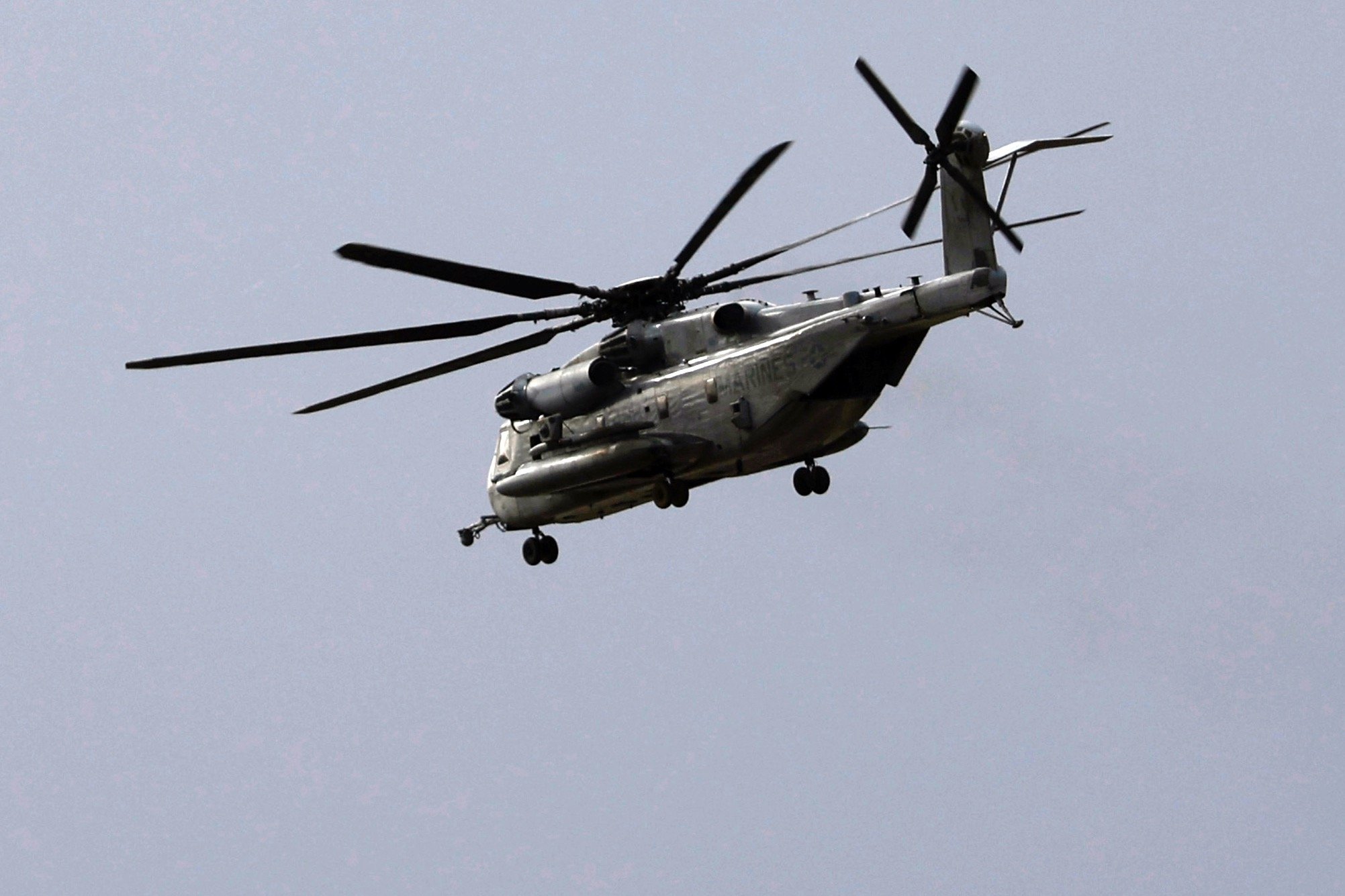
The sea is a heavy, bruised purple at 4:00 AM. Off the coast of the Musandam Peninsula, the water doesn't lap; it groans. For the crew of a VLCC—a Very Large Crude Carrier—the world is reduced to the low hum of engines and the radar’s rhythmic sweep. They are currently floating over a geographic jugular vein.
Twenty-one miles. That is the width of the Strait of Hormuz at its narrowest. It is a distance a marathon runner could cover in a few hours, yet it dictates the heat in a flat in London, the price of a liter of petrol in Mumbai, and the geopolitical blood pressure of every capital city on earth.
When Iran and Israel exchange fire, the world looks at maps of missile trajectories. They count batteries of Iron Dome interceptors. They track the flash of explosions over Isfahan or the Galilee. But the real casualty of this shadow war isn't just found in the debris of a drone strike. It is found in the sudden, terrifying realization that the world’s most vital straw is being pinched by two very large fingers.
The Ghost in the Machine
Consider a hypothetical woman named Elena. She lives in a suburb of Paris, far from the scorching heat of the Persian Gulf. She doesn't follow Middle Eastern maritime law. She doesn't know the difference between a corvette and a destroyer. But when Emmanuel Macron and Keir Starmer urgently call for an international summit to "reopen" or "secure" the Strait, Elena feels it.
It starts at the supermarket. The cost of transporting a crate of oranges from a port in Oman or a shipment of electronics from Shenzhen relies on insurance premiums. When the Strait of Hormuz becomes a "war zone," those premiums don't just rise; they explode. Suddenly, the logistics company shipping Elena’s groceries has to pay five times the normal rate to ensure their vessel doesn't become a scorched husk in the Gulf of Oman.
Elena sees the price of milk go up by twenty cents. She sees the gas bill jump. She thinks it’s inflation. It isn't. It is the sound of a gate slamming shut thousands of miles away.
The Strait is not just a body of water. It is a pressure cooker. Roughly one-fifth of the world’s total oil consumption passes through here every single day. If you think of the global economy as a complex, high-performance engine, the Strait is the fuel line. If you kink that line, the engine doesn't just slow down. It seizes.
A Summit of Necessity
The diplomatic scramble in London and Paris isn't born out of a sudden love for maritime cartography. It is a frantic attempt to prevent a systemic collapse. When Macron and Starmer stand before microphones, their tone is measured, but their eyes tell a different story. They are looking at the math.
The math is brutal.
If the Strait closes, even for a week, the shockwaves would be felt in every corner of the globe. We aren't talking about a minor inconvenience. We are talking about the potential for a global recession triggered in the span of seventy-two hours. This is why the rhetoric focuses on "stability" and "freedom of navigation." These are polite, bureaucratic ways of saying, "If the ships stop moving, the lights go out."
The tension between Iran and Israel has moved beyond the borders of those two nations. It has become a spectral presence in every boardroom and kitchen. When a missile is launched, a trader in Chicago hits 'sell.' When a drone is intercepted, a factory manager in Germany wonders if his energy costs will double by Tuesday.
The Invisible Stakes
We often talk about war in terms of territory. We think of lines on a map being pushed back and forth. But modern conflict, specifically this one, is fought in the "grey zone." It is fought through the disruption of flows—flow of data, flow of money, and most importantly, the flow of energy.
The Strait of Hormuz is a unique vulnerability because it cannot be bypassed easily. There are pipelines, yes. Saudi Arabia and the UAE have built land-routes to move oil to the Red Sea or the Gulf of Oman, bypassing the pinch point. But these pipelines have limits. They can carry perhaps six or seven million barrels a day. The Strait carries over twenty million.
There is no Plan B. There is only the Strait.
For the sailor on that VLCC at 4:00 AM, the stakes are physical. He knows that his ship, carrying two million barrels of crude, is essentially a floating bomb. He knows that the "Tanker War" of the 1980s saw hundreds of ships attacked in these very waters. He watches the horizon for the silhouette of a fast-attack craft or the tell-tale wake of a mine.
For the rest of us, the stakes are psychological. We have lived for decades with the illusion that the things we need will always be there. We assume the shelf will be stocked. We assume the pump will work. We assume the "international order" is a solid, unbreakable floor beneath our feet.
It isn't a floor. It’s a tightrope.
The Diplomacy of Desperation
The summit called by Western leaders is an attempt to grease the gears of that tightrope. They are trying to convince Iran that closing the Strait would be an act of economic suicide, and they are trying to convince Israel that certain types of retaliation carry costs that even their allies cannot bear.
It is a delicate, high-stakes game of poker where the chips are the daily lives of billions of people.
The complexity of the situation is dizzying. You have the IRGC (Islamic Revolutionary Guard Corps) asserting their "sovereignty" over the waters. You have the US Fifth Fleet patrolling nearby, a massive steel presence meant to deter. You have the "shadow fleet" of tankers moving sanctioned oil under flags of convenience, weaving through the chaos like ghosts.
And in the middle of it all, the Strait remains silent, narrow, and terrifyingly deep.
The Ripple Effect
What happens if the summit fails? What happens if the "de-escalation" everyone talks about never arrives?
History tells us that when trade routes are threatened, the world gets smaller. Nations begin to hoard. They look inward. They stop trusting the "global" and start obsessing over the "local." This sounds like a strategic shift, but in reality, it’s a contraction. It’s the sound of a lung gasping for air.
The transition to green energy was supposed to lessen this dependency. We were told that wind and solar would insulate us from the whims of Middle Eastern petro-states. But transitions take decades. In the interim, we are more vulnerable than ever. Our "just-in-time" supply chains have no fat. There is no buffer. If the cargo doesn't arrive today, the factory shuts down tomorrow.
The summit isn't just about ships. It’s about the very idea of a connected world.
If Macron and Starmer succeed, the news cycle will move on. The Strait will remain a footnote in the back of the business section. The sailor on the tanker will finish his watch and go to sleep. Elena in Paris will buy her milk and never think about the Musandam Peninsula.
But if they fail, the purple water of the Gulf will become the center of the world's gravity. We will all learn, very quickly and very painfully, just how much of our comfort is built on a twenty-one-mile stretch of ocean.
The engine is humming for now. The fuel is flowing. But the hand is on the valve, and the world is holding its breath.