The U.S.-led war against Iran just hit a massive, high-tech complication. While missiles fly and naval forces gather near the Iranian coast, a much quieter exchange has been happening in the background. Two senior officials from the Trump administration just dropped a bombshell: SMIC, China's biggest chipmaker, hasn't just been selling chips to Iran—it's been handing over the actual "kitchen" to bake them.
We're talking about chipmaking tools and technical training delivered directly to Iran’s military-industrial complex. This isn't just a trade violation. It's a strategic middle finger to Western sanctions that aims to give Tehran a permanent, domestic way to power its drones and missiles. If you've been wondering how Iran keeps its sophisticated weaponry running despite being cut off from the world, here’s your answer.
The Axis of Evasion moves into high gear
For years, the narrative was that Iran survived on "shadow fleets" of oil tankers and black-market electronics. That’s old news. The new reality is much more organized. U.S. officials say the SMIC shipments started roughly a year ago and, as far as they can tell, they haven't stopped.
This collaboration likely includes hands-on technical training. Think about that. It’s one thing to smuggle in a box of chips; it’s another thing entirely to teach a sanctioned military how to maintain the machines that produce those chips. This moves Iran from being a "customer" of illicit tech to a "producer" of its own military hardware.
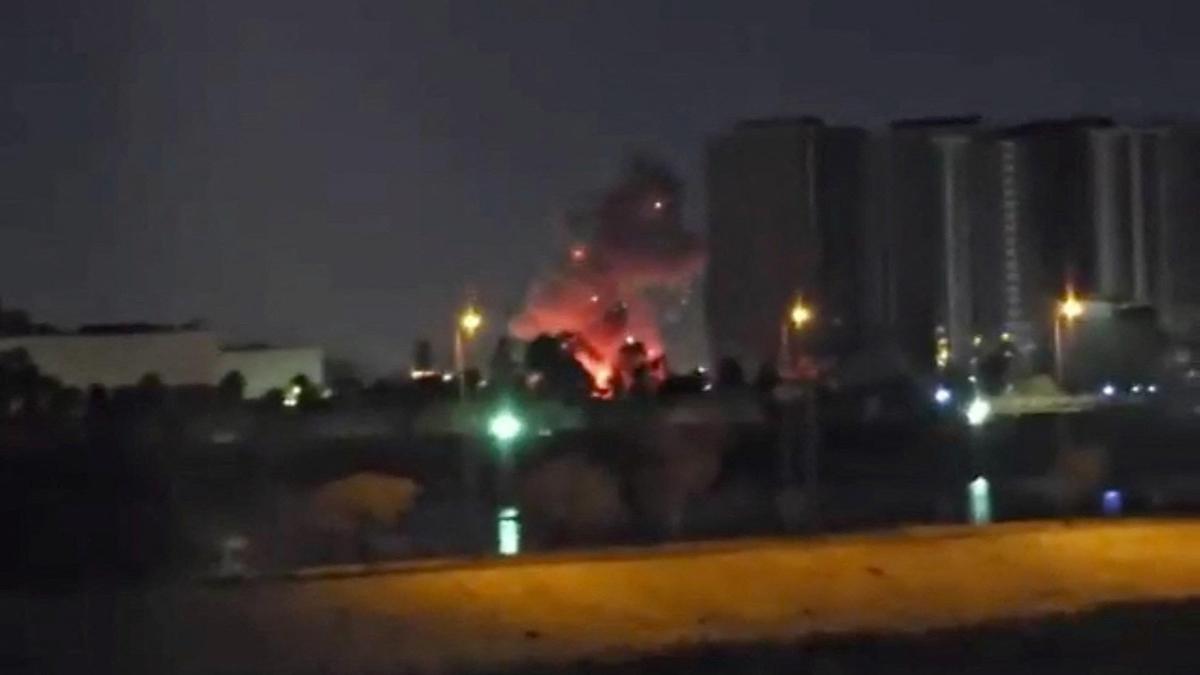
The timing is incredibly messy. We’re currently in the fourth week of a full-scale conflict involving the U.S., Israel, and Iran. While Admiral Brad Cooper of Central Command claims we've hit two-thirds of Iran's missile and drone production facilities, that doesn't matter much if they have a "factory in a box" supplied by Beijing.
Why SMIC is the perfect partner for Tehran
SMIC (Semiconductor Manufacturing International Corporation) isn't some back-alley startup. They’re a global giant that's already been on the U.S. blacklist since 2020. They’ve got nothing left to lose.
- They know the sanctions game: SMIC has been navigating U.S. export controls for years. They've perfected the art of finding workarounds.
- Legacy tech is enough: Iran doesn't need the 3nm chips found in the latest iPhone. To guide a drone or a cruise missile, "legacy" chips—the kind SMIC excels at—are more than sufficient.
- The "Normal Trade" Shield: Beijing’s official line is that they’re just conducting "normal commercial trade." It's a convenient legal umbrella that allows them to claim neutrality while their hardware powers the very missiles being fired at U.S. naval assets.
Honestly, the "is it U.S. origin?" question is almost a distraction at this point. If SMIC is sending their own proprietary tools and training, they’re creating a closed-loop system. Washington has spent years trying to choke off China’s advanced chip industry, but this shows that even "slower" Chinese tech is a massive force multiplier for a regional power like Iran.
The ripple effect on your electronics
You might think a war in the Middle East and a chip spat in China don't affect your daily life. You'd be wrong. The semiconductor supply chain is ridiculously fragile.
About 38% of the world's helium—critical for making chips—comes from Qatar. If the Strait of Hormuz stays a combat zone, the helium stops moving. South Korea and Taiwan have already sounded the alarm. They’re the center of the chip-making universe, and they’re looking at a scenario where a prolonged Iran war could paralyze the global AI boom. We're talking about a $1.5 trillion investment in AI that could literally run out of gas because of a localized conflict.
How the U.S. likely responds
Washington isn't going to sit on this. Expect a massive tightening of the screws on SMIC’s remaining supply lines.
- Secondary Sanctions: The Treasury will likely go after any middleman or bank that touched these SMIC-Iran deals.
- Equipment Crackdown: We’ll probably see even stricter bans on companies like Applied Materials or Lam Research sending any parts to SMIC, even for their older factories.
- Escalation in the Gulf: If the U.S. believes these tools are actively producing the drones currently attacking the fleet, those "production facilities" move to the top of the target list for the next round of strikes.
Beijing is playing a dangerous game of "strategic ambiguity." They call for peace talks while their tech builds the weapons. It's a classic power play. They're making sure that no matter how many facilities the U.S. bombs, Iran has the technical DNA to rebuild.
If you’re tracking the tech industry or the defense sector, keep your eyes on the next set of export control updates from the Bureau of Industry and Security. The era of "globalized" tech is over; we're now firmly in the era of the "fortress supply chain."
You should probably audit your own tech investments for exposure to Middle Eastern logistics risks—because this "shadow" collaboration just made the conflict a lot more permanent.