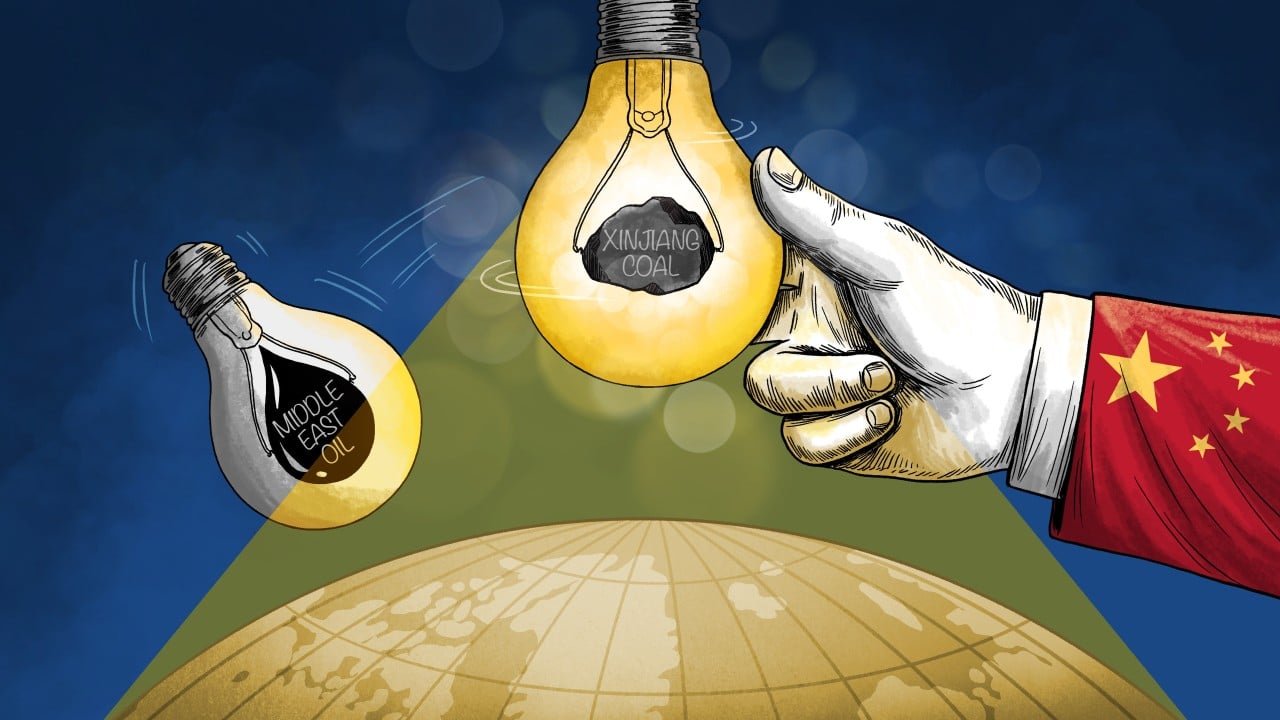
Beijing is quietly attempting to insulate its economy from Middle Eastern oil disruptions by converting massive reserves of raw coal into liquid fuel deep within the western territory of Xinjiang. In October 2024, state-owned CHN Energy broke ground on a 170-billion-yuan ($24 billion) mega-project in Hami, designed to churn out four million tons of synthetic fuel annually by 2027. This aggressive pivot toward coal-to-liquid technology represents a calculated gamble to safeguard domestic transportation infrastructure against foreign supply shocks, effectively weaponizing the country's carbon abundance to buy geopolitical autonomy.
While the West focuses on China’s dominant electric vehicle market, the leadership in Beijing remains acutely aware that heavy transport, military logistics, and aviation cannot yet run on lithium batteries.
The Malacca Dilemma and the Hami Lifeline
China imports over 70 percent of its crude oil. A staggering portion of those barrels travels through the narrow Strait of Malacca, a maritime chokepoint that military strategists view as a critical vulnerability. If a geopolitical conflict or a regional war in the Middle East flares up, naval blockades could choke off the fuel required to keep the world’s second-largest economy moving.
Xinjiang sits atop a literal sea of coal. The Hami project uses second-generation direct liquefaction technology to break down this solid carbon under extreme pressure and temperature, adding hydrogen catalysts to synthesize diesel, gasoline, and jet fuel. By transforming this remote, underutilized resource into transportable liquids, the state is attempting to build an inland oilfield completely immune to naval blockades or foreign sanctions.
The economics of these facilities have historically been brutal. For a standard coal-to-liquid operation to achieve profitability, global crude prices generally need to stay above $60 to $70 per barrel. When oil crashed in the mid-2010s, early synthetic fuel ventures across Inner Mongolia and Ningxia hemorrhaged cash, forcing planners to mothball multi-billion-dollar installations.
The calculus changed after the 2022 invasion of Ukraine and subsequent volatility in the Middle East. Energy security now supersedes short-term corporate profitability. State subsidies and state-directed banking capital ensure that these facilities keep building, regardless of shifting global commodity markets.
The Water Barrier and Environmental Realities
The fundamental engineering flaw of synthetic fuel production is its insatiable thirst. It takes roughly six to eight metric tons of water to process a single ton of liquid fuel from coal.
The geography of this energy push presents a stark physical paradox. Xinjiang is an arid, landlocked expanse dominated by deserts and fragile mountain ecosystems. Siphoning off millions of tons of water from local water tables to feed chemical reactors risks lowering agricultural yields and exacerbating regional desertification.
Engineers are attempting to mitigate this by pairing the Hami mega-plant with massive wind and solar installations. The goal is to use renewable electricity to power water-recycling infrastructure and generate green hydrogen, which is a core ingredient in the direct liquefaction process. If successful, this integration could offset some of the immense internal energy consumption required to keep the reactors running.
Yet, the carbon numbers remain deeply problematic. Standard synthetic diesel production generates more than double the lifecycle greenhouse gas emissions of conventional petroleum refining. Even with green hydrogen inputs, the sheer volume of carbon dioxide released during the initial coal breakdown threatens to undermine the country's public pledge to peak carbon emissions before 2030 and achieve neutrality by 2060.
Two Divergent Energy Systems
The expansion of coal-derived fuels reveals a distinct dual-track strategy within the state planning apparatus. On one side, the country leads global manufacturing in solar panels, wind turbines, and grid-scale battery storage. On the other side, it continues to break records for domestic coal extraction and is rapidly scaling synthetic gas and oil infrastructure.
This is not a policy error. It is a deliberate, two-pronged approach to risk management.
Renewables and electric vehicles are being deployed to clean up urban air pollution and reduce peacetime oil demand in the consumer passenger vehicle sector. Concurrently, the heavy industrial coal-to-liquid and coal-to-gas complexes are being constructed as emergency baseline infrastructure. They are designed to guarantee that the military, heavy rail networks, and chemical manufacturing sectors can function normally during an extended global crisis.
Global Supply Chains and the New Energy Geography
This structural shift alters the traditional patterns of global energy diplomacy. For decades, Beijing has cultivated deep ties with Gulf Cooperation Council nations, securing long-term supply contracts with Saudi Arabia and Qatar to fuel its industrial expansion.
As domestic synthetic capacity scales up over the coming decade, the strategic reliance on these maritime trade routes will subtly decline. The country will not stop buying Middle Eastern oil, but its vulnerability to a total supply cutoff will be significantly blunted.
Western policymakers who view the global energy transition through the single lens of decarbonization are misinterpreting these developments. The massive capital allocations inside Xinjiang prove that for major industrial powers, national survival and energy independence will always take precedence over international climate commitments. The infrastructure being anchored in the deserts of western China is designed to endure a much more hostile, fractured global environment.
