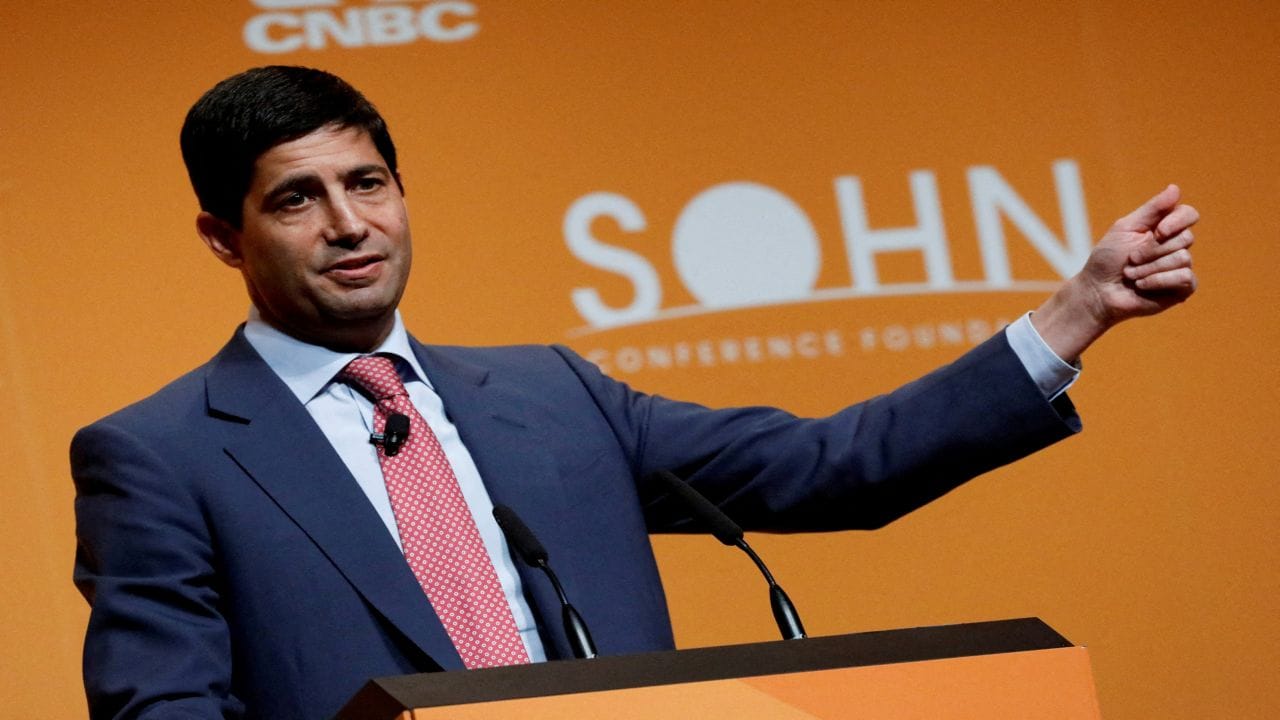
The nomination of Kevin Warsh to a leadership role within the Federal Reserve creates a case study in the intersection of private wealth accumulation and public monetary policy. An ethics disclosure revealing assets exceeding $100 million is not merely a figure of personal net worth; it is a map of potential systemic friction and a dataset for analyzing how a policymaker’s private incentives might interact with the mechanics of the dual mandate.
Standard financial reporting often treats high-net-worth disclosures as a curiosity or a political liability. This perspective ignores the functional reality of how such a balance sheet interacts with the Federal Reserve’s primary tools: open market operations, the federal funds rate, and bank supervision. To analyze the implications of Warsh’s $100 million-plus portfolio, one must examine the specific asset classes involved and the structural constraints imposed by the Federal Reserve’s 2022 ethics overhaul.
The Architecture of the Warsh Portfolio
A disclosure of this magnitude indicates a transition from active income to capital-intensive wealth. The composition of these assets determines the "Beta" of the nominee’s personal fortune relative to Fed policy. Wealth at this scale typically occupies three distinct tiers of liquidity and sensitivity.
Tier 1: Interest Rate Sensitive Instruments
Fixed-income holdings, including Treasuries and municipal bonds, carry an inverse relationship to interest rate hikes. While federal ethics rules require the divestment of specific sector-based holdings, the broader exposure to the yield curve remains. A nominee with substantial bond holdings faces a theoretical "wealth-effect" pressure: tightening cycles depress bond prices. However, at the $100 million threshold, the primary risk is not personal loss—which is often mitigated by laddered maturities—but the perception of a "dovish" bias intended to protect the valuation of long-duration assets.
Tier 2: Equity and Private Equity Exposure
The disclosure highlights significant holdings in diversified equities and, crucially, private investment vehicles. Private equity and venture capital are uniquely sensitive to the Weighted Average Cost of Capital (WACC). When the Fed raises rates, the discount rate applied to future cash flows increases, compressing the valuations of the private firms within a portfolio. For a nominee coming from the private sector, these holdings represent a legacy of relationships and historical performance that are directly impacted by the cost of leverage.
Tier 3: Real Estate and Illiquid Assets
Real estate remains the most localized asset class. Unlike equities, which reflect global or national trends, real estate values are heavily influenced by the availability of mortgage credit and the spread between the 10-year Treasury and commercial lending rates. Large-scale real estate holdings create a specific point of friction if the Fed is required to tighten liquidity to combat inflation, as this directly reduces the refinancing capability of the commercial real estate sector.
The Friction of Regulatory Compliance
The Federal Reserve’s updated Ethics Code, implemented following the 2021 trading controversies, creates a rigid box for someone with Warsh's level of wealth. The framework rests on three pillars of restriction:
- Investment Prohibitions: Policymakers are barred from purchasing individual stocks or sector-specific funds. They are limited to diversified mutual funds, ETFs, and Treasury securities. For an investor with $100 million, the transition from bespoke, high-alpha private investments to "plain vanilla" diversified funds represents a significant opportunity cost in terms of expected returns.
- Mandatory Notice Periods: Any sale or purchase requires a 45-day advance notice. This "latency requirement" eliminates the ability to engage in tactical asset allocation. In a volatile market, a nominee’s wealth is effectively locked in, creating a situation where the individual is "long" on the stability of the US economy by default.
- Holding Periods: Assets must be held for at least one year. This prevents any short-term gains derived from "insider" knowledge of the Federal Open Market Committee (FOMC) deliberations.
The result is a forced alignment between the nominee’s personal balance sheet and the long-term health of the S&P 500 or total bond market indices. The conflict shifts from "insider trading" to "structural alignment." A nominee with $100 million in diversified assets is incentivized toward a "Goldilocks" economy—stable growth with low volatility—which may not always align with the aggressive, painful tightening cycles sometimes necessary to break inflationary cycles.
Quantitative Analysis of the $100 Million Benchmark
The $100 million figure acts as a psychological and operational threshold. In the context of the Federal Reserve, wealth of this scale serves two contradictory functions.
The Independence Function
Extensive private wealth can theoretically insulate a policymaker from "careerist" pressures. A nominee who does not rely on their government salary or future lobbying potential for financial security is arguably more capable of making unpopular, high-conviction decisions. This is the "Plutocratic Independence" hypothesis: wealth provides the safety to execute a "Volcker-style" shock to the system without fear of personal financial ruin.
The Regulatory Capture Function
Conversely, wealth at this level is rarely accidental. It is the product of decades spent within the financial elite. The logic of the "Warsh Portfolio" is likely the logic of the very institutions the Fed supervises. The risk here is not a direct bribe or a specific trade, but "cognitive capture." If a nominee’s wealth was built using the strategies of the G-SIBs (Global Systemically Important Banks), their mental models of risk and liquidity will naturally favor the stability of those institutions.
The Mechanism of Policy Transmission and Personal Assets
The core of the Fed's power is the manipulation of the risk-free rate. When Warsh enters the FOMC room, his personal wealth reacts to the "Forward Guidance" he helps craft.
Consider the impact of a 50-basis point hike on a $100 million portfolio:
- Equity Valuation Impact: If the market has not priced in the hike, a 5% correction in equity markets results in a $5 million paper loss.
- Yield Curve Impact: A flattening yield curve can reduce the income generated by short-term cash equivalents while simultaneously depressing the value of long-term bond holdings.
The critical analytical question is whether the nominee perceives these fluctuations as "noise" or as a signal that the policy is "too tight." For most individuals, a $5 million swing is catastrophic; for a central banker, it must be irrelevant. The ethics filing serves to prove that the nominee has the scale to endure these swings, but it also provides the public with the "strike price" of the nominee’s potential biases.
Structural Constraints on Private Equity Ties
A significant portion of Warsh's disclosure likely involves interests in private equity or consulting firms. These assets are the most difficult to neutralize. Unlike a share of Apple or Microsoft, a limited partnership (LP) interest in a private equity fund cannot be sold instantly on an exchange.
The divestment process for these assets often involves:
- Secondary Market Liquidation: Selling the interest to another investor, often at a discount.
- Blind Trusts: Placing the assets under the control of an independent trustee. However, in the case of private equity, the trustee's ability to "manage" the asset is limited, as the underlying investments are controlled by the General Partner (GP).
This creates a "legacy exposure." Even if the nominee has no active role, their net worth remains tied to the exit multiples of the private equity firm's portfolio companies. If those companies are heavily leveraged—which most are—the nominee remains structurally incentivized toward lower interest rates to facilitate those exits.
Operational Risk and Public Trust
The Federal Reserve operates on the "full faith and credit" of the United States. This faith is tied to the perceived neutrality of the Board of Governors. When a nominee’s wealth exceeds the lifetime earnings of 99% of the population, the "Empathy Gap" becomes a variable in the policy transmission mechanism.
The risk is not that the nominee will act maliciously to increase their wealth from $100 million to $110 million. The risk is that the nominee lacks the "operational lived experience" of the inflationary pressures faced by the bottom 50% of the wealth distribution. A $4 gallon of gas or a 7% mortgage rate is an academic data point for a $100 million household, but a systemic threat for the average consumer. This creates a risk of "lagged response"—where the Fed remains too loose for too long because the leadership does not feel the "heat" of the economy in the same way the public does.
Strategic Allocation of Authority
To mitigate the inherent tensions in the Warsh disclosure, the Federal Reserve must apply a strategy of radical transparency that goes beyond the standard OGE Form 278e.
- Full Liquidation of Sector-Specific Interests: To maintain the appearance of neutrality, the nominee should move toward a 100% indexed portfolio. Any retention of "legacy" private equity interests should be met with a formal recusal from any regulatory decisions involving those specific sectors or firms.
- Disclosure of Debt Obligations: While assets are the focus, liabilities are equally important. A nominee with significant margin debt or personal loans from major financial institutions would be in a compromised position. The absence of such debt in the Warsh filing would be a signal of strength.
- Real-Time Compliance Audits: The Fed should implement a quarterly public audit of the nominee’s trades (within the 45-day notice window) to ensure that "rebalancing" is not being used as a proxy for tactical positioning.
The presence of $100 million in assets does not disqualify a candidate from the Federal Reserve, but it does change the "Internal Rate of Return" (IRR) on their public service. The nominee is essentially trading financial upside for historical influence. The success of this trade—for both the nominee and the public—depends entirely on the rigor with which the "firewall" between the personal balance sheet and the FOMC voting button is maintained. Any deviation will not only damage the nominee’s reputation but will further erode the credibility of the Federal Reserve as an independent technocratic institution.