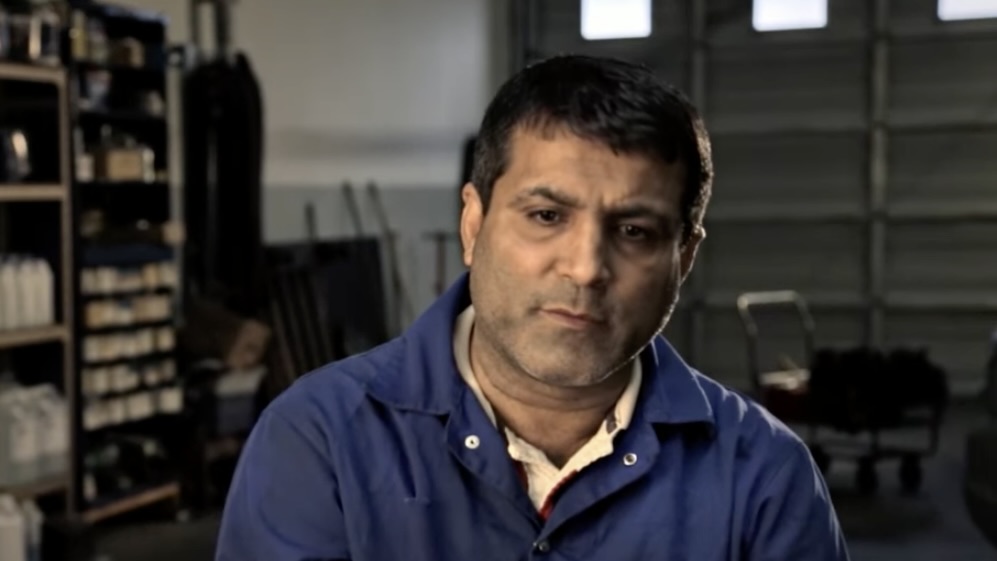
You don't usually see a Canadian courtroom transformed into a platform for tearing down a foreign regime's sovereign immunity. But that's exactly what happened when the Ontario Superior Court of Justice dropped a massive hammer on the Islamic Republic of Iran. The court ordered Tehran to pay a staggering $200 million to Zahed Haftlang, a British Columbia mechanic who survived decades of horrific state-sponsored abuse.
It's a jaw-dropping sum. Honestly, it might be the largest amount ever awarded to an individual in Canadian history. But this case isn't just about the money. It completely changes how Western courts view a dictatorship's violence against its own people.
For decades, foreign governments hid behind international legal shields. They could abuse their citizens back home, and foreign courts wouldn't touch them. This ruling shatters that dynamic. It sets a precedent that treats domestic tyranny as international terrorism, allowing victims who escape to Canada to hold their torturers financially accountable.
The Brutal Path from Child Soldier to Infidel
To understand why Justice Lee Akazaki handed down such an unprecedented judgment, you have to look at the staggering level of cruelty Zahed Haftlang endured. His nightmare began in 1981. The Iranian regime recruited him to fight as a child soldier in the bloody war against Iraq. He was only 13 years old.
He was captured and survived years inside an Iraqi military prison. But his return home in 1990 wasn't a celebration. Instead of welcoming a veteran, Iranian officials branded him an "infidel" because he dared to criticize the regime.
What followed was a horrific loop of arbitrary imprisonment and brutal torture. Regime agents systematically broke his body and tried to crush his spirit. They wanted to silence him. They wanted to ensure he never told anyone about the realities of their war or the inner workings of their revolutionary state apparatus.
He survived, got married, had a daughter, and found work as a mechanic on government cargo ships. But the trauma followed him. In 2001, while aboard the cargo ship Iran Mazandran traveling from South Korea to Vancouver, the pressure boiled over. Haftlang clashed ideologically with the ship's captain and crew, openly insulting Iran's Supreme Leader.
Knowing that returning to an Iranian port meant an automatic death sentence or a return to the torture chambers, Haftlang made a desperate choice. He jumped overboard into the freezing waters and swam to the Canadian shore.
Piercing Sovereign Immunity with the Anti Terrorism Wedge
Normally, Canada's civil courts can't touch foreign governments. It's a bedrock legal principle called state immunity. If you sue a foreign country in a domestic court, the case gets tossed out almost immediately.
So how did Haftlang's lawyer, Mark Arnold, pull this off? They used a powerful legal tag-team: the federal State Immunity Act and the Justice for Victims of Terrorism Act.
The court ruled that the state immunity shield drops if the violence was motivated by politics, religion, or ideology. Justice Akazaki looked at how Iranian agents systematically destroyed Haftlang's life. The judge concluded that labeling a man an infidel and torturing him to suppress dissent constitutes a clear political and religious motive.
Because the abuse aimed to coerce and intimidate, the court officially classified Iran's domestic torture as "terrorist activity."
This is a massive shift. Previously, Canada used these specific laws to penalize state sponsors of terror for external attacks, like the 2020 downing of Ukraine International Airlines Flight PS752. This new ruling marks the first time a Canadian court has declared that a dictatorship's atrocities against its own nationals on its own soil qualify as terrorism under Canadian law.
Can a Tortured Refugee Actually Collect Two Hundred Million Dollars
Let's talk about the giant elephant in the room. Winning a judgment is one thing. Getting a brutal dictatorship to write a check is a completely different story. Iran obviously didn't show up to defend itself in the Ontario court, and they aren't going to willingly hand over a dime.
The $200 million award is split right down the middle:
- $100 million in compensatory damages for a lifetime of physical ruin and severe mental trauma.
- $100 million in punitive damages to punish the regime for exceptional malice.
- An additional $150,000 for Haftlang's wife, daughter, and son for loss of guidance and companionship.
So, how does Haftlang actually see any of this money? The answer lies in frozen foreign assets.
The Canadian government has quietly blocked or seized various Iranian-linked bank accounts, diplomatic properties, and assets over the years. Justice Akazaki explicitly noted that while a single legal judgment won't stop a rogue state from abusing its people, the accumulation of these massive damage awards—when executed against Iran's frozen global assets—exerts genuine financial pressure.
It is a slow, grueling legal battle to systematically strip a regime of its frozen cash piece by piece. But it's possible.
What This Means for Dissidents Living in Canada
If you're a refugee or part of a diaspora community fleeing an authoritarian regime, this case matters immensely. It creates an entirely new legal avenue for accountability.
Dictatorial regimes frequently harass, spy on, and threaten dissidents even after they escape to Canadian soil. By defining domestic torture as a form of state terrorism, the Ontario Superior Court just handed a formidable weapon to victims of oppression worldwide.
It signals to regimes in Tehran, Damascus, or Moscow that their reach isn't absolute. If they torture their citizens, and those citizens manage to escape, settle in places like Vancouver or Toronto, and become Canadian citizens, the financial consequences will eventually catch up to them.
The next step for legal teams representing victims of human rights abuses is clear. They will likely use this exact blueprint to target the assets of other state entities. The door is wide open. Expect a wave of similar civil lawsuits leveraging the Justice for Victims of Terrorism Act to chip away at the financial lifelines of oppressive regimes holding wealth abroad.



:max_bytes(150000):strip_icc():focal(665x0:667x2)/gettyimages-50733149-2000-8b129a2475974982a915418ce92a73d8.jpg)