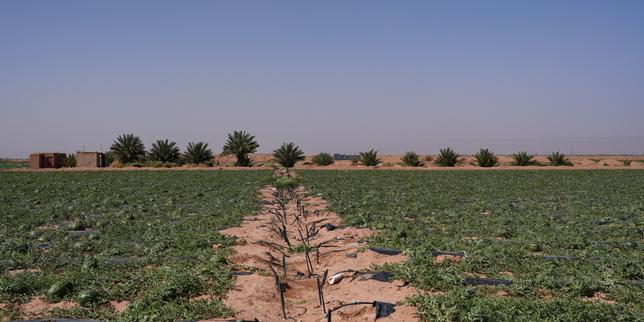
The survival of Morocco’s southern oases is no longer a matter of slow geological shifts. It is a violent collision between medieval ecological wisdom and the insatiable demands of modern global exports. For centuries, these green pockets served as a natural bulwark against the Sahara, kept alive by an ingenious underground canal system known as the khettara. Today, that system is collapsing. The culprit is not just a lack of rain, but a deliberate economic pivot toward water-intensive crops like watermelon and avocado in regions where every drop of moisture is a miracle.
The Mirage of Agricultural Progress
On the surface, Morocco’s agricultural numbers look like a success story. The country has positioned itself as a primary garden for Europe, shipping tons of produce across the Mediterranean every winter. However, this growth rests on a foundation of ecological debt. In provinces like Zagora and Tata, the shift from traditional date palms to commercial watermelon farming has triggered a catastrophic drop in the water table. If you found value in this post, you should check out: this related article.
Watermelon is effectively bottled water exported to foreign markets. In a desert climate, growing a single kilogram of this fruit can require hundreds of liters of water, most of which is pumped from non-renewable fossil aquifers. These underground reservoirs took millennia to fill; they are being emptied in decades. When the water level drops, the salt concentration rises. The land becomes toxic. Eventually, the palms—the literal backbone of the oasis—wither and die, leaving the soil unprotected against the wind.
The Death of the Three Story System
Traditional oases function through a sophisticated three-tier cooling system. At the top, tall date palms provide a canopy that breaks the wind and creates shade. Below them, fruit trees like olives and pomegranates thrive in the filtered light. On the ground level, farmers grow forage crops and vegetables. This microclimate is self-sustaining. It keeps the ground cool and prevents evaporation. For another perspective on this development, check out the recent coverage from The New York Times.
Modern industrial farming destroys this hierarchy. By clearing land for monoculture crops like watermelons, the protective canopy is lost. The ground temperature spikes. Soil moisture evaporates instantly. Without the shade of the palms, the oasis loses its ability to fight back against the encroaching dunes. What remains is a dry, sandy graveyard of blackened trunks.
Why the Policy Shift Backfired
The Moroccan government has attempted to regulate water use, but the economic incentives for farmers often outweigh the threat of fines or long-term collapse. For a small-scale farmer in the Draa Valley, a successful watermelon harvest can bring in more cash in three months than a year of traditional date farming. This creates a "tragedy of the commons" where individuals rush to extract as much water as possible before the wells run dry for everyone.
The 2022 and 2023 bans on certain water-intensive crops in drought-stricken areas were a necessary intervention, but they arrived after the damage was largely done. Enforcement is difficult in remote desert reaches. Illegal wells are dug under the cover of night, tapping into the veins of the earth to keep private profits flowing while the collective heritage of the oasis vanishes.
The Human Cost of Disappearing Green
When an oasis dies, a village dies with it. This is not a metaphor. The loss of water leads to a massive internal migration. Young men and women are forced to abandon their ancestral lands, moving to the overcrowded margins of Casablanca or Marrakech. This creates a demographic vacuum. The elderly are left behind to watch the sand bury their homes.
This migration also kills the intangible culture of the desert. The knowledge of how to maintain the khettara, how to pollinate palms by hand, and how to manage communal water rights is disappearing. Once this chain of oral history is broken, it cannot be recovered. We are witnessing the end of a civilization that survived for a thousand years, only to be defeated by the logistics of a global supermarket chain.
The Desert Does Not Negotiate
Sand is a patient enemy. In the absence of healthy vegetation, the Sahara moves forward at a rate of several kilometers per year in certain sectors. This is known as "siltation." Once the dunes crest the walls of an oasis, the battle is effectively lost. The sand clogs irrigation channels and smothers the roots of remaining trees.
Large-scale engineering projects, such as building "green belts" of trees, are often criticized by local experts as too little, too late. These man-made barriers require even more water to establish, creating a paradoxical cycle of consumption. The real solution requires a radical return to low-impact, traditional methods, combined with a hard stop on industrial exports from arid zones.
A Failed Accounting of Water
The business community often speaks of "water efficiency," but in the desert, efficiency is a trap. If a farmer becomes more efficient at using water, they often simply use the "saved" water to plant more crops, leading to a net increase in consumption. This is known as Jevons' Paradox.
The true cost of a Moroccan watermelon sold in a London or Paris supermarket is not the price on the tag. It is the permanent loss of a carbon-sequestering ecosystem and the displacement of indigenous communities. Until the market accounts for the "virtual water" being shipped out of the Sahara, the oases will continue to shrink.
Potential Paths to Survival
There is a narrow window to save what remains. It starts with recognizing the oasis as a heritage site rather than a production zone.
- Restoring the Canopy: Prioritizing the planting of drought-resistant palm varieties over cash crops.
- Solar Desalination: While expensive, using solar power to treat brackish groundwater could alleviate pressure on freshwater aquifers, though it risks creating brine disposal issues.
- Agro-Ecotourism: Shifting the local economy from extraction to preservation, allowing farmers to earn a living by maintaining the ecosystem for visitors rather than draining it for fruit.
The End of the Well
The water is running out. This is a physical reality that no amount of economic theory or political maneuvering can change. In the Tafilalet region, once the cradle of dynasties, the sound of the wind is increasingly the only thing heard in areas that used to buzz with the sound of running water and birdlife.
If the oases are allowed to disappear, Morocco loses its most effective shield against climate change. The desert will not stop at the old borders. It will continue its march north, driven by the very holes we have drilled in the ground to satisfy a seasonal craving for fruit. The choice is between the short-term profit of a harvest and the long-term survival of a landscape.
Stop digging.