Google built a trillion-dollar empire on a simple, ten-word commandment: Focus on the user and all else will follow. For twenty-five years, this mantra served as the ultimate shield against internal corporate rot and external criticism. It suggested a benevolent meritocracy where profit was merely a byproduct of being helpful. But the reality of modern search, advertising, and artificial intelligence suggests that this founding principle has been weaponized, diluted, and in many cases, inverted to serve the bottom line.
To understand why the "User First" era is effectively dead, you have to look at the tension between a search engine's utility and a public company's need for infinite growth. In the early days, "focusing on the user" meant delivering the most relevant link as fast as possible. Efficiency was the metric. Today, that goal has been replaced by engagement and retention. Every second a user spends on a Google-owned property—YouTube, Maps, or the SERP (Search Engine Results Page) itself—is a second they aren't on the open web. This is the encapsulation strategy. By keeping users within its own ecosystem, Google maximizes ad impressions and data collection. The user is no longer the focus; the user is the fuel.
The Engineering of Friction
The original Google architecture was designed for speed. Larry Page and Sergey Brin once bragged that they wanted you out of Google and onto your destination as quickly as possible. That was the ultimate user-centric behavior. Contrast that with the current state of search.
If you search for "best running shoes" today, the first screen of results is almost entirely devoid of organic content. You are met with a wall of Sponsored tags, followed by Google’s own "People Also Ask" boxes, and perhaps a "highly rated" carousel that pulls data into Google's interface. This creates a friction-filled experience for the publisher but a high-value environment for Google.
The company argues that providing direct answers—zero-click searches—is the ultimate way to focus on the user. They save you a click. However, this creates a parasitic relationship with the open web. By scraping the information from a third-party site and presenting it as its own, Google satisfies the user's immediate itch while slowly starving the very creators who provided the answer. When the creators die off because they can no longer get traffic, the quality of the "user-focused" answer eventually degrades. It is a short-term win masking a long-term systemic failure.
The Ad Revenue Trap
Wall Street doesn't care about user happiness unless it translates to an Earnings Per Share (EPS) beat. This is where the "all else will follow" part of the mantra gets messy. As Google matured, the pressure to grow revenue necessitated a gradual encroachment of advertising into the user experience.
Internal emails made public during various antitrust trials reveal a recurring theme: engineers and executives debating how much they can degrade the organic search experience to boost ad clicks without causing users to flee to Bing or DuckDuckGo. This is often referred to as the dial. Turning the dial slightly toward revenue might mean making the "Sponsored" label a lighter shade of gray or pushing the first organic result another hundred pixels down the page.
- The Monetization Gap: When a search query has high commercial intent, the user's needs are often secondary to the bidder's budget.
- Quality Erosion: The rise of "Made for Advertising" (MFA) sites and SEO-optimized sludge has made it harder for users to find authentic human perspectives.
- Data Hunger: Features that seem user-focused, like "Smart Features" in Gmail, are often dual-purpose tools for training models or refining ad profiles.
The AI Pivot and the End of Attribution
The introduction of Search Generative Experience (SGE) and AI Overviews represents the final stage of the user-focus evolution. Google is betting that users want a synthesized paragraph rather than a list of sources. From a purely technical standpoint, this is an impressive feat of engineering. From a business ethics standpoint, it is the ultimate enclosure of the commons.
When Google provides an AI-generated summary of a complex medical topic or a product review, it is using the collective intelligence of the internet to provide a service that prevents the user from ever visiting the source. This is the "User First" philosophy taken to its logical, and perhaps terminal, extreme. If the user is the focus, and the user wants the answer now, Google will give it to them—even if it means cannibalizing the ecosystem that makes Google useful in the first place.
This shift has created an Expertise Crisis. We are moving toward a web where the "user" is served by an aggregator that may or may not be hallucinating, while the "expert" (the journalist, the doctor, the hobbyist) is sidelined. If the focus on the user results in the destruction of the information supply chain, then the philosophy hasn't just failed; it has backfired.
The Regulatory Backlash
Governments around the world have finally caught on to the fact that "Focusing on the User" can be a convenient cover for monopolistic behavior. The Department of Justice and the EU’s various regulatory bodies are looking at Google’s default search agreements—paying billions to Apple to be the pre-set engine on iPhones—as a way of stifling competition.
Google’s defense is always the same: we do this because it’s what’s best for the user. They argue that users choose Google because it is the best product. While that was true in 2004, the argument loses weight in 2026. When you control the defaults and the distribution, you don't have to be the best; you just have to be the most convenient. The user isn't making a conscious choice to "focus" on Google; they are simply following the path of least resistance that Google spent billions of dollars to pave.
The Illusion of Simplicity
We must also look at the internal culture that this mantra created. For years, Google employees believed they were the "good guys." This moral certainty allowed the company to take massive risks and ignore brewing controversies. If you believe your core mission is inherently virtuous, you become blind to the negative externalities of your growth.
Consider the "User" in the context of privacy. For a long time, Google’s position was that collecting as much data as possible was a service to the user because it allowed for better personalization. But personalization is a double-edged sword. It creates echo chambers and allows for micro-targeted manipulation. A user-focused company would give users a "Delete Everything" button that actually worked and didn't result in a degraded experience. Instead, privacy settings are often buried under layers of complex menus—a practice known as Dark Patterns.
The Ghost of 1998
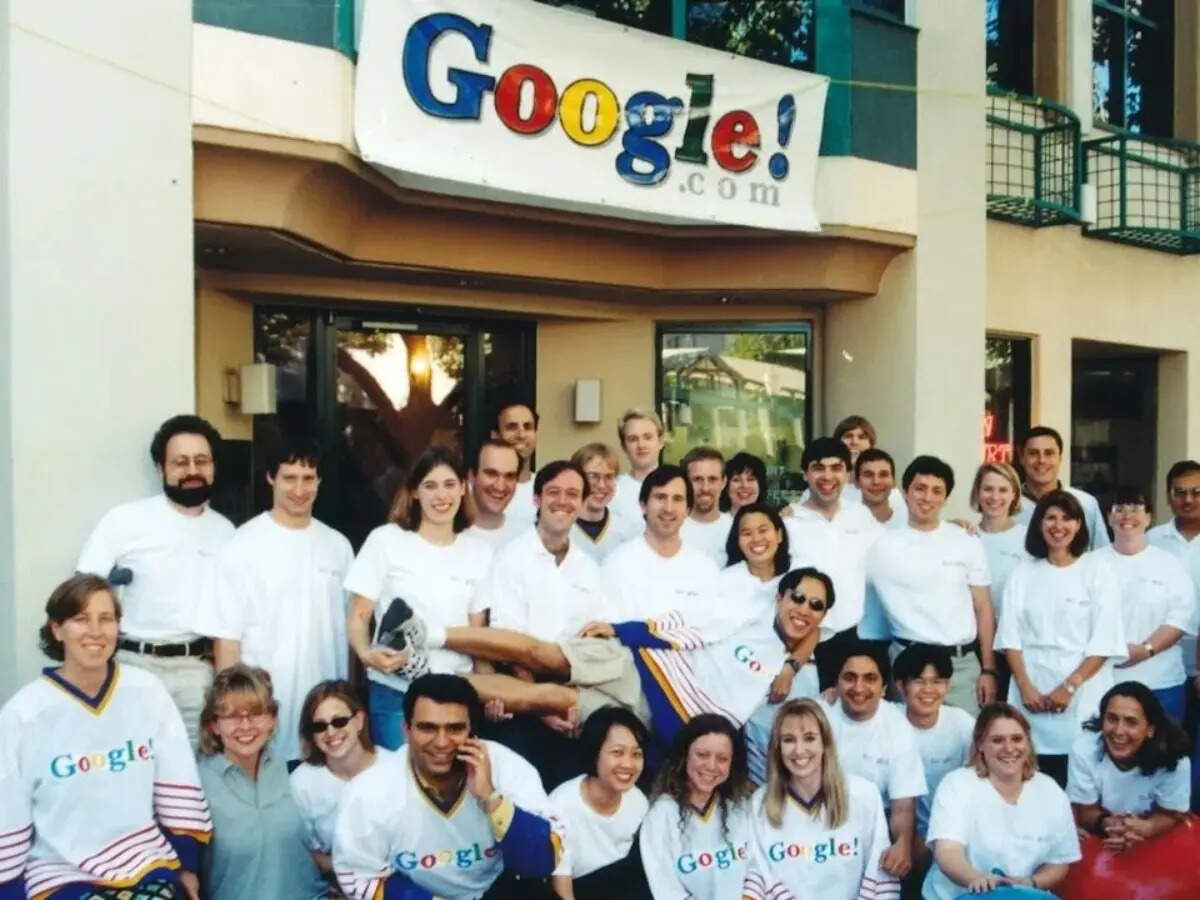
The Google of 1998 was a research project. The Google of today is a utility, a landlord, and a surveillance apparatus. The "one rule" that helped build the company was designed for a world where the internet was a library to be organized. It wasn't designed for a world where the internet is a shopping mall, a battlefield, and a social club all rolled into one.
The "User First" philosophy is now a legacy brand asset rather than a functional strategy. It is used in marketing materials and keynote speeches, but in the product design rooms, the metrics that matter are LTV (Lifetime Value), DAU (Daily Active Users), and ARPU (Average Revenue Per User). These are not user-focused metrics; they are shareholder-focused metrics.
The disconnect is becoming visible to the average person. You can see it in the Reddit threads complaining about the "death of search." You can see it in the migration of younger users to TikTok or Instagram for "search-like" queries because they trust the visual, human-first results more than the ad-cluttered Google SERP. The pivot to video and social search is perhaps the loudest signal that Google’s version of the user experience is no longer the gold standard.
Survival of the Most Profitable
If Google truly focused on the user above all else, it would likely look very different. It would perhaps offer a paid, ad-free version of search that didn't track your every move. It would prioritize small, independent publishers over massive SEO-optimized content farms. It would be transparent about how its algorithms weight different factors.
But Google cannot do those things because they are fundamentally at odds with the "all else will follow" part of the equation. In a capitalist framework, "all else" means profit, and profit requires compromises. The tragedy of Google is that it actually believed its own myth for a while. It thought it could be the biggest company in the world and still be a neutral, user-obsessed helper.
We are now witnessing the inevitable result of that contradiction. The company is doubling down on AI to maintain its grip on the user, even as that same AI threatens to destroy the credibility of the information it provides. It is a high-stakes gamble that assumes the user's desire for convenience will always outweigh their desire for accuracy, privacy, and a healthy digital ecosystem.
Stop looking at the mission statement on the lobby wall. Instead, look at the results on your screen. The ads, the AI-generated snippets, and the lack of diverse voices tell a much more honest story than any corporate slogan ever could. The user isn't the focus anymore; the user is simply the one left holding the bag in a digital landscape that has been optimized to within an inch of its life.
The next time you see a "Sponsored" result disguised as a helpful tip, or an AI summary that strips away the nuance of a complex issue, remember that this is exactly what "focusing on the user" looks like when it’s been put through the meat grinder of a multi-billion dollar advertising machine. The transition from a tool to a trap is complete.
Audit your own digital habits. If a service is no longer serving you, the "User First" promise is an empty one. You are the only person who can truly put your interests first. Search elsewhere.