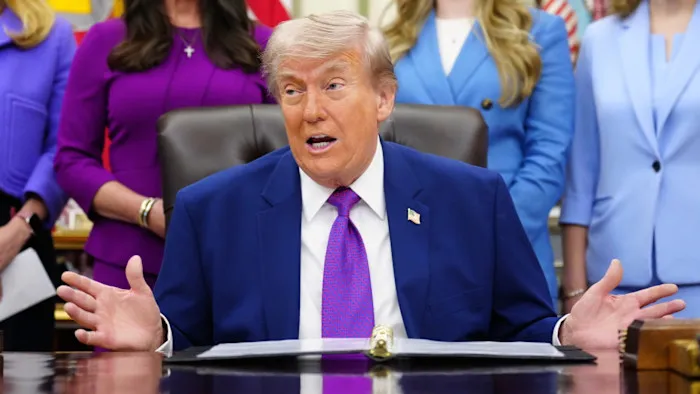
The fragile peace between Washington and Tehran is collapsing, and the diplomatic bridge built over the last month has effectively crumbled. President Donald Trump confirmed on Monday that the five-week-old ceasefire is now on life support following his summary rejection of a counter-proposal from Iran. The standoff, which began with the outbreak of hostilities on February 28, has reached a critical juncture where the prospect of renewed full-scale war is no longer a shadow but a looming reality.
The Garbage Bin Diplomacy
The President did not mince words when describing the document sent by Tehran through Pakistani mediators. He characterized the proposal as a "piece of garbage," a blunt assessment that signals a total breakdown in the negotiation framework established in Islamabad. The core of the disagreement remains the same as it was on day one of this conflict. Washington demands a complete removal of all highly enriched uranium from Iranian soil. Iran, conversely, is offering a diluted compromise: processing some material domestically while shipping the remainder to Russia, a middle-ground Trump has labeled "totally unacceptable."
This is not merely a spat over technicalities. It is a fundamental clash of endgames. For the White House, "complete victory" means the total dismantling of Iran’s nuclear infrastructure and its ballistic missile program. For the Iranian leadership, which has survived the initial decapitation strikes that took the life of their Supreme Leader in March, survival depends on maintaining a "threshold" nuclear status and leverage over the world’s most vital energy artery.
The Chokehold on Global Energy
While the diplomatic cables fly, the Strait of Hormuz remains a graveyard for global commerce. Iran has effectively closed the waterway, allowing only a trickle of traffic while demanding exorbitant tolls from those permitted to pass. This blockade, combined with the U.S. naval blockade of Iranian ports, has created the largest energy shock in modern history. Saudi Aramco officials warned this week that even if the blockade were lifted today, the market recovery would likely extend well into 2027.
The economic pressure is immense. In the United States, gas prices have become the primary political liability for the administration, yet Trump remains defiant. He is gambling that China, the largest purchaser of sanctioned Iranian crude, will eventually buckle under U.S. pressure and force Tehran to capitulate. It is a high-stakes game of chicken where the global consumer is the one paying the bill at the pump.
A War Without a Finish Line
Israeli Prime Minister Benjamin Netanyahu remains the most vocal advocate for a maximalist approach. In a recent interview, he made it clear that the war is far from over. From the Israeli perspective, any deal that leaves enriched uranium inside Iran is a failure. Netanyahu has signaled that if negotiations do not result in the total removal of these materials, the military option is not just on the table—it is the only remaining path.
The reality on the ground reflects this belligerence. Despite the "nominal" ceasefire, violence continues to simmer. In southern Lebanon, the exchange of fire between the Israeli military and Hezbollah has never truly ceased. Iran has linked the survival of the ceasefire to a total cessation of Israeli operations in Lebanon, a condition the U.S. and Israel have flatly rejected.
- The U.S. Demand: Unconditional surrender of all nuclear material and a permanent end to proxy support.
- The Iranian Counter: Recognition of sovereignty over the Strait of Hormuz, war reparations, and the unfreezing of billions in global assets.
These positions are not just far apart; they are irreconcilable.
The Looming Naval Escort
With diplomacy failing, the White House is reportedly reconsidering Project Freedom, a plan to use U.S. Navy destroyers to forcibly escort oil tankers through the Strait of Hormuz. This plan was briefly attempted and then shelved last week to give the Islamabad talks a chance. If the ceasefire officially expires, the return of these escorts would almost certainly lead to direct naval engagements between the U.S. Fifth Fleet and Iranian fast-attack craft.
The risk of miscalculation is at an all-time high. Iran has already shown it can strike regional infrastructure, such as the Petroline in Saudi Arabia, with devastating precision. If the U.S. moves to break the blockade by force, Tehran’s response will likely involve a scorched-earth policy against any oil facility within range of its missile batteries.
The doctor has arrived, and the diagnosis is grim. If the current trajectory holds, the "1% chance of living" the President assigned to this peace deal will evaporate before the week is out. The world is no longer waiting for a deal; it is bracing for the next phase of a war that has already reshaped the Middle East.
Watch the latest update on the Iran ceasefire standoff
This video provides a direct look at President Trump's recent comments and the deteriorating state of the negotiations.