For three days, thousands of households have stared at bone-dry faucets, waiting for a resolution that remains frustratingly out of reach. While the immediate cause is a burst water main, the real story isn't the pipe itself. It is the systemic decay of an infrastructure network pushed far beyond its intended lifespan. Residents in the affected regions are now living through the inevitable result of decades of underinvestment, where "emergency repairs" have become the primary method of maintenance rather than a last resort.
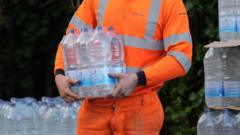
The crisis began with a single rupture, but the cascading failure that followed highlights a terrifying lack of redundancy in the system. When a primary trunk main fails, modern engineering should allow for the rerouting of water through secondary channels. Instead, we see entire postcodes plunged into a Victorian-era existence, reliant on plastic bottles delivered to supermarket parking lots. This isn't just an inconvenience. It is a fundamental collapse of a basic utility that citizens pay for under the guise of "world-class" service.
The Engineering of Failure
Water companies often point to "unforeseen ground shifts" or "extreme weather" as the culprits for these outages. This is a convenient narrative that masks a much uglier reality. The majority of the United Kingdom’s water network consists of cast-iron pipes, some of which have been underground since the early 20th century. These materials have a finite shelf life. As they corrode, they don’t just leak; they become structurally unstable, susceptible to every minor change in pressure or temperature.
Engineers on the ground are fighting a losing battle. When they patch one section of a hundred-year-old pipe, the surge in pressure required to restart the flow often triggers a "sympathetic burst" further down the line. It is a high-stakes game of Whac-A-Mole played with the public’s hygiene and health. The technology exists to monitor these pipes using acoustic sensors and AI-driven pressure management, yet the deployment of these tools is patchy at best. It’s cheaper for a utility company to pay a fine for an outage than it is to preemptively replace five miles of high-risk Victorian piping.
The Myth of the Quick Fix
The public expects a burst pipe to be fixed in hours, not days. The reason for the current three-day delay lies in the complexity of the modern urban environment. These mains are buried deep beneath layers of fiber-optic cables, gas lines, and electrical grids. Accessing a primary water main often requires a logistical dance involving local councils, traffic management, and multiple utility partners.
Furthermore, once the physical repair is made, the water cannot simply be turned back on. The system must be flushed to remove contaminants, and the pressure must be increased with extreme caution. If a technician opens a valve too quickly, the resulting "water hammer" effect can shatter the brittle pipes adjacent to the repair site. We are currently trapped in a cycle where the very act of fixing the problem risks creating a new one.
The Financial Drain
Follow the money, and the picture becomes even clearer. Since privatization, the water industry has been criticized for prioritizing shareholder dividends over capital expenditure. While billions have been paid out to investors, the rate of pipe replacement has slowed to a crawl. At current speeds, it would take some water companies nearly 300 years to renew their entire network.
The business model is essentially built on "sweating the assets." This involves running old equipment until it fails completely, rather than investing in a proactive replacement cycle. For the consumer, this means bills continue to rise while service reliability plummets. The regulatory bodies, intended to act as watchdogs, often appear toothless, issuing fines that represent a mere fraction of the companies' annual profits.
Infrastructure as a Disposable Commodity
We have moved away from the idea of infrastructure as a permanent, evolving public good. Instead, it is treated as a spreadsheet entry to be managed for maximum short-term yield. This shift in philosophy is why a burst pipe in 2026 feels more catastrophic than one in 1986. Our dependence on a constant, high-pressure water supply has increased—for everything from high-efficiency boilers to home filtration systems—while the delivery mechanism has aged into obsolescence.
The cost of a total overhaul is staggering, estimated in the hundreds of billions. No private entity wants to shoulder that burden, and no government wants to admit that the "efficiency" of privatization was largely an illusion created by deferred maintenance. So, we wait. We wait for the next burst, the next dry weekend, and the next apology from a corporate spokesperson.
The Human Cost of Negligence
A three-day outage is not a minor hurdle. For the elderly, it is a health crisis. For families with young children, it is a logistical nightmare. For local businesses, particularly those in the hospitality and service sectors, it is a direct hit to a bottom line that is already under pressure.
Consider a local cafe or restaurant. Without running water, they cannot operate legally under health and safety regulations. They lose three days of revenue, their staff loses three days of wages, and the "bottled water stations" provided by the utility company do nothing to compensate for these economic ripples. The liability for these losses is almost always buried in the fine print of service agreements, leaving the small business owner to foot the bill for the utility's failure.
The Fragility of the Status Quo
This incident should serve as a wake-up call, but history suggests it won't be. We have become accustomed to a level of "functional instability." We accept that the trains might not run, the internet might flicker, and occasionally, the water will stop. This acceptance is dangerous. It signals to providers that the threshold for public outrage is high enough to allow for continued neglect.
True resilience requires more than just a repair crew with a shovel. It requires a complete rethink of how we value the literal lifelines of our cities. This means mandating higher rates of pipe replacement, enforcing stricter penalties for multi-day outages, and perhaps most importantly, removing the profit motive from the basic maintenance of life-sustaining infrastructure.
Accountability and the Path Forward
If we want to stop these outages, the pressure must be applied to the boardrooms, not just the pipes. Transparency is the first step. Consumers deserve to see a "risk map" of their local area. They should know if the water they drink is traveling through a pipe that has already exceeded its lifespan by forty years.
Regulatory reform must move beyond simple fines. There should be a "failure threshold" where a company’s license to operate is called into question if they cannot maintain basic service levels. The current system provides no real incentive for excellence; it only provides a slight disincentive for total collapse.
Taking Back Control of the Tap
Residents are currently being told to "be patient." Patience is a virtue when someone is working to fix an accident; it is a weakness when you are being asked to tolerate a predictable failure. The data shows exactly where the leaks are. The technology shows which mains are under the most stress. The only thing missing is the political and corporate will to spend the money required to fix it.
Until that happens, the three-day dry spell will not be an anomaly. It will be the new baseline. We are watching the slow-motion disintegration of a national asset, one burst pipe at a time. The solution isn't another patch; it is a total, unapologetic reconstruction of the system from the ground up.
Demand a timeline for the replacement of every Victorian-era main in your district. Hold local representatives accountable for the "dividend over dikes" mentality that has characterized the last three decades of water management. Without a fundamental shift in how these companies are governed, you should keep those plastic water jugs in the garage. You are going to need them again, and likely sooner than you think.